Is Rayon Bad for Your Skin? What Actually Causes the Itch (2026)
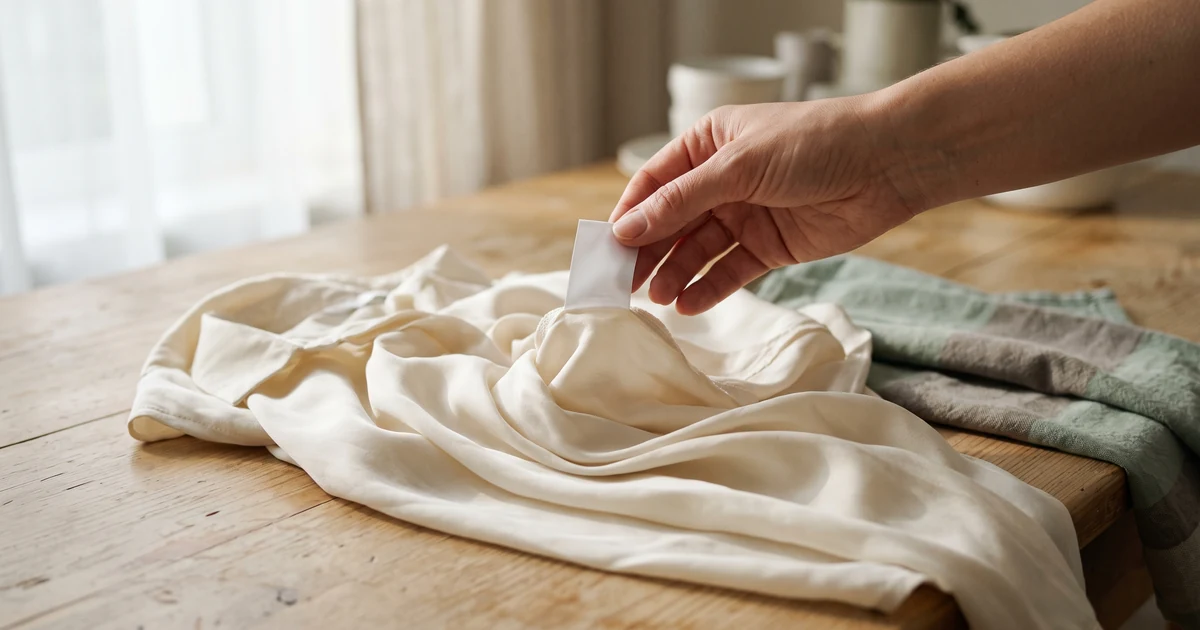
TL;DR - Key Takeaways
- Most rayon is fine. The fibre against your skin is regenerated cellulose, the same base polymer family as cotton.
- DermNet describes textile contact dermatitis as more commonly a reaction to chemical additives used in processing than to the fibres themselves.
- Three real culprits: formaldehyde-releasing wrinkle-resist finishes, residual processing chemistry and surface pH, and moisture behaviour.
- A care claim like wrinkle-free or non-iron tells you more about skin risk than the word rayon does.
- Wash it before you wear it. That is the highest-value habit in this whole article.
Most rayon is fine. If you have worn a viscose blouse or a modal t-shirt without a problem, that is the normal outcome, and nothing in this article should change how you feel about the clothes already in your wardrobe.
But some rayon garments do make people itch, and the reason is rarely the fibre. It is usually something that was added to the fibre on its way to becoming a shirt. Once you know which three things those are, "is rayon bad for my skin" stops being a yes or no question and becomes something you can actually check on a specific garment.
I have read a lot of care labels with a phone torch in fitting rooms. The pattern is consistent: two shirts can both say 100% viscose and behave completely differently against skin, because the label describes the fibre and says nothing about the finish.
Most Rayon Is Fine. Here Is When It Is Not.
Regulators restrict chemicals in textiles, not the rayon fibre itself, and dermatology sources do not treat the fibre as the usual suspect either. According to DermNet, textile contact dermatitis is more commonly a contact allergy to the chemical additives used in processing the fabric than a reaction to the textile fibres themselves.
That single sentence reframes the whole question. The risk in a rayon garment tracks with how it was finished, dyed and treated, not with the word on the label. A plain, undyed, unfinished viscose is a low-risk fabric for most people. A wrinkle-resistant, deep-dyed, cheaply produced viscose shirt that goes straight from the bag onto your body is a different proposition.
If you want a general ranking of fabrics for reactive skin rather than a deep look at one fibre, start with our guide to the best fabrics for sensitive skin and come back here for the rayon specifics.
What Rayon Actually Is (and Why "Semi-Synthetic" Matters for Your Skin)
Rayon sits in an awkward middle category, and that is where most of the confusion comes from. It is not a synthetic like polyester, which is spun from petrochemicals. It is not a natural fibre like cotton, which is picked and spun. It is cellulose from wood pulp or plant material that has been chemically dissolved and re-formed into a fibre.
The US definition is precise. Under the Federal Trade Commission's textile fibre rules at 16 CFR 303.7, rayon is "a manufactured fiber composed of regenerated cellulose", with substituents replacing no more than 15% of the hydrogens of the hydroxyl groups. The same rule allows the name lyocell for cellulose "precipitated from an organic solution in which no substitution of the hydroxyl groups takes place and no chemical intermediates are formed".
The practical takeaway: what ends up against your skin is cellulose, the same base polymer family as cotton. The heavy chemistry happens at the factory, not in your wardrobe. What matters for skin is how much of that chemistry, and how much of everything applied afterwards, is still sitting on the finished cloth.
Viscose, Modal, Lyocell and Bamboo Rayon: Same Family, Different Processes
Viscose is the oldest and most common rayon process, and in casual use "viscose" and "rayon" get treated as the same thing. Modal is a rayon variant made for more strength and softness, usually from beech pulp. Lyocell, sold most often under the TENCEL brand, uses a closed-loop solvent process and is the one the FTC rule singles out with its own generic name.
Bamboo rayon is bamboo pulp put through the viscose process. Where the raw plant came from is a sourcing and labelling question, and we keep that one separate from this one. For skin purposes, treat bamboo viscose as viscose, because by the time it reaches the fibre stage that is exactly what it is.
The Three Things That Actually Irritate Skin
Formaldehyde-Releasing Wrinkle-Resist Finishes
This is the big one. Easy-care, wrinkle-free and permanent-press finishes have historically used formaldehyde-based resins, and those resins can release free formaldehyde onto the fabric surface. DermNet lists formaldehyde resins used for wrinkle resistance among the main causes of textile contact dermatitis, alongside dyes and flame retardants.
A 2025 case report in the journal Contact Dermatitis, indexed on PubMed Central, followed a health care worker who developed allergic contact dermatitis from new standard-issue work clothes. The analysis showed a high release of formaldehyde from the new garments and no detectable release from the older ones the same worker had washed many times. It is one case, not a population study, so read it as an illustration of a mechanism rather than a measure of how common the problem is.
Regulators have put a ceiling on this. Under EU rules introduced by Commission Regulation (EU) 2018/1513, formaldehyde in clothing and textiles has been limited to 75 mg/kg since 1 November 2020, with a temporary allowance of 300 mg/kg for jackets, coats and upholstery that ended on 1 November 2023. If you want the full picture on this chemistry, we cover it in formaldehyde in clothing.
Residual Processing Chemistry and Surface pH
Fabric can reach you still carrying leftover processing chemistry, and it can reach you outside a neutral pH band. Voluntary certification schemes treat both as worth capping on anything that touches skin, which tells you the industry considers them a real variable.
According to the OEKO-TEX STANDARD 100 criteria, certified articles in product class I (babies and small children up to 3 years) and product class II (materials with direct skin contact) must fall in a pH range of 4.0 to 7.5. The same criteria set free and partially releasable formaldehyde at "not detectable" for class I and 75 mg/kg for class II. Those numbers are the reason an OEKO-TEX label on a viscose garment is worth more than the fibre name next to it.
Moisture Behaviour, or Why Rayon Can Feel Clammy
Viscose takes up a lot of water and gets noticeably weaker when wet, which is why so many viscose garments carry hand-wash or dry-clean instructions. Against skin, a fabric that absorbs sweat and then holds it can feel damp and cling rather than dry out.
That matters more than it sounds. The National Eczema Society notes that many people with eczema find wool and synthetics such as polyester and nylon cause overheating, sweating and irritation, which sets off the itch. Rayon is not in that group, but the same physics applies to any garment that traps heat and damp against a compromised skin barrier. A loose viscose shirt in warm weather and a tight viscose base layer under a jacket are not the same experiment.
👆 Try it yourself — Scan your own clothes with FiberCheck (Free)
Rayon vs Cotton vs Lyocell for Sensitive and Eczema-Prone Skin
Cotton is the default recommendation, and it earns it. The National Eczema Society describes 100% cotton as soft, cool, good at absorbing sweat, easily washable and breathable. That page also lists silk, bamboo and lyocell as eczema-friendly options, and describes lyocell or TENCEL as an equally eczema-friendly choice with a better environmental profile than bamboo viscose.
Read that carefully, because it is the most useful thing in this article. The UK's main eczema charity does not tell people to avoid regenerated cellulose fibres. It names bamboo viscose and lyocell as workable choices. The fibre is not the problem.
If you are ranking for reactive skin, a reasonable order looks like this.
1. Undyed or lightly dyed 100% cotton
First choice, especially with a certification behind it.
2. Lyocell
Close behind, because the closed-loop process leaves less residual chemistry and the fabric handles moisture well.
3. Standard viscose or modal
Good when it is plain and certified, less predictable when it is heavily finished.
4. Wrinkle-free anything
Last, whatever the fibre, because that finish is exactly the category dermatology sources keep flagging.
How to Tell If Your Rash Is the Fabric and Not the Detergent
Fabric reactions have a shape. DermNet notes the areas most often affected are the crooks of the arms, the backs of the knees, the armpits, the groin and the buttocks, the places where clothing sits closest to skin. Friction points and tight seams get worse before loose areas do.
A detergent or fabric-softener reaction tends to be more even across everything you wear, because everything went through the same wash. A single-garment reaction that shows up within a day or two of wearing something new, in the pattern above, and calms down when the garment is out of rotation, points at the garment.
Two things make this test usable. Change one variable at a time, and give it a week. Retiring a shirt and switching detergent in the same week tells you nothing.
When to Stop Experimenting and See a Doctor
If the reaction keeps coming back, patch testing is the actual diagnostic tool, and DermNet notes it may need to cover a range of chemicals because modern textiles carry a mix of dyes, resins and other substances. This article is general information, not medical advice. A persistent, spreading or infected rash is a reason to see a doctor rather than to keep experimenting with your wardrobe.
What the Label Tells You, and What It Hides
A composition label is a legal statement about fibre content. It is not a statement about chemistry. "100% viscose" tells you the fibre and nothing about the dye class, the finish, the residual pH or how the fabric was treated after weaving.
Three things on a garment tell you more than the fibre name.
Care claims are the loudest signal
Wrinkle-free, non-iron, easy-care, permanent press and stain-resistant all describe applied finishes, and formaldehyde-based resins have long been the standard way to deliver the wrinkle-resistance ones.
A certification mark
OEKO-TEX STANDARD 100 tells you the article was tested against limit values for formaldehyde, pH and a long list of other substances.
Deep saturated colours in a smooth fabric
Worth a second thought, because DermNet names dyes among the main textile culprits, including para-phenylenediamine and the dispersal dyes that sit loosely on the fabric and rub off onto skin, though it adds that those dispersal dyes are rarely used in textiles now.
A Five-Step Check Before You Buy or Wear Rayon
Read the care claims, not just the fibre. Wrinkle-free and non-iron are finish claims. Treat them as the flag, whatever the fibre.
Look for a certification mark. OEKO-TEX STANDARD 100 on a skin-contact garment means tested pH and formaldehyde limits.
Do the smell test. A sharp chemical or sour smell on new fabric is a reason to wash before wearing, or to leave it.
Prefer plain over heavily processed. Undyed, unfinished and simply constructed pieces carry less applied chemistry.
Think about where it sits. Loose over a layer is a low-stakes place for a fabric you are unsure of. Directly against the crooks of your arms is not.
If You Already Own It: Washing, Wearing, and When to Let It Go
Wash it before you wear it. That is the highest-value habit in this whole article, and it is the one the Contact Dermatitis case above supports, where the repeatedly washed older garments showed no detectable formaldehyde release and the new ones did. Our guide on washing new clothes before wearing covers the specifics.
For viscose, wash cool and gentle, because the fibre is weak when wet and a hot aggressive cycle will wreck it before it does much extra good. Repeated gentle washes are the part that matters, not the temperature of any single one. Skip fabric softener while you are testing a garment, since it adds another set of chemicals to the surface and muddies the result.
Wear it loose while you are still unsure, keep it off the highest friction areas, and give your skin a full week to answer.
Let a garment go when it fails a clean test. If a piece reliably produces the same rash in the same place after several washes, after a detergent change, and after a week away from it, that is your answer. One shirt is not worth a month of managed irritation.
The Bottom Line
Rayon is not a fibre to avoid. It is a fibre whose skin risk is carried almost entirely by what was applied to it: the wrinkle-resist finish, the dye, the residual chemistry and the pH it left the mill with. That is good news, because a finish claim on a care label is something you can read in a shop, and a fibre name is not something you can do anything about. Check the claims, prefer the plain and certified piece, wash it before it touches you, and change one variable at a time if your skin still objects.
Scan Your Clothes — Know What You're Wearing
FiberCheck analyzes clothing labels and fabric photos instantly using AI, giving you health scores, chemical breakdowns, and safety insights in seconds. Make safer choices for your family.
Frequently Asked Questions
Is rayon good or bad for sensitive skin?
Rayon itself is neutral for most people, since the fibre you wear is regenerated cellulose. Sensitivity problems usually trace back to applied finishes, dyes and residual processing chemistry rather than the fibre. A plain, certified, freshly washed viscose garment is a reasonable choice for sensitive skin; a wrinkle-free one is the version worth avoiding.
Can rayon cause a rash or contact dermatitis?
Yes, a rayon garment can trigger textile contact dermatitis, though DermNet describes the cause as usually a contact allergy to the chemical additives used in processing the fabric rather than the fibres themselves. The rash typically appears where clothing presses closest, including the crooks of the arms, the backs of the knees, the armpits and the groin. Patch testing is the way to confirm what you are actually reacting to.
Is rayon better or worse than polyester for skin?
For most people, rayon is the more comfortable of the two, mainly because polyester traps heat and moisture. The National Eczema Society notes that many people with eczema find synthetics such as polyester and nylon cause overheating, sweating and irritation. Both fibres can carry problem finishes and dyes, so the finish still matters more than the head-to-head fibre comparison.
Is bamboo rayon safer than regular viscose rayon?
Not for skin purposes. Bamboo rayon is bamboo pulp run through the viscose process, so the finished fibre is viscose. The National Eczema Society lists bamboo among eczema-friendly fabrics while noting that the processing is chemical intensive. Where the pulp came from is a sourcing and labelling question, not a skin one.
Is lyocell or TENCEL better than rayon for eczema?
It is a reasonable first choice among regenerated cellulose fibres. Lyocell has its own generic name under 16 CFR 303.7 because it is precipitated from an organic solution with no substitution of the hydroxyl groups and no chemical intermediates, and the National Eczema Society describes lyocell and TENCEL as an equally eczema-friendly option next to bamboo. As with any fabric, a wrinkle-resist finish on lyocell puts you back where you started.
Disclaimer: This article is for informational purposes only and is not medical advice. It summarizes publicly available dermatology guidance, regulations and certification criteria as of August 2026; limits and guidance can change, and the primary sources linked above govern. If you have a persistent, spreading or infected rash, or you suspect a contact allergy, consult a qualified dermatologist. Patch testing is the diagnostic tool, not a blog post. FiberCheck is a fabric analysis tool and is not a substitute for professional medical guidance.