Is Spandex Toxic? What Elastane Means for PFAS, BPA and Your Skin (2026)
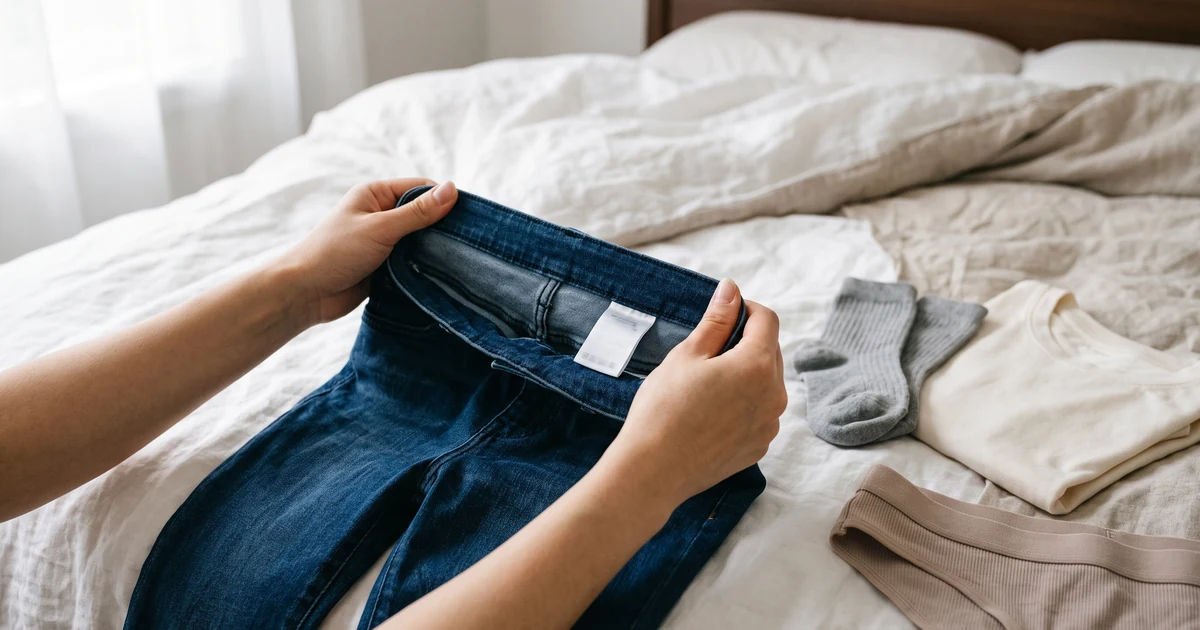
Is spandex toxic? For most people, no. The spandex on your label is not, by itself, a known health problem. Spandex is a polyurethane fiber; labels in the UK, EU and Australia usually call it elastane, and Lycra is a brand name for it. It is not a PFAS chemical by definition, and dermatology sources say fibers rarely cause allergies on their own. The worries you have read about come from what gets added to the fiber: water- and stain-repellent finishes (that is where PFAS shows up), BPA that tests have found in some polyester-spandex blends, and rubber chemicals in elastic bands.
TL;DR:
- The fiber is not PFAS. PFAS in clothing comes from water- or stain-repellent finishes.
- The BPA findings come from legal notices and lab studies. They raise fair questions, not proven harm.
- Most skin reactions trace back to finishes, dyes and rubber elastic, not the elastane itself.
- Read the label, question finish claims and look for a recognized certification.
Holding a stretch label now? Scan it to see the exact spandex, nylon or polyester share, plus a skin compatibility rating and 0-10 health score.
Get FiberCheckWhat spandex, elastane and Lycra actually are
Spandex is not a vague marketing word. In the US it is a legal fiber name with a fixed definition. Under 16 CFR 303.7, spandex is a manufactured fiber made of a long chain synthetic polymer "comprised of at least 85 percent of a segmented polyurethane." That segmented structure is what lets the fiber stretch far and snap back. Elastane is the same fiber under its international name. The FTC's textile labeling guide notes that the ISO standard uses elastane for spandex, and US sellers may use either name. Lycra is a brand name for a spandex fiber, not a different material, so "is Lycra toxic" and "is spandex toxic" are really the same question.
You rarely see elastane as the main fiber. It is usually the small number at the bottom of the label, after nylon, polyester or cotton. The FTC guide even says a fiber under 5% can be named with its percentage when it "has a definite functional significance at that amount," and its sample label reads 96% acetate and 4% spandex. In plain terms: a little stretch does a lot of work, so most of what touches your skin is usually the other fiber, plus whatever the mill put on the fabric.
Does spandex have PFAS? The fiber is not the finish
This is the most searched version of the question, and the answer depends on separating two things: the fiber and the finish. PFAS are a large chemical family. The EPA describes them as thousands of widely used, long lasting chemicals that break down very slowly, and says exposure to some PFAS in the environment may be linked to harmful health effects. Spandex, by its federal definition, is a polyurethane. Nothing in that definition calls for a PFAS chemical, so elastane does not contain PFAS just by being elastane. When PFAS shows up in clothing, it usually arrives as a finish applied to make fabric shed water, oil or stains.
The best evidence that the finish decides the result, not the fiber, comes from a 2022 study in Environmental Science and Technology. Xia and colleagues analyzed 72 children's textile products marketed as stain-resistant, and PFAS were detected in all of them. The detail that matters here: higher total targeted PFAS concentrations were found in school uniforms made of 100% cotton than in synthetic blends. Cotton is about as natural a fiber as you can buy, yet the stain-resistant cotton uniforms carried more PFAS. The lesson for spandex is simple. A stretch blend with no repellent treatment is not a PFAS product, and a natural fiber with a stain-repellent finish can be. For the bigger picture on these chemicals in clothes, see our guide to PFAS forever chemicals in clothing.
Why "nylon and elastane" gets flagged
Are nylon and elastane toxic? Not as a blend. The same logic applies to the very common "80% nylon, 20% elastane" label on leggings, swimwear and shapewear. That blend tells you which fibers are in the fabric. It does not tell you whether the fabric was treated. The words worth a second look are "water-repellent," "stain-resistant," "DWR" and "moisture-repellent," because those describe a finish. If a nylon and elastane piece makes none of those claims, there is no reason to assume PFAS. If it does make them, that is the moment to look for a clear PFAS-free statement from the brand.
Does spandex have BPA? What the tests found
BPA (bisphenol A) is a different story from PFAS, and the evidence is thinner. Xue, Liu and Kannan called their 2017 paper the first study to report BPA in textiles and clothing. They analyzed 77 textile and infant clothing samples and found BPA in 82% of them, at a mean concentration of 366 ng/g. Socks had the highest BPA levels, with a mean of 1,810 ng/g. The single highest result, 13,300 ng/g, came from a 97% polyester fabric marketed for infants. Note what that study did and did not do. It tested textiles in general, not spandex in particular, and it estimated skin exposure rather than measuring harm in people.
The spandex link comes from legal notices filed in California. In May 2023, ABC7 reported that the Center for Environmental Health, an advocacy group, said its investigations had found BPA only in polyester-based clothing containing spandex. The same report noted that California's Proposition 65 maximum allowable dose for BPA through the skin is 3 micrograms per day. Athleta, one of the named brands, said it believed the claims had no merit, and the American Chemistry Council, an industry trade group, defended BPA as thoroughly tested, citing a safety record of more than 50 years. A notice is an allegation, not a court ruling. It also does not show whether the BPA came from the elastane, the polyester or the dyeing and finishing steps.
Keep the scale in mind. According to the NIEHS, the primary source of exposure to BPA for most people is the diet. The same page notes that some animal studies suggest infants and children may be the most vulnerable to its effects, which is why parents ask about it. If you want the brand-by-brand findings and the sports bra details, our breakdown of PFAS and BPA in workout clothes covers them. The short version for spandex: the BPA questions are real and worth watching, but they point at certain polyester-spandex products, not at stretch fiber as a class.
Is elastane bad for your skin?
Is elastane fabric good for skin? For most people, it is fine. According to DermNet, it is rare for textile fibers themselves to cause allergic contact dermatitis. When clothes do cause a reaction, it is most often a result of the formaldehyde finishing resins, dyes, glues and chemical additives used on the fabric. DermNet also points out that metallic fasteners and elastic in clothing can cause contact dermatitis where they touch the skin. That pattern matters for stretch clothes. If a rash follows the line of a waistband, a bra band or a leg opening, the elastic or its chemistry is a more likely suspect than the elastane woven through the whole garment.
There is one older clue that the fiber's manufacturing can play a part. In 1967, Porter and Sommer reported allergic contact dermatitis due to spandex, with the rash on the back where the spandex portions of bras sat. Each patient also had a positive patch test to mercaptobenzothiazole, a rubber accelerator, and the authors suggested a related chemical was used to make the spandex. That is a case report from almost 60 years ago, not evidence of how common the problem is today. Tight, stretchy clothes also hold sweat against the skin, which can make any irritation feel worse. If you already react easily, our list of the best fabrics for sensitive skin is a good starting point.
Spandex and latex are not the same thing
People often lump spandex in with rubber, but US labeling law keeps them apart. The same federal rule that defines spandex lists rubber as its own fiber category, made of natural or synthetic rubber. A single bra or pair of underwear can contain both: elastane in the fabric and rubber in the elastic band. Doctors have a name for one classic rubber problem. In a 1998 paper in American Family Physician, Berger and Meffert describe waistband dermatitis, also called bleached rubber syndrome, as a common form of allergic contact dermatitis. People with it are typically allergic to elastic that has been washed repeatedly with liquid bleach, not to the elastic in new underwear. If a rash persists, the authors recommend patch testing, which is something to do with a doctor, not at home.
Babies, underwear and other close-contact clothes
Is elastane safe for babies? Nothing in the evidence above singles out elastane as a problem for infants. In baby clothes, stretch often shows up as a small share in waistbands, cuffs and leggings, while the main fabric is cotton or a cotton blend. The more useful questions are the same ones that apply to adults, asked more carefully: was the fabric given a repellent or easy-care finish, and has the finished garment been tested? The BPA study above found its single highest result in a polyester fabric marketed for infants, which is a good reminder that the whole product matters, not just the stretch fiber.
Certification is the closest thing to a shortcut here. OEKO-TEX STANDARD 100 says every thread, button and accessory of a certified item has been tested against a list of over 1,000 harmful substances. Its Product Class 1 covers products for babies and children up to 3 years, and it has the strictest requirements and limit values. OEKO-TEX also announced in its 2023 regulations update a general ban on the use of PFAS/PFC across STANDARD 100, LEATHER STANDARD and ECO PASSPORT. A label is only as good as the certificate behind it, so check that the certificate number is real and covers the product you are holding.
Underwear, sports bras and shapewear deserve the same attention for a different reason: they sit on skin for hours, often under pressure and with sweat. These are the places where elastic bands, rubber and dyes have the most contact. If you react to one brand's underwear and not another's, the difference is more likely the band or the dye than the elastane share on the label.
How to read a stretch label before you buy
The fiber label is the one piece of information you can always read, and in the US it has to be specific. The FTC guide requires the generic name of each fiber and its percentage by weight, listed in order of predominance. That tells you what the fabric is made of. What it does not tell you is how the fabric was treated. No fiber label shows a finish, and no app that reads the label can see one either. For finishes, you need the brand's own statements and a certificate. Here is a short routine for any stretch piece:
- Read the percentages. A small elastane share in cotton is a different garment from a high-stretch nylon or polyester blend.
- Look for finish words such as water-repellent, stain-resistant, wrinkle-free or DWR, and ask the brand what was used.
- Check for a clear PFAS-free statement and a valid OEKO-TEX STANDARD 100 label, especially for babies and underwear.
- Wash new stretch clothes before the first wear to rinse off loose dye and processing residue.
- If a rash follows a waistband or bra line and keeps coming back, see a dermatologist and ask about patch testing.
None of this means you need to audit every T-shirt. Save the extra care for the pieces you wear tight, wear long, or put on a baby.
Labels can say spandex, elastane or Lycra. FiberCheck reads the care label and shows the blend in seconds, so you know what touches your skin.
The Bottom Line
Spandex is not a reason to empty your drawers. The fiber itself is a polyurethane, it is not PFAS, and true allergies to elastane are uncommon. The real questions sit around it: repellent finishes that can carry PFAS, BPA findings in some polyester-spandex products, and rubber or dyes at the points where clothes grip your skin. Be selective rather than worried. Read the label, question finish claims, look for a certificate on baby clothes and underwear, and let a dermatologist sort out any rash that keeps coming back.
Shopping stretch basics? Scan the care label with FiberCheck for the fiber mix, a skin compatibility rating and a 0-10 health score. Free to download on iOS and Android.
FAQ
Is Lycra the same as spandex?
Yes. Lycra is a brand name for a spandex fiber, and elastane is the international name for the same fiber. US labels may say spandex or elastane, while labels in the UK, EU and Australia usually say elastane.
Does spandex contain PFAS?
The spandex fiber is a polyurethane, so it is not a PFAS chemical by definition. PFAS gets into clothing mainly through water-repellent and stain-resistant finishes, which can be applied to stretch blends and to natural fibers like cotton. If a stretch item makes no repellent claims, there is no particular reason to suspect PFAS.
Is nylon and elastane safe to wear every day?
For most people, yes. Nylon and elastane blends are common in leggings, underwear and swimwear, and fiber allergies are rare. If you notice redness where the waistband or straps sit, the elastic, dyes or finishes are more likely causes than the elastane itself.
Is elastane safe for babies?
There is no evidence singling out elastane as a problem for babies, and it often appears as a small share in waistbands and cuffs. The more useful checks are whether the fabric has a repellent or easy-care finish and whether the item carries an OEKO-TEX STANDARD 100 label, whose Product Class 1 covers items for children up to 3 years.
Can you be allergic to spandex?
It is possible but uncommon. A 1967 case report linked spandex bra bands to dermatitis in patients who also reacted to a rubber accelerator, a chemical the authors suspected was used in making the fiber. Today, most reactions to stretch clothes come from finishes, dyes or rubber elastic, and a dermatologist can confirm the cause with a patch test.
Disclaimer: This article is for informational purposes only and is not medical advice. FiberCheck did not test any products mentioned here. If you have a persistent rash, see a dermatologist.