Formaldehyde in Clothing: Why Your New Shirt Might Be Making You Itch
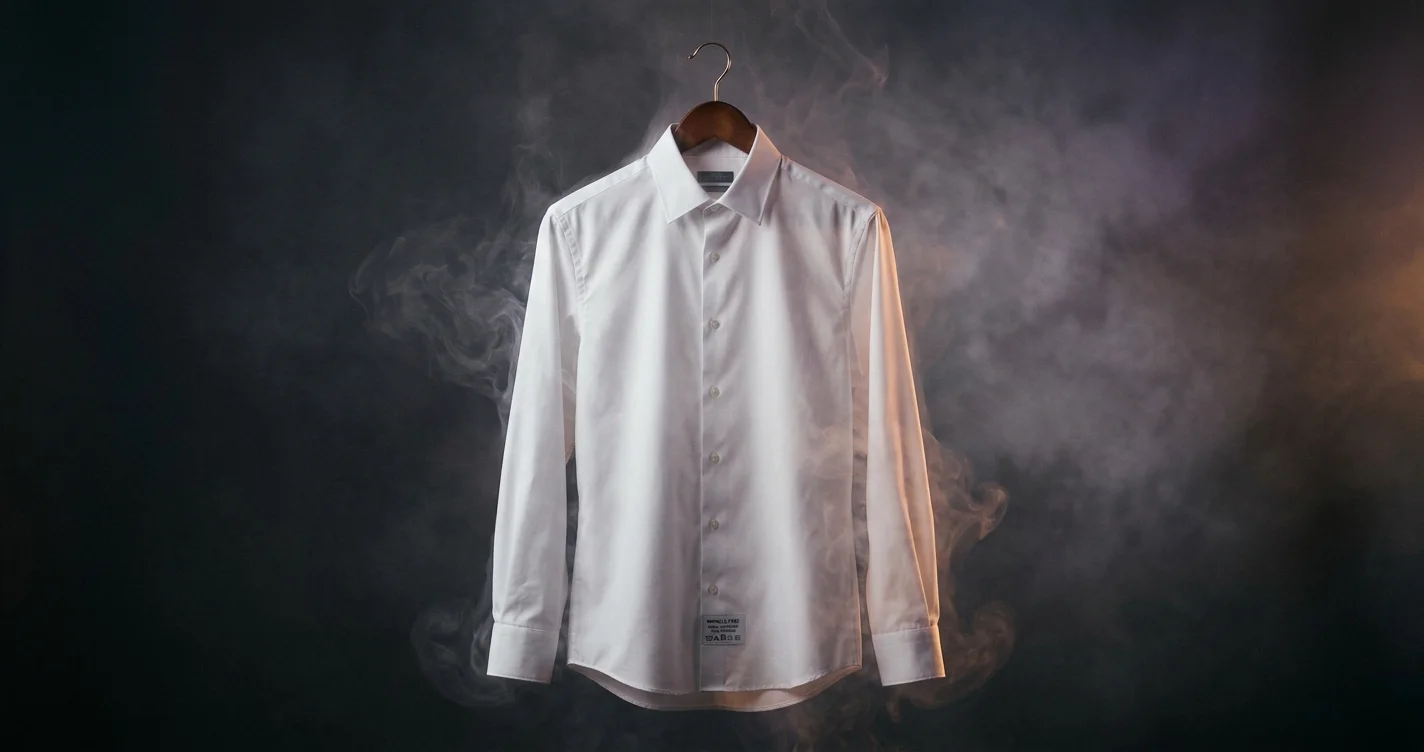
TL;DR
- Formaldehyde is used in "wrinkle-free," "permanent-press," and "easy-care" clothing finishes to prevent creasing and shrinkage.
- Classified as a Group 1 carcinogen by IARC — but textile-level exposure is primarily a skin irritant, not a cancer risk for consumers.
- The EU limits formaldehyde to 75 mg/kg in adult clothing and 16 mg/kg for baby items under its REACH regulation.
- The USA has no federal textile formaldehyde limit — making label scanning and certification checks essential.
- Washing new clothes before wearing removes 60-80% of free formaldehyde residue in a single wash cycle.
You unbox a crisp new dress shirt, peel off the packaging, and catch a sharp chemical whiff. That smell isn't "newness" — it's formaldehyde, the same preservative used in medical labs and building materials. It's been a staple of textile manufacturing since the 1960s, and there's a good chance it's in your wardrobe right now. Here's everything you need to know about how it gets there, what it does to your body, and how to minimize your exposure.
What Is Formaldehyde and Why Is It in Your Clothes?
Formaldehyde (CH2O) is a colorless gas with a sharp, pungent odor. At room temperature it's volatile — meaning it evaporates from surfaces, which is why you can smell it on new clothes even through packaging. In textile manufacturing, it's not applied as raw gas but as part of a resin system, typically urea-formaldehyde or melamine-formaldehyde resin, that cross-links with cotton fibers to change the fabric's physical properties.
The purpose? These resins make fabric resist wrinkles, prevent shrinkage, lock in dye color, and resist mildew during shipping and storage. The result is the "permanent press" revolution that started in the 1960s and 1970s — shirts that didn't need ironing, sheets that came out of the dryer looking crisp. It was marketed as a lifestyle upgrade, and consumers embraced it without questioning the chemistry.
Today, formaldehyde-based finishes are still widely used, especially in mass-produced garments and imports from manufacturing regions with fewer chemical restrictions. You'll find them in dress shirts, poly-cotton bed sheets, blended-fabric curtains, school uniforms, and any garment marketed as "wrinkle-free," "easy-care," or "no-iron." Pure natural fibers like 100% organic cotton or linen generally don't need these treatments because they aren't blended with synthetics that introduce shrinkage and wrinkling issues.
Health Risks of Formaldehyde in Textiles
Let's be clear about what the science actually says. The International Agency for Research on Cancer (IARC) classifies formaldehyde as a Group 1 carcinogen — the highest category, meaning there is sufficient evidence it causes cancer in humans. However, this classification is based primarily on occupational and industrial inhalation exposure at concentrations far higher than what clothing produces. Wearing a treated shirt is not the same as working in a formaldehyde production facility.
That said, textile-level formaldehyde exposure is not harmless. Here are the documented risks:
Contact Dermatitis
The most common reaction. Formaldehyde resins cause allergic contact dermatitis in sensitized individuals — red, itchy, inflamed patches where treated fabric rubs against skin. The most affected areas are the neck, wrists, inner elbows, armpits, and waistline — anywhere the fabric folds, presses, or traps sweat against the body. Once you're sensitized, even low concentrations can trigger reactions.
Respiratory Irritation
New clothes off-gas formaldehyde, especially in enclosed spaces like closets, drawers, or sealed garment bags. Opening a package of wrinkle-free shirts in a small room can produce a noticeable chemical smell. For people with asthma or chemical sensitivities, this off-gassing can trigger coughing, wheezing, or throat irritation.
Cumulative Exposure Concern
The dose from a single garment is small. But consider the full picture: a treated dress shirt during the day, treated sheets at night, treated curtains in the bedroom. If multiple items in your daily environment contain formaldehyde resins, the cumulative exposure adds up — especially for your skin, which is in constant contact with these fabrics. Learn how bedding fabric affects your health during sleep.
The key takeaway: formaldehyde in clothing is a real irritant, not a theoretical risk. But it's a manageable one. Understanding which items contain the most, and knowing how to reduce your exposure, makes the difference.
Which Clothing Items Contain the Most Formaldehyde?
Not all garments are created equal when it comes to formaldehyde content. The concentration depends on the fabric blend, the finish applied, and the manufacturing standards of the producing country. Here's how common items rank:
| Item | Risk Level | Why |
|---|---|---|
| "Wrinkle-free" dress shirts | Very High | Core formaldehyde application — the entire garment is treated with resin to maintain its pressed appearance |
| "No-iron" bed sheets | Very High | Large surface area means high total exposure over 8 hours of sleep. See bedding safety guide |
| Poly-cotton blends | High | Formaldehyde resin needed to prevent the cotton component from shrinking against the polyester |
| Imported garments (no certification) | High | Less regulated manufacturing — no independent testing for chemical residue levels |
| Children's / baby clothing | Varies | Stricter limits in EU and Japan, but not regulated in the USA. Baby clothing safety guide |
| 100% organic cotton | Very Low | No need for anti-wrinkle resin — natural fiber that doesn't require cross-linking treatments |
| OEKO-TEX certified | Very Low | Independently tested and verified to be within strict formaldehyde limits |
👆 Try it yourself — Scan your own clothes with FiberCheck (Free)
Formaldehyde Limits Around the World
One of the most frustrating aspects of formaldehyde in textiles is how dramatically regulations vary by country. What's illegal to sell in Tokyo may sit on a shelf in New York without any warning. Here's the global landscape:
USA
No federal textile formaldehyde limit. The CPSC has never established one despite GAO recommendations. Some states, like California under Proposition 65, require warnings for products that expose consumers to formaldehyde — but there's no concentration cap for textiles. Full US fabric safety breakdown.
EU (REACH Regulation)
75 mg/kg for adult clothing with direct skin contact. 16 mg/kg for infant and toddler items. Enforced under REACH Annex XVII, with market surveillance and testing by member states. EU fabric safety standards explained.
Japan
75 mg/kg for adults, 16 mg/kg for infants under 24 months. Japan's "Law 112" was one of the first textile formaldehyde regulations in the world and remains among the most strictly enforced globally, with mandatory testing at import.
China (GB Standards)
75 mg/kg for direct skin contact textiles. 20 mg/kg for infant items (slightly stricter than EU/Japan for babies). GB 18401 is the mandatory national standard, though enforcement consistency varies across provinces and manufacturers.
Why This Matters for US Consumers
If you live in the United States, there is no federal safety net for formaldehyde in your clothing. A garment that would be pulled from shelves in Paris or Tokyo can be legally sold in any US store. This makes personal vigilance — label reading, certification checking, and pre-wear washing — your primary line of defense.
How to Reduce Your Formaldehyde Exposure
The good news: reducing your formaldehyde exposure is straightforward. You don't need special equipment or expensive products. These six steps cover the most effective strategies, ranked by impact.
Wash before wearing — always
This is the single most effective action you can take. One warm wash with a mild, fragrance-free detergent removes 60-80% of free formaldehyde residue from the fabric surface. A second wash catches most of what remains. Never wear a new garment directly against your skin without washing first. Why you should always wash new clothes.
Avoid "wrinkle-free," "easy-care," and "permanent-press" labels
These terms are the clearest indicator that formaldehyde-based resins have been applied. If a garment promises wrinkle resistance without specifying how, assume formaldehyde resin until proven otherwise. Accept wrinkles, or learn to iron — your skin will thank you.
Choose organic or GOTS-certified fabrics
GOTS (Global Organic Textile Standard) explicitly prohibits formaldehyde-based finishes in certified products. Organic cotton, linen, and hemp don't require anti-wrinkle treatments because they aren't blended with synthetics. Is organic cotton worth the price?
Look for OEKO-TEX Standard 100 certification
OEKO-TEX tests finished products for over 350 regulated and non-regulated chemicals, including formaldehyde. Class I (baby products) has the strictest limits at 16 mg/kg. Class II (skin contact) limits formaldehyde to 75 mg/kg — far below levels that cause skin irritation in most people.
Air out new clothes for 24 hours
If you can't wash a garment immediately, remove it from packaging and hang it in a well-ventilated area for at least 24 hours. Formaldehyde is volatile and dissipates into the air — an outdoor clothesline or an open-window room accelerates the process significantly.
Pay special attention to children's clothing
Children's skin is thinner and more permeable than adult skin, making them more vulnerable to chemical absorption. In the US, where no federal formaldehyde limit exists for children's textiles, look for OEKO-TEX Class I or GOTS certification as your safety baseline. Complete baby clothing safety guide.
Testing for Formaldehyde — What Actually Works
If you suspect a garment is causing contact dermatitis or want to verify a product's formaldehyde content, here are the testing methods available — listed from most to least reliable:
- Professional lab testing — The gold standard. Labs use the Nash reagent method or HPLC (high-performance liquid chromatography) to quantify exact formaldehyde concentrations. Costs $50-150 per sample but gives you a definitive number. Worth it if you're experiencing persistent skin reactions to a specific garment.
- The smell test — Not definitive, but useful as a first-pass indicator. A strong chemical or "new clothes" odor, especially near seams and collar areas, often indicates formaldehyde off-gassing. If a garment smells noticeably chemical after unpackaging, it's likely been treated with finishing agents.
- Skin reaction pattern — If you develop contact dermatitis specifically at skin folds, along the waistband, under the collar, or inside the elbows — areas where fabric presses and rubs — formaldehyde resin allergy is a likely cause. A dermatologist can confirm with a patch test (T.R.U.E. test or specific formaldehyde patch).
- FiberCheck label scanning — Scan the clothing label with your phone to get a fabric composition breakdown and safety risk assessment. FiberCheck flags high-risk fabric blends and "wrinkle-free" treatments that indicate likely formaldehyde content.
- Home test kits — Available online, but generally unreliable for textile testing. Most consumer-grade formaldehyde test kits are designed for air quality monitoring and lack the sensitivity to accurately measure formaldehyde bound in fabric resins. Not recommended as a primary testing method. More ways to check for harmful chemicals.
The Bottom Line
Formaldehyde in clothing is a real issue — but it's a manageable one. The chemical is most concentrated in "wrinkle-free" and "permanent-press" items, and the USA's lack of federal limits means you can't rely on regulation to protect you. The most effective defenses are simple: wash every new garment before wearing, avoid wrinkle-free marketing claims, choose certified fabrics (OEKO-TEX or GOTS), and pay extra attention to children's clothing. One wash eliminates the majority of surface formaldehyde — it's the single highest-ROI habit in clothing safety.
Scan Your Clothes — Know What You're Wearing
FiberCheck analyzes clothing labels and fabric photos instantly using AI, giving you health scores, chemical breakdowns, and safety insights in seconds. Make safer choices for your family.
Frequently Asked Questions
Is formaldehyde in clothing dangerous?
At textile concentrations, formaldehyde is primarily a skin irritant rather than a cancer risk. The IARC classifies formaldehyde as a Group 1 carcinogen, but that classification is based on occupational inhalation exposure at much higher levels than what clothing releases. The most common reaction is allergic contact dermatitis — red, itchy patches where treated fabric rubs against skin. People with sensitive skin, eczema, or chemical sensitivities are at higher risk.
Which clothes have the most formaldehyde?
"Wrinkle-free," "permanent-press," and "easy-care" garments contain the highest formaldehyde levels because these finishes rely on urea-formaldehyde or melamine-formaldehyde resins. Dress shirts, poly-cotton bed sheets, and blended-fabric curtains are the most common high-formaldehyde items. Imported garments from less regulated markets may also contain elevated levels due to fewer manufacturing controls.
Does washing remove formaldehyde from clothes?
Yes. Studies show that one warm wash removes 60-80% of free formaldehyde residue from fabric. A second wash eliminates most of what remains. Use warm or hot water with a mild, fragrance-free detergent for best results. However, some formaldehyde is cross-linked into the fiber structure as part of the wrinkle-free finish, so trace amounts may persist and slowly release over time — though at levels far below skin irritation thresholds after washing.
Why doesn't the USA limit formaldehyde in clothing?
The U.S. Consumer Product Safety Commission (CPSC) has considered establishing a federal textile formaldehyde limit multiple times but has never enacted one. The Government Accountability Office (GAO) recommended action as far back as 2010. Currently, the USA relies on voluntary industry standards and general product safety laws. California's Proposition 65 requires warnings for formaldehyde exposure, but does not set a textile-specific concentration limit.
Is formaldehyde-free clothing available?
Yes. Look for GOTS-certified organic cotton, which prohibits formaldehyde-based finishes entirely. OEKO-TEX Standard 100 certified garments are tested and verified to contain formaldehyde below strict limits (16 mg/kg for baby items, 75 mg/kg for adult skin-contact clothing). Untreated 100% natural fibers like linen, silk, and organic cotton generally do not require anti-wrinkle resins and are naturally low in formaldehyde.
Disclaimer: This article is for informational purposes only and does not constitute medical advice. The information provided is based on publicly available research and regulatory standards as of April 2026. If you experience skin irritation, allergic reactions, or respiratory symptoms that you suspect are related to clothing chemicals, consult a qualified dermatologist or healthcare professional. FiberCheck is a fabric analysis tool and is not a substitute for professional medical guidance.