Organic Cotton vs Regular Cotton: Is It Really Worth It?
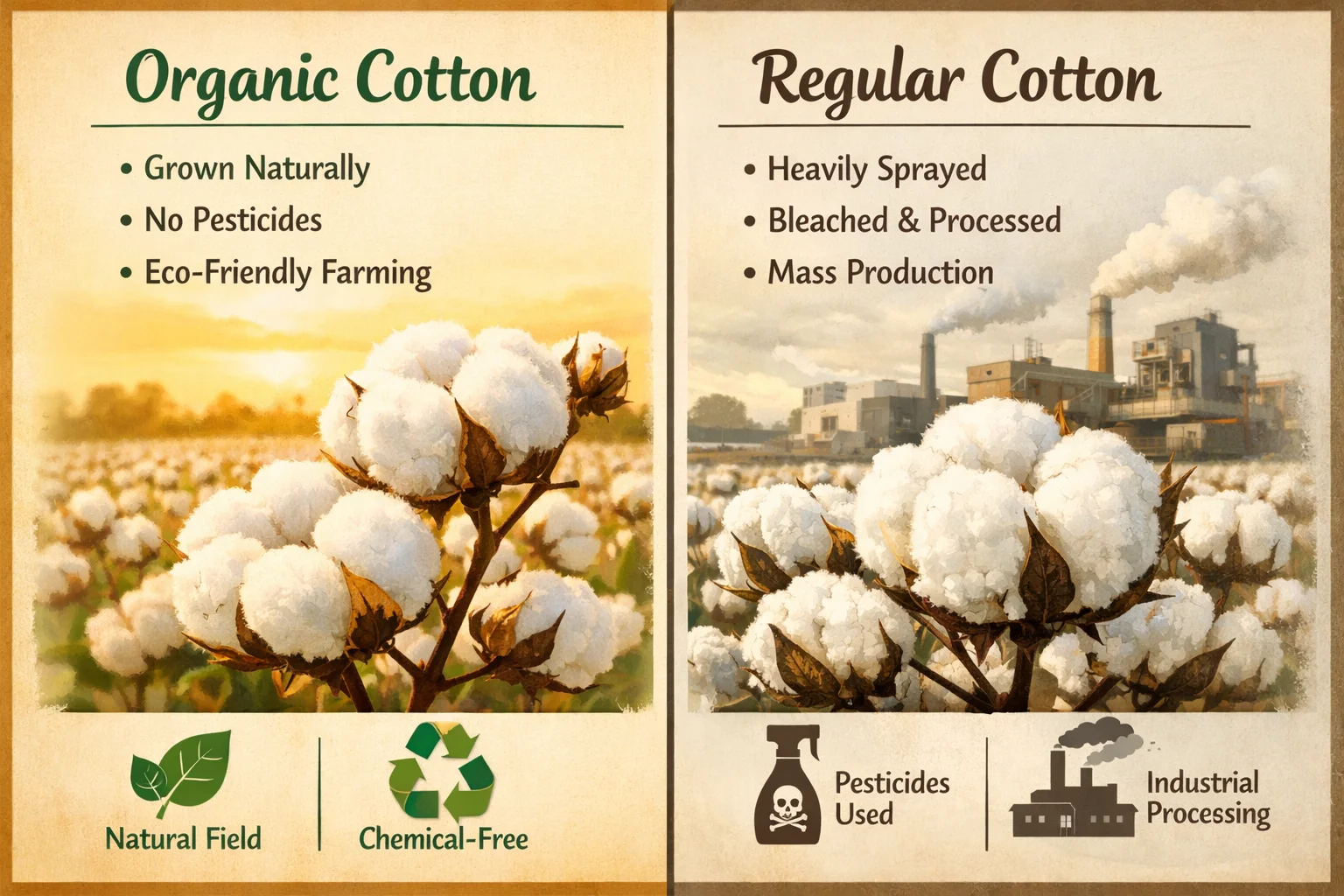
You've seen the labels: "100% Organic Cotton" printed proudly on t-shirts that cost twice as much as their conventional counterparts. The organic cotton market has grown to over $10 billion globally, yet it still accounts for less than 1% of total cotton production. So what's behind the premium — and more importantly, is organic cotton actually better for your health, your skin, and the planet? Let's break it down with data, not marketing.
The Price Gap — How Much More Does Organic Cotton Cost?
On average, organic cotton garments cost 20-50% more than their conventional equivalents. A standard organic cotton t-shirt retails for $25-40, compared to $12-20 for a regular cotton tee. For bedding, the difference can be even steeper — organic cotton sheet sets typically run $80-200 versus $30-80 for conventional cotton.
But raw material cost tells only part of the story. Organic cotton farming yields are approximately 20-30% lower than conventional farming because organic farmers can't use synthetic fertilizers or genetically modified seeds to boost output. Add the cost of GOTS certification (which can run $2,000-5,000 annually for small farms), third-party auditing, and segregated supply chains, and the premium starts to make more sense.
The real question isn't whether organic cotton costs more — it's whether the benefits justify the price. And the answer depends on what you're buying it for: health, environmental impact, or quality.
What Makes Cotton "Organic"? (Certification & Standards)
The term "organic cotton" isn't just a marketing label — it refers to cotton grown according to strict agricultural standards that prohibit synthetic pesticides, herbicides, fertilizers, and genetically modified organisms (GMOs). But not all organic claims carry the same weight.
GOTS (Global Organic Textile Standard)
The gold standard. Covers the entire supply chain — from farming to finished garment. Requires at least 70% organic fiber, bans toxic chemical inputs (including certain dyes and finishes), mandates fair labor practices, and requires annual on-site audits. Look for the GOTS label for the highest assurance.
OCS (Organic Content Standard)
Verifies the presence and amount of organic material in a finished product through chain-of-custody tracking. However, OCS does not regulate chemical processing or manufacturing practices — it only confirms that the cotton fiber itself was grown organically.
OEKO-TEX Standard 100
Not an organic certification, but tests finished products for 350+ harmful substances. A garment can be OEKO-TEX certified without using organic cotton — and vice versa. Ideally, look for products that carry both GOTS and OEKO-TEX labels.
USDA Organic / EU Organic
Government-backed certifications that verify organic farming practices at the agricultural level. These labels confirm how the cotton was grown but don't address chemical processing during textile manufacturing.
Watch Out for Greenwashing
Terms like "natural cotton," "pure cotton," or "eco-cotton" have no regulatory meaning. Without a recognized certification logo (GOTS, OCS, USDA Organic), these claims are marketing language — not verified standards. Always look for the actual certification mark on the label or product page.
Health Comparison — Chemicals in Regular vs Organic Cotton
This is where the organic vs conventional debate gets personal. Conventional cotton is one of the most chemically intensive crops in the world — it uses approximately 16% of the world's insecticides and 7% of pesticides despite occupying only 2.4% of global cropland. But do those agricultural chemicals actually end up in your finished t-shirt?
The answer is nuanced. Most pesticide residues are removed during textile processing (scouring, bleaching, dyeing). However, studies have detected trace pesticide residues in finished conventional cotton products — and the chemical processing itself introduces new concerns. Conventional cotton is routinely treated with formaldehyde-based resins (for wrinkle resistance), chlorine bleach, azo dyes, and synthetic softeners that can irritate sensitive skin. Learn more about hidden chemicals in clothing.
| Factor | Regular Cotton | Organic Cotton |
|---|---|---|
| Pesticide Residues | Trace levels possible in finished fabric | No synthetic pesticides used in farming |
| Formaldehyde | Commonly used for wrinkle resistance | Banned under GOTS certification |
| Bleaching | Chlorine bleach (releases dioxins) | Hydrogen peroxide (safer alternative) |
| Dyes | Azo dyes and heavy metals permitted | GOTS restricts toxic dyes and heavy metals |
| GMO Seeds | ~80% of global cotton is GMO | GMO seeds strictly prohibited |
| Skin Irritation Risk | Higher for sensitive skin (chemical residues) | Lower — fewer chemical irritants in finished fabric |
| Price | $12-20 (basic t-shirt) | $25-40 (basic t-shirt) |
For most healthy adults, the chemical residue difference between regular and organic cotton clothing may be minimal. But for people with eczema, contact dermatitis, chemical sensitivities, or compromised immune systems, organic cotton's cleaner processing chain can make a noticeable difference in comfort and symptom management.
Environmental Impact — Water, Pesticides, and Soil Health
The environmental case for organic cotton is stronger and more clear-cut than the health argument. According to the Textile Exchange's 2025 Organic Cotton Market Report, organic cotton farming uses 91% less water from blue water sources (rivers and groundwater) compared to conventional cotton. This is primarily because organic farming relies more heavily on rainwater and builds healthier soil that retains moisture more effectively.
Less blue water consumption compared to conventional cotton farming
Lower energy demand due to elimination of synthetic fertilizer production
Reduction in global warming potential per ton of organic cotton fiber
Pesticide elimination is another major win. Conventional cotton farming uses roughly 200,000 tons of pesticides annually, many of which contaminate local water supplies, kill beneficial insects, and degrade soil biodiversity. Organic cotton farms use natural pest management — crop rotation, beneficial insects, and trap crops — preserving ecosystem health and reducing toxic runoff. Explore our complete sustainable fashion guide.
Soil health may be the most underappreciated benefit. Organic cotton fields maintain higher levels of organic matter, support more diverse microbial communities, and sequester more carbon than conventionally farmed land. Over time, healthy soil requires less irrigation and produces more resilient crops — creating a virtuous cycle that makes organic farming increasingly efficient as soil quality improves.
Durability and Quality — Which Lasts Longer?
There's a persistent myth that organic cotton is inherently softer or more durable than regular cotton. The reality is more nuanced. The quality of any cotton fabric depends primarily on the fiber staple length, weave density, and finishing process — not whether the cotton was grown organically.
That said, organic cotton does have a structural advantage: because it's not treated with harsh chemical finishes (formaldehyde resins, chlorine bleach, synthetic softeners), the natural cellulose fibers remain more intact. This means organic cotton tends to get softer with each wash rather than breaking down, while conventionally finished cotton can feel stiff or lose its softness as chemical coatings wear off.
In terms of longevity, well-made organic cotton garments typically last 2-3 years with regular wear — comparable to quality conventional cotton. The key factor isn't organic vs conventional but rather fabric weight (GSM), stitch quality, and how you care for the garment. A cheap organic cotton t-shirt will still pill and thin out faster than a well-constructed conventional one.
When Organic Cotton Is Worth the Splurge (and When It's Not)
Not every cotton purchase needs to be organic. Here's a practical framework for deciding where to spend the premium and where to save.
Worth the Splurge
- Baby and toddler clothing — infants have thinner, more permeable skin that absorbs chemicals more readily
- Underwear and bras — direct contact with sensitive areas and mucous membranes
- Bedding and pillowcases — 6-8 hours of continuous skin contact every night
- Sensitive skin or eczema — fewer chemical irritants can reduce flare-ups
- Pregnancy and postpartum — hormonal changes increase skin sensitivity
Regular Cotton Is Fine
- Outerwear and jackets — minimal direct skin contact, often layered
- Jeans and heavy denim — thick fabric reduces chemical migration to skin
- Canvas bags and accessories — non-wearable items with minimal skin exposure
- Work clothes that get replaced often — cost-per-wear favors cheaper options
- Budget is tight — washing new clothes before wearing removes most surface residues
The key insight is to prioritize organic cotton where skin contact is prolonged, direct, and involves sensitive areas. Read our complete guide to baby clothing fabric safety for more specific recommendations on infant textiles.
How to Verify Cotton Claims with FiberCheck
The problem with cotton labeling is that "100% Cotton" on a tag tells you nothing about how that cotton was grown, what chemicals were used in processing, or whether it's genuinely organic. Greenwashing is rampant — a 2025 investigation found that up to 20% of "organic cotton" products on major retailers contained no organic cotton at all. Learn more about hidden costs of fast fashion.
FiberCheck helps you cut through the noise. Simply scan any clothing label with your phone camera, and the app's AI analyzes the fabric composition, identifies potential chemical risks, and flags whether the garment's claims align with recognized certification standards. You'll get a health score from 0-10, detailed information about likely chemical treatments based on the fabric type, and personalized recommendations for your skin sensitivity profile.
Whether you're comparing two cotton t-shirts on a store shelf or checking a "100% organic" claim from an online retailer, FiberCheck gives you the transparency that clothing labels don't.
Frequently Asked Questions
Is organic cotton softer?
Not inherently. Softness depends on fiber staple length, fabric weight, and finishing techniques — not whether the cotton was grown organically. However, organic cotton that hasn't been treated with chemical stiffeners can feel softer immediately, and it tends to get progressively softer with washing because the natural fibers aren't coated with synthetic resins. High-quality organic cotton with long staple fibers (like organic Pima or Supima) will feel noticeably softer than short-staple conventional cotton.
Does organic cotton shrink more?
Yes, it can. Conventional cotton is often pre-treated with formaldehyde-based resins specifically to prevent shrinkage (those "pre-shrunk" and "wrinkle-free" labels). Organic cotton skips these chemical treatments, which means untreated organic cotton can shrink 3-5% on the first wash. To minimize shrinkage, wash in cold water and air dry, or look for organic cotton that's been mechanically (not chemically) pre-shrunk — a process called sanforization that uses steam and pressure rather than formaldehyde.
Best organic cotton brands?
For basics and everyday wear, look at Pact, Kotn, and Colorful Standard — all carry GOTS certification across their core lines. For premium quality, Patagonia (outdoor), People Tree (fashion), and Coyuchi (bedding) are industry leaders in certified organic cotton. For baby clothing, Burt's Bees Baby, Hanna Andersson, and Under the Nile offer GOTS-certified options. Always verify claims by checking the certification label on the product itself, not just the brand's marketing.
Is GOTS certification reliable?
GOTS is widely considered the most rigorous textile certification in the world. It requires annual on-site inspections at every stage of the supply chain — from farm to factory to finished product. Independent, accredited certifiers conduct unannounced audits, and every certified entity receives a unique license number that consumers can verify online through the GOTS public database. While no system is perfect, GOTS has the strongest enforcement mechanisms and broadest scope of any organic textile standard.
The Bottom Line
Organic cotton isn't a miracle fabric — but it is a meaningfully better choice in specific contexts. For items that sit directly against your skin for extended periods (underwear, bedding, baby clothes), GOTS-certified organic cotton offers genuine health and comfort advantages by eliminating toxic processing chemicals. The environmental benefits — 91% less water, zero synthetic pesticides, healthier soil — are significant and well-documented. For outerwear, denim, and accessories, conventional cotton is perfectly acceptable, especially if you wash new items before wearing. The smartest approach isn't all-or-nothing — it's knowing where organic matters most and spending your money there.
Scan Your Clothes — Know What You're Wearing
FiberCheck analyzes clothing labels and fabric photos instantly using AI, giving you health scores, chemical breakdowns, and safety insights in seconds. Make safer choices for your family.