Should You Wash New Clothes Before Wearing Them? Here's What Experts Say
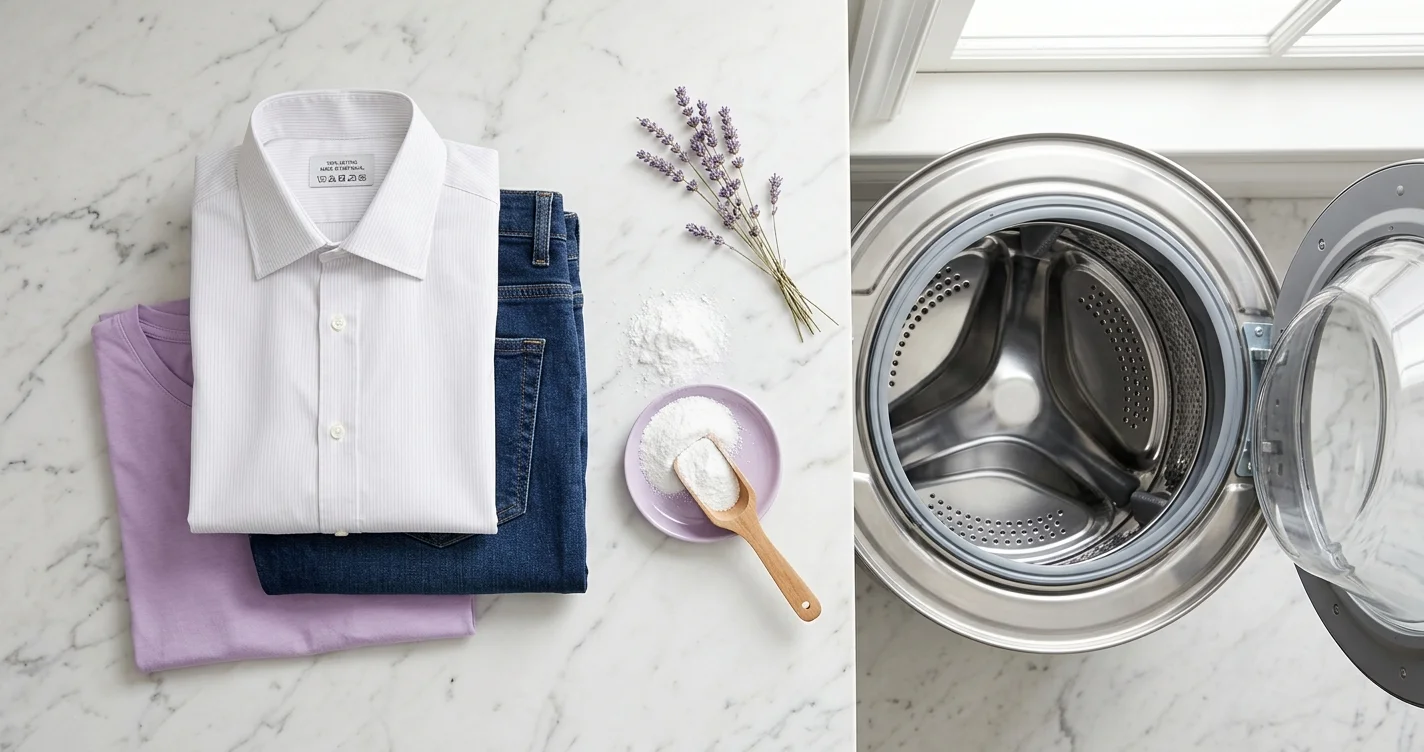
TL;DR — Key Takeaways
- New clothes are NOT clean — they go through 10+ chemical treatments before reaching you.
- Formaldehyde, azo dyes, PFAS, and NPE residues are common in unwashed garments.
- Babies and people with sensitive skin are most at risk from chemical exposure.
- One warm wash with fragrance-free detergent removes 60-80% of surface chemicals.
- "Wrinkle-free" and "stain-resistant" labels = higher chemical load.
You bring home a new shirt, tear off the tags, and put it on. It looks clean, it smells fresh, and it came folded in plastic wrap. But that garment has been through a gauntlet of chemical processing — from spinning and dyeing to anti-wrinkle finishing — long before it reached the store shelf. So should you wash it first? The short answer: yes, always.
This guide explains exactly what's lurking in your unwashed new clothes, who's most at risk, and how to wash new garments properly to protect your skin and your family. We'll break down the science behind each chemical, tell you which fabrics need extra attention, and give you a step-by-step washing protocol that takes the guesswork out of it entirely.
Why New Clothes Aren't as Clean as They Look
A single garment passes through a remarkably long chain before it reaches your closet. Raw fibers are spun into yarn, woven or knitted into fabric, bleached, dyed, and then treated with finishing chemicals — sizing agents to keep fabric stiff on the bolt, dye fixatives to lock in color, anti-wrinkle resins to prevent creasing, and softening agents to improve hand feel. Each of these steps adds chemical residues to the fabric.
But manufacturing is only part of the story. After production, garments are packed into shipping containers that may be fumigated with pesticides or antimicrobial agents to prevent mold and insect damage during transit. A 2019 investigation by the Wall Street Journal found that dermatologists were seeing increasing cases of contact dermatitis linked directly to chemical residues in unwashed clothing. The article noted that formaldehyde levels in some off-the-rack garments exceeded the limits recommended by the American Contact Dermatitis Society.
Then there's the retail environment itself. Before you buy that dress or pair of jeans, it may have been tried on by dozens of people. Skin cells, sweat, body oils, perfumes, and even cosmetics transfer to the fabric in fitting rooms. A study published in the Journal of Environmental Health found measurable levels of bacteria on retail display garments, including Staphylococcus aureus and Escherichia coli. Combined with the chemical residues from manufacturing, unwashed new clothes are far from the sterile product many consumers assume they are.
The Hidden Chemicals in Your New Wardrobe
Not every chemical used in textile manufacturing poses a health risk, but several common finishing agents have well-documented effects on human health. Here are the five most concerning substances you're likely to encounter in unwashed clothing.
Formaldehyde
Where it's found: Anti-wrinkle, anti-shrink, and permanent-press finishes. Formaldehyde-based resins are applied to fabric to prevent creasing during shipping and display. They're especially prevalent in "wrinkle-free" dress shirts, blended-fiber garments, and bed linens.
Health risk: Classified as a Group 1 carcinogen by the International Agency for Research on Cancer (IARC). At concentrations commonly found in new clothing (75-300 mg/kg), it causes skin irritation, contact dermatitis, itching, and redness. Prolonged exposure through inhalation of off-gassing can irritate the respiratory tract. The OEKO-TEX Standard 100 limits formaldehyde to 75 mg/kg for adult clothing and just 16 mg/kg for infant garments.
What to do: One warm wash removes a significant portion of free formaldehyde from fabric. For heavily treated items, wash twice. Learn more about harmful chemicals in clothing.
Azo Dyes
Where they're found: Used in an estimated 60-70% of all textile dyes globally. Azo dyes produce vibrant, saturated colors — particularly reds, oranges, yellows, and blacks. They're the most widely used class of synthetic colorants in the fashion industry.
Health risk: Certain azo dyes can break down through reductive cleavage and release carcinogenic aromatic amines, including benzidine and 4-aminobiphenyl. The EU's REACH regulation bans 22 specific aromatic amines in textiles. However, enforcement varies widely outside Europe, and many imported garments still contain restricted azo dyes. Symptoms of exposure include skin rashes, redness, and allergic reactions — especially in areas where sweat increases dye transfer.
What to do: Wash dark and brightly colored garments separately before wearing. If color bleeds heavily during the first wash, that's a sign of unfixed dye residues. Read our guide to toxic dyes in clothing.
PFAS ("Forever Chemicals")
Where they're found: Stain-resistant, water-repellent, and "easy-care" finishes. PFAS (per- and polyfluoroalkyl substances) are applied to everything from outdoor jackets and school uniforms to work pants and table linens. Any garment marketed as "stain-proof" likely contains PFAS.
Health risk: PFAS are called "forever chemicals" because they do not break down in the environment or in the human body. A 2024 study in Environmental Science & Technology detected PFAS in 65% of stain-resistant clothing tested. Exposure is linked to thyroid disruption, immune system suppression, increased cholesterol levels, and reproductive harm. The EPA has classified several PFAS compounds as likely carcinogens.
What to do: Avoid garments marketed as "stain-proof" or "water-repellent" unless they explicitly state PFAS-free. Washing helps reduce surface-level PFAS but cannot fully remove bonded fluorinated coatings. Deep dive into PFAS in clothing.
NPEs (Nonylphenol Ethoxylates)
Where they're found: NPEs are industrial surfactants used during fabric washing and finishing stages of manufacturing. They help remove oils and dirt from raw fabric and improve dye penetration. Residues remain in the finished garment and are released during home laundering.
Health risk: NPEs break down into nonylphenol (NP), a persistent endocrine disruptor that mimics estrogen in the body. A Greenpeace investigation tested garments from 20 major global brands and found NPE residues in 89% of samples. The EU has restricted NPEs in textiles to a maximum of 0.01% by weight since 2021. NPEs are also toxic to aquatic organisms when released into wastewater.
What to do: Washing new clothes before wearing them helps flush NPE residues out of the fabric. Use an adequate amount of detergent and warm water for best results.
Antimicrobial Treatments
Where they're found: Activewear, sportswear, socks, underwear, and any garment marketed as "odor-resistant" or "anti-bacterial." Common agents include triclosan, silver nanoparticles, and quaternary ammonium compounds.
Health risk: Triclosan was banned by the FDA in consumer hand soaps in 2016, yet it remains permitted in textiles. It is a suspected endocrine disruptor and may contribute to antibiotic resistance. Silver nanoparticles, while effective at killing bacteria, raise concerns about long-term accumulation in the body and environmental toxicity when shed during washing.
What to do: Wash antimicrobial-treated garments before first wear. Consider whether you actually need the antimicrobial feature — regular washing with standard detergent is usually sufficient for odor control.
Who's Most at Risk?
While everyone benefits from washing new clothes before wearing them, certain groups face significantly higher health risks from chemical residues in unwashed garments. If you or someone in your household falls into any of these categories, pre-washing is not optional — it is essential.
Babies and Infants
Infant skin is roughly 30% thinner than adult skin and absorbs substances at rates up to 3x faster. Babies also have a much higher skin surface-area-to-body-weight ratio, meaning even low concentrations of chemicals result in proportionally greater exposure. They spend 16-20 hours per day in direct contact with clothing and bedding, making fabric safety critically important. See our complete baby clothing safety guide.
People with Eczema or Sensitive Skin
If you have eczema, psoriasis, or generally sensitive skin, your skin barrier is already compromised. Chemical residues that might cause only mild irritation in someone with healthy skin can trigger full-blown flare-ups, intense itching, and prolonged redness in people with skin conditions. Formaldehyde and azo dye residues are among the most common triggers for textile-related contact dermatitis. Find the best fabrics for sensitive skin.
Pregnant Women
Endocrine-disrupting chemicals like NPEs and PFAS are of particular concern during pregnancy. These substances can interfere with hormonal signaling at very low concentrations. While the risk from a single unwashed garment is small, the cumulative effect of wearing multiple treated garments daily adds up. Pregnant women should be especially cautious with garments labeled "stain-resistant" or "wrinkle-free."
People with Chemical Sensitivities (MCS)
Multiple Chemical Sensitivity (MCS) is a condition in which exposure to low levels of chemicals triggers symptoms like headaches, fatigue, difficulty breathing, and skin reactions. For people with MCS, the volatile organic compounds (VOCs) that off-gas from unwashed clothing — including formaldehyde vapors and solvent residues — can be enough to provoke a reaction. If you have MCS, consider washing new garments two to three times and airing them in direct sunlight before wearing.
The Right Way to Wash New Clothes — Step by Step
Simply tossing new clothes in the wash is a good start, but following the right protocol maximizes chemical removal and protects your existing wardrobe from dye transfer. Here's the dermatologist-recommended approach.
Wash before first wear — always, no exceptions
This is the single most important step. Whether the garment is a $10 t-shirt or a $500 blazer, it has been through chemical processing. Even garments from trusted brands and premium retailers carry finishing residues. Make pre-washing a non-negotiable habit for every new piece of clothing that enters your home.
Use warm water (30-40°C) — not cold, not hot
Warm water is significantly more effective than cold water at dissolving and releasing chemical residues from fabric. Cold water alone won't break down formaldehyde resins or dye fixatives. However, hot water (above 60°C) can set certain stains and shrink natural fibers. The sweet spot is 30-40°C — warm enough to dissolve chemicals, gentle enough to preserve garment quality.
Choose fragrance-free, dye-free detergent
The purpose of pre-washing is to reduce chemical exposure — so don't introduce more chemicals in the process. Fragranced detergents contain synthetic musks, phthalates, and other sensitizing ingredients. Use a plain, fragrance-free, dye-free detergent for the best results. Avoid fabric softener entirely during pre-washing, as it coats fibers and can trap chemical residues instead of removing them. Learn about fabric softener health risks.
Wash new items separately from your existing wardrobe
New garments can release excess dye, formaldehyde, and surfactant residues during their first wash. If you mix them with your regular laundry, those chemicals transfer to your already-clean clothes. Wash new items in a separate load, and sort by color — dark and brightly colored items are most likely to bleed dye.
For heavily treated items, wash twice
Garments with "wrinkle-free," "permanent press," or "stain-resistant" labels are treated with cross-linking resins that bond to the fiber. A single wash may only remove the surface layer of these finishes. Washing twice — or even three times for items with a strong chemical smell — provides a much more thorough reduction. If the garment still smells after two washes, consider returning it.
Air dry in sunlight when possible
Sunlight provides natural UV radiation that helps break down certain chemical residues — including formaldehyde and some volatile organic compounds — through photodegradation. Line-drying in direct sunlight for a few hours after washing adds an extra layer of chemical reduction. It's not a substitute for washing, but it's a useful supplement.
Which Fabrics Need the Most Attention?
Not all garments carry the same chemical load. The type of fabric, the finish applied, and the origin of the garment all affect how much pre-washing is needed. Use this table as a quick reference guide when deciding how to handle new additions to your wardrobe.
| Fabric / Label | Risk Level | Why | What to Do |
|---|---|---|---|
| Wrinkle-free / Permanent press | High | Formaldehyde-based resins bonded to fibers | Wash 2-3 times before wearing |
| Dark / bright synthetics | High | Heavy dye loads, potential azo dyes, unfixed colorants | Wash separately, check for dye bleeding |
| Fast fashion imports | Medium-High | Less regulated supply chains, higher chemical variance. Learn more | Wash at least once, preferably twice |
| Activewear / sportswear | Medium | Antimicrobial treatments (triclosan, silver nanoparticles). Learn more | Wash once with warm water |
| Organic / GOTS certified | Low | Strict chemical limits enforced through certification | Still wash once for hygiene |
The pattern is clear: the more chemical processing a garment undergoes, the more important pre-washing becomes. "Wrinkle-free" and "stain-resistant" are essentially marketing terms for "heavily treated with chemicals." On the other end of the spectrum, organic and certified garments go through less chemical processing, but they still pass through shipping and retail environments — so one wash is still recommended.
Pay special attention to garments that will be worn tight against the body — underwear, bras, socks, base layers, and fitted t-shirts. These items have maximum skin contact and are most likely to cause irritation if chemical residues remain. Loose- fitting outer layers pose less risk but should still be washed for best practice.
What About Dry-Clean-Only Items?
Dry-clean-only labels present a challenge. You can't just toss a silk blouse or structured wool blazer into the washing machine. But these garments are still treated with the same finishing chemicals as everything else — and in some cases, even more, since delicate fabrics often receive additional protective coatings. Here's how to handle them.
Steam as an alternative: A handheld garment steamer can kill surface bacteria and reduce some volatile chemical residues through heat. It's not as effective as a full wash, but it's significantly better than nothing. Run the steamer across the entire garment, paying extra attention to areas that will contact skin directly — collars, cuffs, underarms, and the inner lining.
Air out for 24-48 hours: Hang the garment in a well-ventilated area (ideally outdoors or near an open window) for one to two days before wearing. This allows volatile organic compounds — including formaldehyde vapor — to off-gas and dissipate. It won't remove non-volatile residues, but it addresses the most immediately irritating compounds.
Choose a non-perc dry cleaner: If you do take the garment to a dry cleaner, look for one that uses non-perchloroethylene (non-perc) solvents. Perchloroethylene is classified as a probable carcinogen by the EPA and can leave its own chemical residues on cleaned garments. Safer alternatives include liquid CO2 cleaning and hydrocarbon-based solvents.
Consider hand-washing: Many garments labeled "dry-clean only" can actually be hand-washed safely. The label often reflects the manufacturer's liability preference, not a strict technical requirement. Silk, cashmere, and unstructured wool can typically be hand-washed in cool water with a gentle detergent. Test a small, inconspicuous area first. The only items that truly require professional dry cleaning are heavily structured garments (like tailored suit jackets) and items with embellishments that may dissolve in water.
The Bottom Line
Always wash new clothes before wearing them. It doesn't matter how expensive the brand is, how clean the packaging looks, or whether you bought it from a high-end boutique or a fast fashion website. Use warm water (30-40°C), a fragrance-free detergent, and skip the fabric softener. For garments labeled "wrinkle-free," "permanent press," or "stain-resistant," wash two to three times. For dry-clean-only items, steam and air out for 24-48 hours. This simple habit removes the majority of chemical residues and significantly reduces your risk of skin irritation, allergic reactions, and long-term chemical exposure.
Scan Your Clothes — Know What You're Wearing
FiberCheck analyzes clothing labels and fabric photos instantly using AI, giving you health scores, chemical breakdowns, and safety insights in seconds. Make safer choices for your family.
Frequently Asked Questions
Is it really necessary to wash new clothes before wearing them?
Yes, dermatologists universally recommend washing new clothes before wearing them. New garments go through numerous chemical treatments during manufacturing — including formaldehyde-based anti-wrinkle resins, dye fixatives, and sizing agents. They're also handled by many people during production, shipping, and retail display. A single wash with warm water and fragrance-free detergent removes 60-80% of surface chemical residues and significantly reduces the risk of contact dermatitis and skin irritation.
What chemicals are in new clothes?
New clothes commonly contain formaldehyde (used in anti-wrinkle and anti-shrink finishes), azo dyes (used in 60-70% of textile dyes, some of which can release carcinogenic aromatic amines), PFAS or 'forever chemicals' (found in stain-resistant and water-repellent finishes), nonylphenol ethoxylates or NPEs (surfactant residues that act as endocrine disruptors), and antimicrobial agents like triclosan and silver nanoparticles (common in activewear). The specific chemical load depends on the fabric type, color, finish, and where the garment was manufactured.
How many times should I wash new clothes?
Once is sufficient for most standard garments. However, items labeled 'wrinkle-free,' 'permanent press,' or 'stain-resistant' should be washed two to three times, as these finishes are designed to bond to the fabric and release chemicals more slowly. Dark or brightly colored synthetics may also benefit from a second wash to remove excess dye. If a garment still has a noticeable chemical smell after one wash, wash it again before wearing.
Can I just air out new clothes instead of washing them?
Airing out new clothes can reduce volatile organic compounds (VOCs) that you can smell, but it does not remove non-volatile chemical residues like formaldehyde resins, dye fixatives, or PFAS that are bonded to the fabric surface. These substances require water and detergent to dissolve and rinse away. Airing is better than nothing — especially for dry-clean-only items — but washing is significantly more effective at reducing your chemical exposure.
Are expensive brands safer than fast fashion?
Price alone does not guarantee safety. Even premium and luxury brands use formaldehyde-based finishes, azo dyes, and chemical treatments during manufacturing. A 2023 investigation by the Swedish Chemicals Agency found that designer garments exceeded safe formaldehyde limits at roughly the same rate as budget brands. What matters more than price is certification: look for OEKO-TEX Standard 100 or GOTS labels, regardless of the brand's price point. Always wash before wearing, no matter how expensive the item.
Disclaimer: This article is for informational purposes only and does not constitute medical advice. The information provided is based on publicly available research and regulatory standards as of April 2026. If you experience skin irritation, allergic reactions, or any health concerns related to clothing, consult a qualified dermatologist or healthcare professional. FiberCheck is a fabric analysis tool and is not a substitute for professional medical guidance.