Is Period Underwear Safe? What PFAS Testing Actually Found
Reviewed against publicly available reporting from EPA-certified laboratory testing, two settled class-action lawsuits, and health guidance from the U.S. Agency for Toxic Substances and Disease Registry (ATSDR) and the Harvard T.H. Chan School of Public Health, current as of June 2026. Not medical advice.
TL;DR: Is Period Underwear Safe, at a Glance
- The category is not recalled. No health agency advises people to stop wearing reusable period underwear.
- But it is a per-product issue. EPA-certified lab testing found detectable fluorine (a PFAS marker) in about 65 percent of pairs tested, and several came back clean.
- The Thinx and Knix settlements were business decisions to end litigation, not court findings of danger; both companies denied wrongdoing and agreed to drop PFAS.
- PFAS are not needed to make leak-resistant underwear work, so a certified clean pair is genuinely achievable.
- The shopping rule: favor OEKO-TEX STANDARD 100, distrust bare "PFAS-free" slogans, and check the specific pair rather than the category.
Most period underwear is fine to wear, but here is what the testing actually found. Independent lab panels and two settled class-action lawsuits turned up PFAS, the so-called "forever chemicals," in some popular brands. That sounds alarming, and the headlines were. The fuller picture is calmer and more useful: not every pair is affected, the brands at the center of the lawsuits agreed to stop, and there are concrete steps you can take to choose and check a safer pair.
This guide walks through what the science says, what the lawsuits did and did not prove, and how to read a label so you can decide for yourself.
Is Period Underwear Safe? The Short Answer
For most people, reusable period underwear is a reasonable, low-waste choice. The garment itself is not a recalled product, and no health agency has told people to stop wearing it.
The nuance is this: a portion of the period underwear that researchers have tested showed signs of PFAS in the fabric. PFAS are linked to a list of health concerns, and the part of the garment nearest your skin is exactly where you do not want them. So "safe" depends on the specific pair, not the category. The good news is that PFAS are not needed to make leak-resistant underwear work, several tested brands came back clean, and you can verify before you buy.
If you are pregnant, buying for a teen, or simply want to be careful, the rest of this guide is for you.
What PFAS "Forever Chemicals" Are, and Why They Ended Up Here
PFAS stands for per- and polyfluoroalkyl substances, a family of thousands of synthetic chemicals built around extremely stable carbon-fluorine bonds. Those bonds are why they are useful (they repel water, oil, and stains) and why they earned the "forever chemicals" nickname. According to the Harvard T.H. Chan School of Public Health, PFAS persist in the environment and in the body and have been linked with serious health harms, which is why the U.S. EPA set its first-ever national drinking-water limits for several of them.
Period underwear is engineered to wick, absorb, and resist leaks. A water- and stain-repellent treatment is one way a manufacturer can hit that performance target, and that is the most likely route for PFAS to end up in the fabric. It is worth being precise here: testing detects fluorine as a screening marker, and detectable fluorine strongly suggests PFAS treatment, but it is an indicator rather than a full chemical fingerprint of every compound present.
What the Lab Testing Actually Found
The clearest public dataset comes from the consumer-health group Mamavation, which sent period underwear to an EPA-certified laboratory. According to Mamavation's testing guide, about 65 percent of the products tested had detectable fluorine in either the outer or inner layer, across 17 pairs from 14 brands. The lab's limit of quantification was 10 parts per million, so anything below that would not register, and several brands came back with no detectable fluorine at all. That last point matters: it shows leak-resistant underwear can be made without these chemicals.
The numbers that drew the lawsuits were higher. In the testing that kicked off the Thinx case, Dr. Graham Peaslee found one pair containing 3,264 parts per million of fluorine and another at 2,053 ppm in the inner layers, according to Consumer Notice. Those figures are specific to the pairs tested at that time and should not be read as the level in every pair sold, but they are why the issue moved from a footnote to a courtroom.
One more piece of context worth keeping in mind: in broader menstrual-product testing, the highest fluorine readings have often shown up in tampon and pad wrappers rather than the absorbent product itself, so PFAS in this category is not unique to underwear.
It also helps to read the percentages the way a scientist would. A "detectable" result at or above 10 ppm means the lab measured fluorine in that layer, but the amount varies enormously from pair to pair, and not every detection sits near the crotch where skin contact is closest. A clean result, on the other hand, is genuinely reassuring within the limit of the test. The practical message from the data set is consistent: this is a per-product issue, not a verdict on every pair of period underwear ever made, and the cleanest way to know about your pair is to check it rather than guess from a category-wide headline.
Not sure what is in the pair you own? Scan the fabric label with FiberCheck to flag PFAS, formaldehyde, and other chemicals of concern before you buy or rebuy.
Open FiberCheckThe Thinx and Knix Settlements: What They Did and Did Not Prove
Two brands settled class-action lawsuits over PFAS, and both settlements are widely misread, so it is worth being plain about them.
Thinx settled for about 5 million dollars. As Consumer Notice reports, the company denied all the allegations and stated the settlement was not an admission of wrongdoing. The case centered on marketing (the lawsuit argued Thinx promoted its products as free of harmful chemicals while testing suggested otherwise). As part of the deal, Thinx agreed to change its marketing language and to take measures so that PFAS are not intentionally added to its products.
Knix settled separately for 1.4 million dollars, covering U.S. purchases made between January 1, 2020 and December 31, 2022. According to Open Class Actions, Knix also denied the allegations and admitted no fault, and eligible buyers could claim up to 5.30 dollars per product, capped at 15.90 dollars.
Here is the key takeaway, stated carefully: a settlement is a business decision to end litigation, not a court finding that a product is dangerous. Both companies denied wrongdoing. What the settlements did accomplish is practical: they pushed two large brands to drop unverified "PFAS-free" style marketing and to commit to keeping these chemicals out going forward. That is a real consumer win even without an admission. It also means a pair bought today from a brand that has cleaned up its supply chain is not the same product that was tested years ago.
How Worried Should You Be?
This is the part where calm matters more than headlines. The honest answer is that the health concern about PFAS is real and well documented, while the specific dose you would absorb through skin from a garment is not well quantified.
On the documented side, the U.S. Agency for Toxic Substances and Disease Registry (ATSDR), part of the CDC, associates PFAS exposure with elevated cholesterol, reduced antibody response to vaccines, changes in liver enzymes, pregnancy-induced hypertension and preeclampsia, lower birth weights, and kidney and testicular cancer. ATSDR is careful to frame these as associations from epidemiological studies rather than proven cause-and-effect for any one person. A National Academies review summarized by the NIH put four outcomes in the "sufficient evidence" tier: decreased antibody response, abnormal blood lipids (high cholesterol), decreased infant and fetal growth, and increased kidney cancer risk in adults.
Two things keep this in proportion. First, most documented PFAS exposure in the population comes from contaminated drinking water and food, not from a single garment. Second, the amount that actually crosses skin from fabric during normal wear has not been well measured, so nobody can responsibly hand you a precise risk number for a pair of underwear. Avoiding an unnecessary, skin-contact source is a sensible precaution, not a reason to panic.
Who should be most cautious? People who are pregnant, anyone shopping for teens, and anyone trying to lower their total chemical load. Fetal and infant growth is one of the endpoints with stronger evidence, and pregnancy is a sensible time to favor certified products and skip anything making vague "stain-proof" promises about a garment that sits against the skin. Teens are worth a mention too, both because they may wear these products for years and because younger bodies are still developing, which is the same logic that puts baby and children's textiles in the strictest certification tier.
None of this means a single pair of period underwear will determine your health. The reasonable goal is not zero exposure, which is effectively impossible given how widespread PFAS are in water and food, but lowering the avoidable, close-contact sources you can actually control. A garment you choose deliberately is one of the easier ones to control, which is why a few minutes of label-checking is worth more here than worry.
How to Choose Safer Period Underwear
You do not need a chemistry degree to shop smarter. A few label habits cover most of the risk.
Look for OEKO-TEX STANDARD 100
The OEKO-TEX STANDARD 100 label means every component thread, button, and accessory has been tested against a list of more than 1,000 harmful substances and certified as harmless to human health under defined limits. It is one of the few third-party signals that an independent lab actually checked the fabric.
Be skeptical of bare "PFAS-free" or "non-toxic" claims
Those exact unverified phrases are what the lawsuits targeted. A claim is only as good as the testing behind it, so prefer a certification or a published lab report over a marketing line.
Favor brands that publish test results
Several do now, partly because of the litigation. Transparency is a better signal than a slogan.
Watch the cheapest cross-border listings
Ultra-low-cost marketplace sellers (the kind you see on Temu, Shein, and similar platforms) rarely provide a verifiable chemical disclosure or a recognized certification, so you are buying blind. That is not proof those items contain PFAS, but it is a reason to treat them with extra caution for a skin-contact product.
If you want to go deeper on the same chemistry in other garments, see our guides on PFAS in swimwear and whether activewear is toxic. For pregnancy-specific shopping, our note on maternity clothes and safety during pregnancy covers the same precautionary mindset.
How to Check a Pair You Already Own
If you already own period underwear and now you are wondering about it, you have a few options that do not involve throwing everything out in a panic.
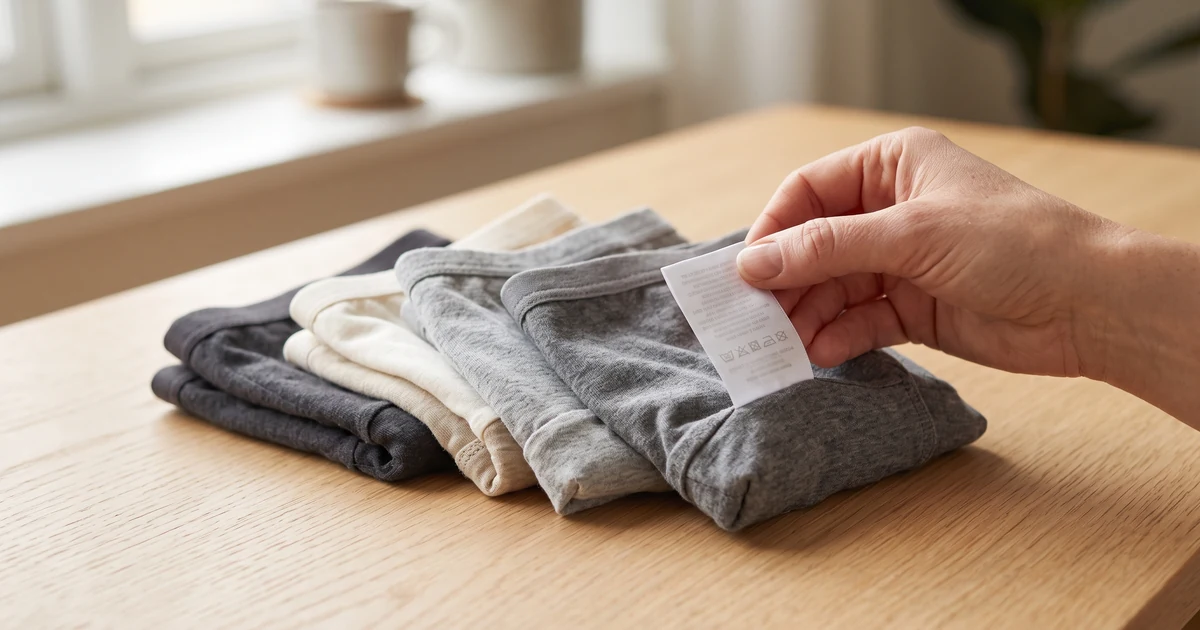
Start with the label and the brand's website. Look for an OEKO-TEX STANDARD 100 certification or a published, dated lab report. If the brand was named in a settlement, check whether the pair was bought before or after the company changed its sourcing, since newer stock is not the product that was tested. Washing a new garment before first wear is good general practice and can reduce surface residues, though it will not strip out a treatment bonded into the fibers.
This is where FiberCheck helps. Instead of decoding a fabric tag yourself, you scan the label and the app flags chemicals of concern, including PFAS, formaldehyde, azo dyes, and BPA, so you can make a quick, informed call on a pair you own or one you are about to buy. It turns "I have no idea what is in this" into a two-second check.
Before you buy your next pair, scan the label with FiberCheck and see what is actually in the fabric.
Try FiberCheck FreeThe Bottom Line
Most period underwear is safe to wear, and the category is not recalled, but PFAS testing turned the question into a per-product one. Lab panels found detectable fluorine in a majority of pairs tested and none in others, the Thinx and Knix settlements pushed two big brands to drop the chemicals without admitting fault, and the dose you would absorb through skin remains poorly quantified. The practical move is not to panic or avoid the category, but to favor OEKO-TEX STANDARD 100 certification, distrust bare "PFAS-free" slogans, take extra care during pregnancy, and check the specific pair rather than the headline.
Scan Your Clothes — Know What You're Wearing
FiberCheck analyzes clothing labels and fabric photos instantly using AI, giving you health scores, chemical breakdowns, and safety insights in seconds. Make safer choices for your family.
Frequently Asked Questions
Is period underwear safe to wear?
For most people, yes. The garment is not recalled, and no health agency advises against it. The caveat is that lab testing has found PFAS in some pairs from some brands, so safety depends on the specific product. Choosing a certified pair and checking the label, rather than avoiding the category, is the practical move.
Does Thinx still contain PFAS?
As part of its roughly 5 million dollar settlement, Thinx agreed to change its marketing and to take steps so PFAS are not intentionally added to its products, while denying any wrongdoing. That means pairs sold after the settlement are not the same as the ones tested years earlier. If you want certainty for a specific pair, look for current third-party testing or scan the label.
Is Temu or Shein period underwear safe?
There is no public lab evidence singling out those marketplaces, but ultra-low-cost cross-border listings rarely come with a recognized certification or a verifiable chemical disclosure. For a product worn against the skin, that lack of transparency is a reason to be cautious and to favor certified brands or to check the fabric yourself.
How do I know if my period underwear has PFAS?
You cannot tell by touch. Look for an OEKO-TEX STANDARD 100 label or a published lab report from the brand, and check whether the brand was named in a PFAS settlement. To skip the guesswork, scan the fabric label with FiberCheck, which flags PFAS and other chemicals of concern.
Is period underwear safe to use during pregnancy?
It can be, with a little extra care. Decreased fetal and infant growth is one of the PFAS endpoints with stronger evidence, so pregnancy is a sensible time to choose OEKO-TEX certified pairs, avoid vague "stain-proof" claims, and skip uncertified bargain listings. When in doubt, check the label and ask your provider about your overall exposure.
Disclaimer: This article is for informational purposes only and does not constitute medical advice or replace consultation with a qualified healthcare provider. It summarizes publicly available laboratory testing, court-settlement reporting, and health guidance as of June 2026. References to the Harvard T.H. Chan School of Public Health, the U.S. Agency for Toxic Substances and Disease Registry (ATSDR), the NIH, and named brands are for informational attribution; this article is not endorsed by or affiliated with those organizations. A legal settlement is not a court finding of wrongdoing, and the named companies denied the allegations. FiberCheck is a clothing-analysis tool and is not a substitute for professional medical diagnosis, treatment, or laboratory testing.