Nickel Allergy from Clothing: Symptoms, Hidden Sources, and Safer Fabrics [2026]
Reviewed against publicly available guidance from the Cleveland Clinic, the NHS, and the American Academy of Dermatology, plus peer-reviewed dermatology literature current as of June 2026. Not medical advice.
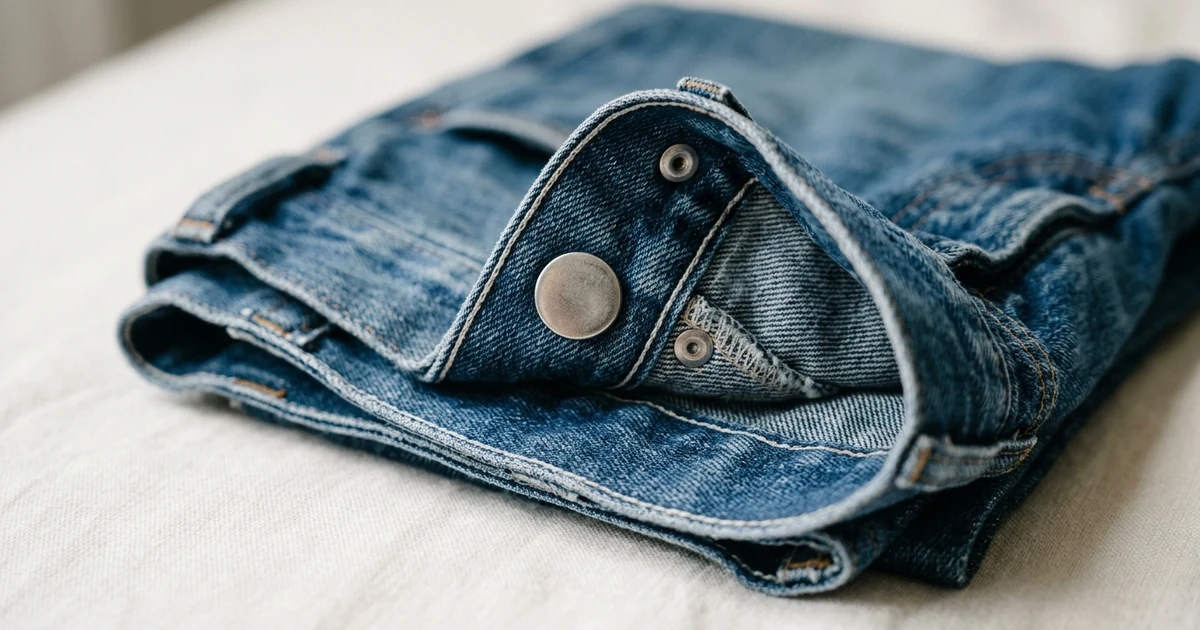
Here is the reassuring part first. Most of your closet is not the problem. If you get an itchy ring of rash on your skin from clothes, the usual culprit is not the cotton, the polyester, or the dye. It is a small piece of metal touching your skin all day, and nine times out of ten it is the button on the front of your jeans.
Nickel is the most common contact allergen there is. According to Cleveland Clinic, nickel allergy is the most common type of contact dermatitis related to metal. The good news is that once you know where the nickel actually lives, the fix is usually simple and you almost never have to throw a garment away. This post walks you through what a reaction looks like, where the metal hides, who needs to be most careful, and how to build a wardrobe that does not fight your skin.
Most Clothing Is Fine, but Nickel Is the Exception Worth Knowing
Let me set expectations honestly. You are not allergic to "clothes." Fabric on its own does not contain free nickel. The reaction comes from the metal hardware sewn or riveted into the garment, and from your skin touching that metal, sweating against it, and reacting over hours.
That distinction matters because it changes the fix. If a fabric finish or dye bothered you, you would need a different garment. With nickel, you keep the garment and deal with one small piece of metal. The first thing I check on a new pair of jeans is the back of the button, the part that presses into the belly, because that is where the trouble starts for most people.
What a Nickel Clothing Reaction Actually Looks Like
A nickel reaction is a form of allergic contact dermatitis. According to the NHS, contact dermatitis can make the skin itchy, blistered, dry and cracked, and the same page notes that lighter skin can become red while darker skin can become dark brown, purple or grey. So do not assume "red rash" is the only sign. On deeper skin tones the patch may look brown or violet instead.
The reaction is usually itchy, sometimes weepy or scaly, and it tends to settle in the exact shape of the metal that touched you. That shape is the biggest clue you have.
Where the rash shows up
The location often tells you the source before any test does.
- A round or oval itchy patch just below or around the belly button points straight to a jean button or a metal snap. This is the classic pattern.
- A rash on the lower back near the waistband points to a belt buckle.
- Irritation on the upper back, the sides of the chest, or where a bra band sits points to bra hooks or underwire.
- Itchy, flaky earlobes are a separate clue. They usually mean cheap earrings, but a person who reacts there often reacts to clothing hardware too, because it is the same metal and the same allergy.
If the rash is diffuse, all over wherever the shirt touches, and not shaped like a button or buckle, nickel is less likely and you may be dealing with a fabric finish or dye instead.
How to tell nickel apart from a dye or formaldehyde reaction
The shape and location test is your friend. Nickel reactions are localized to a point of metal contact. A reaction to a fabric finish such as formaldehyde resin, common in wrinkle-free shirts, tends to spread across the whole area the fabric covers, often the underarms, neck, and inner thighs where sweat and friction are highest. If you want to dig into that other pathway, see our guide on formaldehyde in clothing. When in doubt, a dermatologist can patch test you and name the exact allergen, which I cover at the end.
Where the Nickel Is Hiding in Your Wardrobe
Once you start looking, you will see metal everywhere. According to Cleveland Clinic, common nickel-containing clothing items include belt buckles, bra hooks, buttons, snaps and zippers. The American Academy of Dermatology lists the same culprits: belt buckles, bra hooks, and metal buttons, zippers and snaps.
Here is the practical map of your closet:
- Jean buttons and rivets. The single most common source. The button sits against bare skin for hours.
- Snaps and studs. Western shirts, baby onesies, jackets, and work shirts often use metal snaps that press right against the chest or belly.
- Zippers. Metal zipper pulls and teeth on jackets, jeans, and dresses, especially where the pull rests against skin.
- Bra hooks and underwires. Long contact plus heat and sweat, which is exactly the condition that releases more nickel.
- Belt buckles. Pressed into the lower abdomen all day.
- Bag and backpack straps. The buckles and sliders can sit against the shoulder, collarbone, or hip.
- Eyeglass frames. Not clothing, but the same allergy, and a frequent source of a rash on the nose bridge and behind the ears.
One detail that surprises people: brand new jeans tend to release more nickel than ones you have washed and worn many times. A study of blue-jean buttons published on PubMed found that nickel-positive buttons were more common in new jeans than in preworn jeans. So that fresh pair off the shelf is often the worst offender, and an old favorite that no longer bothers you may simply have shed its surface nickel over time.
Before you buy, take ten seconds to scan the garment. The fabric label tells you what the cloth is made of, and the hardware tells you what will touch your skin. You can scan a label and read the material breakdown in seconds with FiberCheck, then do a quick visual check of the button, snap, and zipper yourself. The app reads the fabric label, not the metal, so the hardware is your eyeball job, but together it is a thirty-second habit that saves you a week of itching.
Who Is Most at Risk (and Why Kids and Eczema-Prone Skin Matter)
Nickel allergy is common, and some groups carry more of it than others.
The numbers are striking in children. A systematic review of contact allergy in children, published on NIH PMC, found nickel to be the allergen with the highest prevalence, at 11.9 percent. Among children with atopic dermatitis specifically, the pooled prevalence was even higher at 12.6 percent, and the same review reported nickel sensitization reaching 18.0 percent in the United States. In plain terms, nickel is the top patch-test allergen in kids, and eczema-prone kids carry an even heavier load.
That overlap with eczema matters. Atopic skin has a weaker barrier, so it reacts more readily and the rash is easier to mistake for an eczema flare. If you are dressing a child with sensitive or eczema-prone skin, the metal snaps on clothing deserve real attention. For more on choosing gentle baby clothing, see our guide on baby fabrics and eczema.
Adults are not off the hook either. The American Academy of Dermatology reports that more than 18 percent of people in North America are allergic to nickel, including 11 million children in the United States. People with pierced ears are also more likely to be sensitized, because a piece of nickel sitting inside broken skin is a strong path to developing the allergy in the first place.
What the Rules Actually Require (and What They Miss)
If you live in Europe or buy European brands, there is a real legal limit working in your favor. Under REACH Annex XVII Entry 27, items in direct and prolonged contact with the skin must not release more than a set amount of nickel. According to Intertek, that migration limit is 0.5 micrograms per square centimeter per week, and the release is measured with the standardized EN 1811 test method.
Two things are worth understanding about this rule.
First, it limits how much nickel comes off, not how much nickel is in the metal. A button can be loaded with nickel and still pass, as long as the surface does not release much. That is why coatings and finishes matter, and why a worn coating on an old item can start causing trouble again.
Second, this is a European rule. The United States has no equivalent federal limit on nickel release from clothing fasteners. So an imported garment may meet a high standard or no standard at all, and you cannot tell which by looking. That uncertainty is exactly why a personal check beats trusting the supply chain.
Safer Fabrics, Fasteners, and a Simple Build-Your-Wardrobe Checklist
The honest headline: the fabric is rarely your nickel problem, so choose fabric for overall skin comfort and choose hardware to dodge nickel. For the comfort side, breathable, low-friction materials are kinder to reactive skin in general, and our guide to the best fabrics for sensitive skin covers that in depth.
For the nickel side, here is the working checklist:
- Prefer button-free where you can. Pull-on, elastic-waist, and drawstring bottoms remove the belly-button button entirely. This is the easiest win for anyone who reacts at the waistband.
- Choose plastic, coated, or certified hardware. Cleveland Clinic suggests using plastic belt buckles, bra hooks, buttons, snaps and zippers. Plastic, coated, painted, or certified nickel-free metal will not release free nickel.
- Cover the offending metal. You do not have to bin a garment. The American Academy of Dermatology recommends coating the metal item with clear nail polish to create a barrier, while noting that the polish needs reapplying often. An iron-on patch or a stitched fabric cover behind a jean button works for longer.
- The nail polish trick is backed by data. The blue-jean button study on PubMed found that one clear coat of nail polish prevented nickel release through two wash and dry cycles in testing. Reapply after a couple of washes and you are covered.
- For kids, go hardware-light. Favor tagless, snap-light, pull-on clothing, especially for eczema-prone children. Fewer metal points means fewer reaction sites.
How to Check a Garment Before It Touches Your Skin
Building a low-nickel wardrobe comes down to a short routine you do at the rack or before the first wear.
Read the label
Know the fabric so you can judge overall comfort and breathability. Reading labels well is a skill in itself, and our guide on reading clothing labels for health breaks it down.
Inspect the hardware
Look at the button back, snaps, zipper pull, and any buckle that will sit on skin. If it is bright bare metal that presses against your body, treat it as suspect. Plastic or coated parts are safer bets.
Pre-coat or swap if needed
New jeans you love but cannot trust? A clear barrier coat on the button back before you wear them is two minutes of insurance.
See a dermatologist for certainty
If the rashes keep coming and you cannot pin the source, a patch test names the exact allergen. That turns guesswork into a plan.
FiberCheck fits into step one. Scan a clothing label and you get a fast, plain-language read of the materials so you are not squinting at a tiny tag in bad store lighting. To be straight with you, the app reads the fabric label and material composition. It does not chemically detect nickel or metal, so the hardware check in step two stays your job. Used together, the label scan plus a ten-second hardware glance is the whole routine.
The Bottom Line
Most clothing is safe, nickel is the predictable exception, and the exception is manageable. Choose button-free where you can, swap or coat the metal that touches you, pay extra attention for kids and eczema-prone skin, and check before you buy. Make the label scan automatic with FiberCheck and pair it with a quick look at the hardware. Your skin will thank you.
Scan Your Clothes — Know What You're Wearing
FiberCheck analyzes clothing labels and fabric photos instantly using AI, giving you health scores, chemical breakdowns, and safety insights in seconds. Make safer choices for your family.
Frequently Asked Questions
Can clothes really cause a nickel allergy rash, or is it just the fabric?
Both can irritate skin, but a true nickel rash comes from the metal hardware, not the fabric. Buttons, snaps, zippers, bra hooks, and buckles release small amounts of nickel that your skin reacts to over hours of contact. If the rash is shaped like a button or buckle and sits exactly where metal touches you, nickel is the likely cause.
Why do my jeans leave a rash around my belly button?
That round, itchy patch is the classic sign of a nickel reaction to the jean button, which presses into bare skin all day. New jeans tend to release more nickel than well-worn ones, so a fresh pair is often the worst. A clear barrier coat on the button back, or switching to a pull-on style, usually solves it.
Is there such a thing as truly nickel-free clothing?
The fabric itself contains no free nickel, so any garment with plastic, coated, or certified nickel-free hardware is effectively nickel-free for your skin. The catch is that you often cannot tell what a metal button is made of by looking. In the EU, REACH Annex XVII limits how much nickel skin-contact items may release, but the United States has no equivalent rule, so imports vary.
How do I stop a metal button from irritating my skin without throwing the garment out?
Cover the metal so it cannot touch you. The American Academy of Dermatology recommends coating the item with clear nail polish, reapplied as needed, and a blue-jean button study found one coat blocked nickel release through two wash cycles. An iron-on patch or stitched fabric cover behind the button lasts longer.
Are children more likely to react to nickel in clothing than adults?
Nickel is the top patch-test allergen in children, and kids with eczema carry an even higher rate of sensitization. Their skin barrier is more fragile, so metal snaps and buttons deserve real attention. Favor pull-on, snap-light, tagless clothing for sensitive young skin.
Medical Disclaimer: This article is for informational purposes only and does not constitute medical advice or replace consultation with a qualified healthcare provider. It summarizes publicly available guidance from the Cleveland Clinic, the NHS, and the American Academy of Dermatology, plus peer-reviewed dermatology literature current as of June 2026. References to those organizations are for informational attribution; this article is not endorsed by or affiliated with them. Allergic contact dermatitis is a medical condition. If you have persistent rashes, broken skin, signs of infection, or any other clinical concern, consult a board-certified dermatologist. FiberCheck is a clothing-analysis tool and is not a substitute for professional medical diagnosis, treatment, or laboratory testing; it reads fabric labels and does not chemically detect nickel or metal.