Is Bamboo Fabric Safe? The Truth About Bamboo, Rayon & Viscose
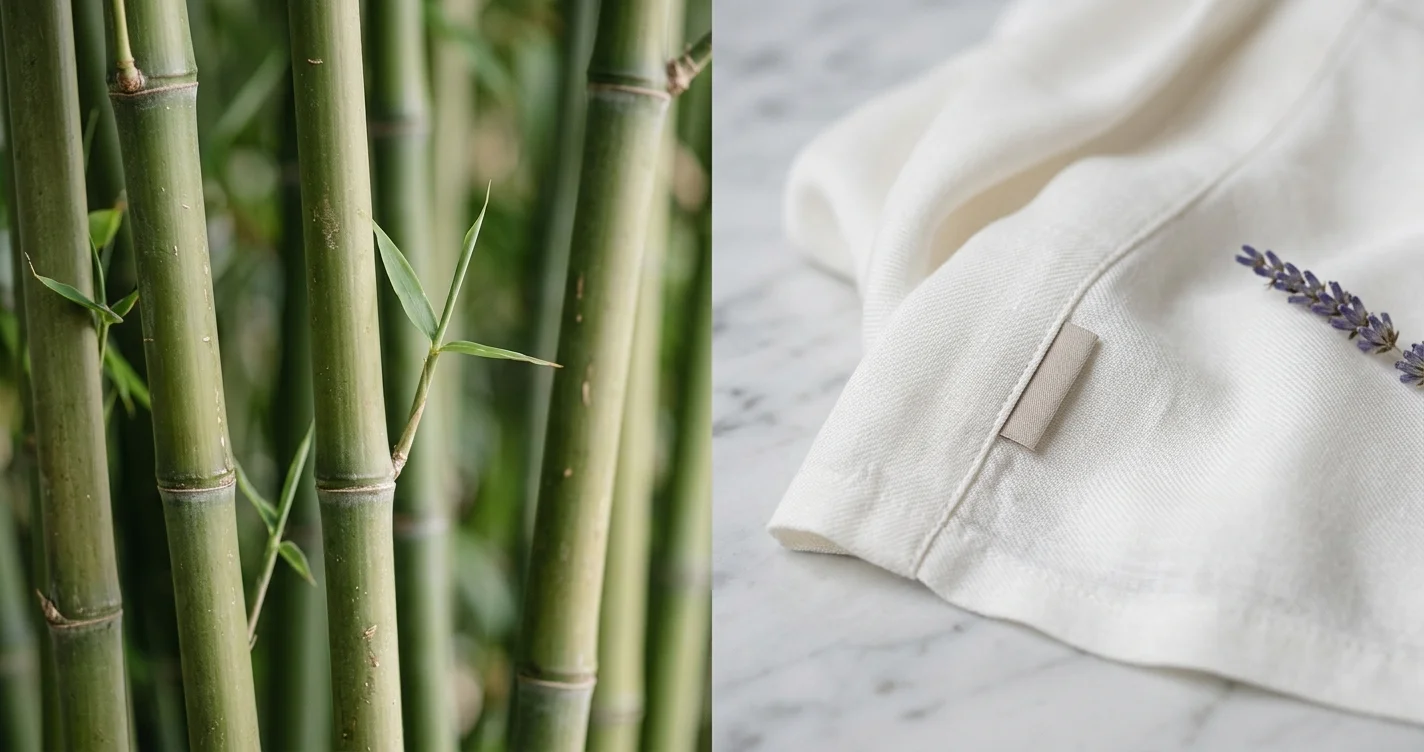
TL;DR — Key Takeaways
- "Bamboo fabric" is almost never raw bamboo — it's chemically processed rayon or viscose made from bamboo pulp.
- The viscose process uses carbon disulfide (CS2) and sodium hydroxide, both of which can leave trace residues in the finished fabric.
- The FTC has fined major retailers (Amazon, Sears, Macy's) for falsely labeling rayon as "bamboo."
- Bamboo lyocell (closed-loop process) is significantly safer than bamboo viscose.
- OEKO-TEX or GOTS certification is the only reliable way to verify the safety of bamboo textiles.
Bamboo fabric has become one of the most heavily marketed textiles in the world. It's advertised as eco-friendly, naturally antibacterial, and incredibly soft. But there's a critical disconnect between the bamboo plant growing in the field and the "bamboo" fabric hanging in your closet. Understanding that gap is essential — because what's sold as bamboo is almost always a chemically processed synthetic, and the safety implications are real.
Why Bamboo Fabric Is Everywhere
Walk through any department store or browse any online retailer, and you'll find bamboo sheets, bamboo socks, bamboo activewear, and bamboo baby clothes. The marketing is consistent and compelling: "eco-friendly," "naturally antibacterial," "hypoallergenic," "silky soft." The global bamboo textile market is projected to reach $98 billion by 2030, driven largely by consumers who associate the word "bamboo" with sustainability and health.
And to be fair, the bamboo plant itself deserves much of that reputation. Bamboo is one of the fastest-growing plants on Earth, capable of growing up to 36 inches in a single day. It requires no pesticides, minimal water compared to cotton, regenerates from its own roots without replanting, and absorbs more carbon dioxide than equivalent stands of trees. As a raw material, bamboo is genuinely sustainable.
But here's the problem: the bamboo plant and bamboo fabric are not the same thing. The plant's eco-credentials don't automatically transfer to the textile made from it. What happens between harvest and hanger is where the safety questions begin — and where most consumers are being misled.
Bamboo Plant vs. Bamboo Fabric — They're Not the Same
Raw bamboo is a hard, woody grass. It doesn't naturally have the silky, drapey quality of the "bamboo" fabrics you find in stores. To turn rigid bamboo stalks into soft, wearable fiber, the plant must undergo intensive chemical processing. The bamboo is chipped, pulped, dissolved in chemical solvents, extruded through spinnerets, and reconstituted as regenerated cellulose fiber. The result is rayon — a semi-synthetic material that retains virtually none of the original plant's structure or properties.
This means most "bamboo" clothing is actually rayon made from bamboo — not bamboo itself. The antibacterial, hypoallergenic properties touted in marketing are properties of the raw bamboo plant, not of the chemically processed rayon fiber. Multiple studies have confirmed that bamboo viscose shows no inherent antibacterial activity unless specifically treated with antimicrobial agents during finishing.
FTC Crackdown on False "Bamboo" Labels
Between 2009 and 2013, the U.S. Federal Trade Commission fined Amazon, Sears, Leon Max (BCBG), Macy's, and other major retailers for labeling rayon products as "bamboo." Penalties totaled over $1.5 million. The FTC now requires that fabrics made through the viscose process be labeled "rayon made from bamboo" — not simply "bamboo." Despite this, many smaller brands and international sellers continue to use misleading "100% bamboo" labels.
How Bamboo Fabric Is Actually Made
There are three ways to turn bamboo into textile fiber. The method used determines everything — from chemical safety to environmental impact to how the fabric feels against your skin.
1. Viscose/Rayon Process (Most Common — ~95% of Bamboo Fabrics)
This is the process behind almost every "bamboo" product you've ever purchased. Bamboo chips are soaked in sodium hydroxide (caustic soda/lye) to create a cellulose pulp. That pulp is then dissolved in carbon disulfide (CS2) — a volatile, toxic solvent — to form a viscous solution called viscose. The viscose is forced through fine spinnerets into a sulfuric acid bath, which coagulates it into solid filaments. These filaments are washed, dried, and spun into fiber ready for weaving or knitting.
The chemical concerns are significant. Carbon disulfide is neurotoxic — occupational studies have linked chronic CS2 exposure in viscose factory workers to nerve damage, cardiovascular disease, and reproductive harm. While the finished fabric contains far lower concentrations than factory air, solvent residues can and do remain in the final product, particularly in fabrics that haven't been thoroughly washed during finishing.
Environmentally, the viscose process is also problematic: it generates toxic wastewater, the CS2 recovery rate is typically only 50-70%, and the remaining solvent is released into the atmosphere or waterways near production facilities.
2. Lyocell Process (Safer Alternative)
The lyocell process uses N-methylmorpholine N-oxide (NMMO) — a non-toxic organic solvent — to dissolve bamboo cellulose directly. The key difference: NMMO is recovered and recycled in a closed-loop system with a solvent recovery rate of 99.7%. This means virtually no chemical waste enters the environment, and the finished fiber contains minimal solvent residue.
Brands using this process include Tencel (by Lenzing AG) and Monocel. The resulting fiber is soft, breathable, biodegradable, and genuinely low-chemical. The downside: lyocell bamboo is significantly more expensive to produce than viscose bamboo, which is why it represents only a small fraction of the bamboo fabric market.
If you see "bamboo lyocell" or "Tencel Lyocell from bamboo" on a label, you're looking at the safer option.
3. Mechanical Processing (Rare)
In theory, bamboo can be processed mechanically — the stalks are crushed, and natural enzymes break down the cell walls to extract individual fibers. This is similar to how flax is processed into linen. The result is bamboo linen — a coarse, textured fabric with minimal chemical involvement.
In practice, this method is almost never used for commercial clothing. The resulting fiber is rough, difficult to spin into fine yarn, and far too expensive to compete with viscose. If you encounter genuine mechanically processed bamboo, it will feel more like burlap than silk. Almost no commercial clothing on the market uses this method.
Chemical Residues — What Stays in the Fabric?
The central safety question with bamboo fabric is simple: after all that chemical processing, what's left in the finished textile? The answer, according to a landmark 2018 report by the Changing Markets Foundation, is concerning. Their investigation found that viscose production facilities worldwide were discharging toxic chemicals — including carbon disulfide, zinc, and sodium hydroxide — into surrounding communities, and that finished viscose fabrics frequently contained detectable levels of processing chemical residues.
Carbon Disulfide (CS2)
A volatile, neurotoxic solvent central to the viscose process. Trace residues can remain in finished bamboo viscose fabric. Classified as a reproductive toxin and neurotoxin by occupational health agencies. Long-term, low-level skin exposure effects on consumers are still being studied.
Sodium Hydroxide (Lye)
A highly caustic chemical used to dissolve bamboo pulp. Residual sodium hydroxide in fabric can increase the pH of the textile surface, potentially irritating sensitive skin, causing dryness, or triggering contact dermatitis in susceptible individuals — especially babies and people with eczema.
The difference between certified and uncertified bamboo viscose is measurable. Independent testing has shown that OEKO-TEX certified bamboo viscose contains significantly lower levels of residual chemicals than uncertified equivalents, because the certification process requires thorough washing and sets strict limits on over 350 harmful substances. Learn more about harmful chemicals hiding in your clothes.
The Bottom Line on Residues
Certified bamboo viscose (OEKO-TEX or GOTS) has been tested and verified to contain safe levels of residual chemicals. Uncertified bamboo viscose — especially from fast-fashion brands and unregulated marketplaces — has no such guarantee. The label alone won't tell you which one you're getting. Certification is the only reliable signal.
👆 Try it yourself — Scan your own clothes with FiberCheck (Free)
Bamboo vs. Cotton vs. Organic Cotton — Full Comparison
How does bamboo stack up against cotton in terms of safety, sustainability, and everyday wearability? This comparison covers the four main options you'll encounter when shopping.
| Factor | Bamboo Viscose | Bamboo Lyocell | Conventional Cotton | Organic Cotton (GOTS) |
|---|---|---|---|---|
| Chemical Processing | Heavy — CS2, NaOH, sulfuric acid | Minimal — closed-loop NMMO solvent | Moderate — bleaching, dyeing, finishes | Low — restricted chemical inputs |
| Environmental Impact | High — toxic wastewater, air pollution | Low — 99.7% solvent recovery | High — pesticides, heavy water use | Low — no pesticides, 91% less water |
| Softness | Very soft, silky drape | Very soft, smooth hand feel | Moderate — varies by quality | Soft — improves with washing |
| Breathability | Good — moisture-wicking | Excellent — superior moisture management | Good — naturally breathable | Good — naturally breathable |
| Certifications Available | OEKO-TEX (when tested) | OEKO-TEX, FSC, EU Ecolabel | OEKO-TEX, BCI | GOTS, OCS, OEKO-TEX, USDA Organic |
| Safety Rating | Moderate (if certified) | High | Moderate | High |
| Price Point | $ — Low to moderate | $$ — Premium | $ — Low | $ — Moderate |
The table makes one thing clear: the safest bamboo option (lyocell) competes directly with GOTS organic cotton on safety and sustainability, while the most common bamboo option (viscose) carries risks that are on par with — or worse than — conventional cotton. Read our full organic cotton comparison.
Is Bamboo Safe for Babies?
This is one of the most common questions parents ask — and the answer depends entirely on the processing method. Baby skin is approximately 30% thinner than adult skin and absorbs substances at a significantly higher rate. What might be a negligible chemical residue for an adult can be a meaningful exposure for an infant wearing the same fabric for 16+ hours a day.
Bamboo fabric itself can be an excellent choice for babies when it's the right type. Lyocell-processed bamboo is soft, temperature-regulating, and moisture-wicking — ideal properties for infant comfort. But the vast majority of "bamboo" baby clothes on the market are viscose, and without OEKO-TEX Standard 100 Class I certification (the strictest class, designed specifically for baby products), there's no guarantee that chemical residues are within safe limits.
Safe for Babies
- Bamboo lyocell — closed-loop, minimal chemical residue
- OEKO-TEX Standard 100 Class I certified bamboo viscose
- GOTS-certified bamboo blends with organic cotton
Avoid for Babies
- Generic "bamboo" from fast-fashion brands with no certification
- Uncertified bamboo viscose — unknown chemical residue levels
- Brightly dyed bamboo without dye safety certification
For a comprehensive look at fabric safety for infants, see our complete baby clothing safety guide and our analysis of polyester in baby clothing.
How to Buy Genuinely Safe Bamboo Products
If you want to enjoy the softness and comfort of bamboo without the chemical risks, follow these five steps every time you shop.
Read the Label Carefully
Look for specific fiber names: "bamboo lyocell," "Tencel Lyocell from bamboo," or at minimum "rayon made from bamboo." If the label says just "bamboo" or "100% bamboo," it's almost certainly viscose — and the brand may be violating FTC labeling requirements. Learn how to decode clothing labels.
Check for Certifications
OEKO-TEX Standard 100 verifies the finished product is free from harmful levels of 350+ substances. GOTS certification covers the entire supply chain from farm to garment. FSC certification confirms the bamboo was sustainably sourced. Ideally, look for products carrying at least two of these certifications.
Research the Brand
Does the brand disclose which processing method they use (viscose vs. lyocell)? Do they name their fiber supplier? Transparent brands will tell you where their bamboo is sourced and how it's processed. If a brand's website says "bamboo" without any specifics about manufacturing, that's a red flag.
Scan with FiberCheck
Point your phone camera at any clothing label, and FiberCheck's AI instantly analyzes the fabric composition, identifies the fiber type (viscose, lyocell, or blend), calculates a safety score, and flags potential chemical risks. No guesswork — just data-driven clarity in seconds.
When in Doubt, Choose Organic Cotton
If you can't verify the processing method or certification of a bamboo product, GOTS-certified organic cotton is a reliably safe alternative with transparent supply chains and strict chemical limits. See our organic cotton guide.
The Bottom Line
Bamboo fabric isn't inherently dangerous — but it isn't inherently safe, either. The word "bamboo" on a label tells you almost nothing about how the fabric was made or what chemicals it may contain. The vast majority of bamboo clothing is viscose rayon produced through a chemical-intensive process that leaves trace residues in the finished product. Bamboo lyocell is the genuinely safer and more sustainable option, but it represents a small fraction of the market. Your best defense is to read labels carefully, look for OEKO-TEX or GOTS certification, and use tools like FiberCheck to verify what you're actually wearing. Don't let marketing language substitute for verifiable safety.
Scan Your Clothes — Know What You're Wearing
FiberCheck analyzes clothing labels and fabric photos instantly using AI, giving you health scores, chemical breakdowns, and safety insights in seconds. Make safer choices for your family.
Frequently Asked Questions
Is bamboo fabric actually eco-friendly?
The bamboo plant itself is highly sustainable — it grows rapidly without pesticides and requires very little water. However, the viscose manufacturing process used to turn bamboo into fabric is chemically intensive, involving carbon disulfide and sodium hydroxide. Only bamboo lyocell, which uses a closed-loop solvent recovery system, can genuinely be called eco-friendly. Look for FSC-certified bamboo sourcing combined with lyocell processing for the most sustainable option.
Is bamboo safe for sensitive skin?
Bamboo lyocell is excellent for sensitive skin due to its smooth fiber structure, natural moisture-wicking properties, and minimal chemical residue from the closed-loop manufacturing process. However, bamboo viscose — which accounts for roughly 95% of bamboo fabrics on the market — may contain trace chemical residues from processing that can irritate sensitive skin. Always check for OEKO-TEX Standard 100 certification to ensure safety.
What's the difference between bamboo and bamboo rayon?
They're often the same thing. 'Bamboo' on a clothing label typically means bamboo rayon or bamboo viscose — a fiber made by chemically dissolving bamboo pulp and regenerating it into fiber. The FTC requires that this fabric be labeled 'rayon made from bamboo,' not simply 'bamboo.' True mechanical bamboo fiber (bamboo linen) is extremely rare in commercial clothing. If a label says just 'bamboo,' it is almost certainly rayon.
Is bamboo better than cotton?
It depends on which bamboo and which cotton you're comparing. Bamboo lyocell is softer, more breathable, and more sustainable than conventional cotton. But bamboo viscose, while soft, carries chemical processing concerns that conventional cotton doesn't. Meanwhile, GOTS-certified organic cotton is arguably safer and more transparent than most bamboo fabrics. The best choice depends on your priorities: softness, safety, environmental impact, or price.
How can I tell if my bamboo clothes are safe?
Check the care label for specific fiber names — 'bamboo lyocell' or 'Tencel Lyocell from bamboo' indicates safer processing, while 'rayon made from bamboo' or 'bamboo viscose' means conventional chemical processing was used. Look for OEKO-TEX Standard 100 or GOTS certification marks. You can also scan the label with the FiberCheck app to get an instant safety analysis and chemical risk assessment.
Disclaimer: This article is for informational purposes only and does not constitute medical or safety advice. The information provided is based on publicly available research, regulatory actions, and industry reports as of April 2026. If you experience skin irritation or allergic reactions from any textile product, consult a qualified dermatologist. FiberCheck is a fabric analysis tool and is not a substitute for professional medical guidance.