Are Second-Hand Clothes Actually Safer Than New? [2026]
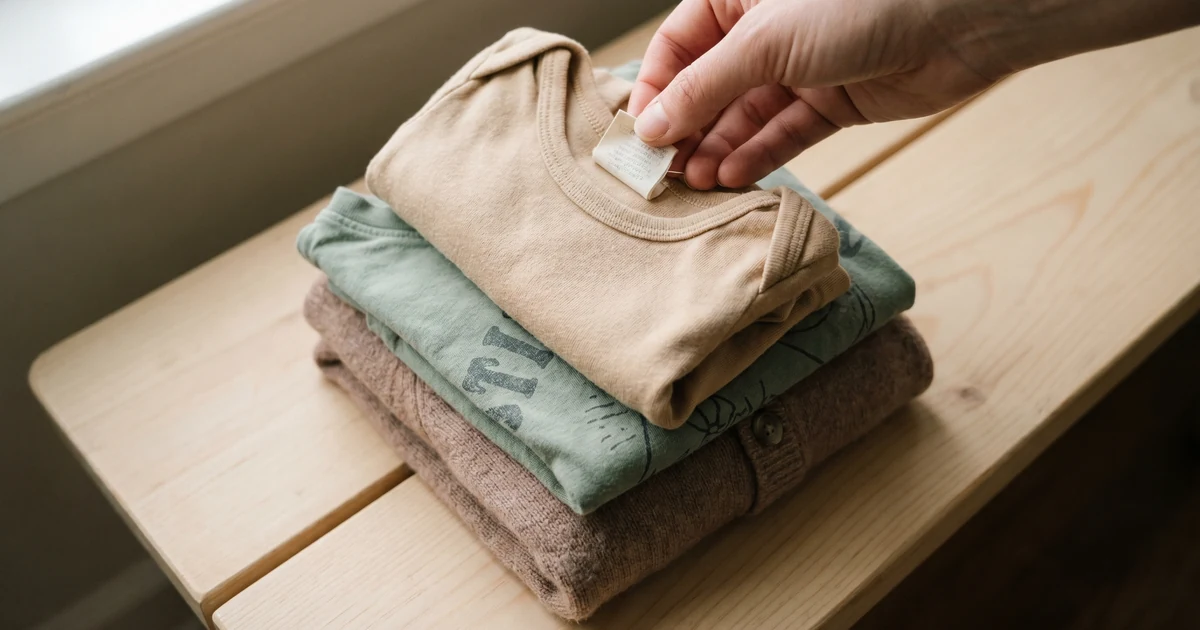
The assumption is almost universal among conscious shoppers: thrifted clothes are safer. The logic feels solid. New clothes come loaded with factory chemicals. Used clothes have been washed a hundred times. Surely all that formaldehyde and dye residue is long gone by the time you pull that flannel shirt off a rack at Goodwill.
The reality is more complicated. Used clothing is often safer than brand-new fast fashion, but "often" is not the same as "always." Three specific risks can survive years of washing: lead in vintage prints, PFAS from stain-resistant treatments, and biological contaminants. If you're thrifting for babies or picking up pre-1990 pieces, those risks are worth taking seriously.
TL;DR - Key Takeaways
- Used clothing usually has lower chemical load than new fast fashion -- but "usually" has exceptions.
- Three risks survive washing: lead in old graphic prints, PFAS in legacy stain treatments, and biological hazards.
- Babies need stricter rules: skip pre-1990 graphic prints, padded sleep items of unknown origin, and cracking prints.
- A hot wash and hot dry cycle handles biological risk; chemical risk requires knowing the garment's era and finish.
What Washing Actually Removes
Many surface finishing chemicals are water-soluble. Much of the residual formaldehyde washes out in the first hot cycle; ISO 6330 (the international standard for textile laundering methods) is the reference methodology for this testing. Dye fixatives, sizing agents, and optical brighteners wash out progressively across the first few cycles.
By the time a garment has been laundered a dozen times, surface residues are largely gone. What doesn't wash out falls into two categories: substances chemically bonded to the fiber, and substances physically embedded in the fabric structure.
Bonded substances include PFAS. These are added as stain-resistant or water-repellent finishes under trade names like Scotchgard. 3M announced the PFOS/PFOA Scotchgard phase-out in May 2000 and completed it between 2000 and 2002. Those legacy formulations are chemically stable in ways that make them resistant to standard laundry cycles.
Embedded substances include heavy metals in plastisol ink. The pigments in screen-printed graphics are not a coating on top of the fabric. They are pressed into the weave. Hot washing does not dissolve lead pigments. It redistributes particles at most.
The Vintage Lead Problem
The 1978 lead paint ban was issued by CPSC under the Consumer Product Safety Act of 1972 (see 16 CFR Part 1303); the 2008 CPSIA later tightened total-lead limits for children's products. What most people don't know: the 1978 prohibition didn't extend immediately to textile inks. Pre-1990s plastisol screen-print inks often contained lead-based pigments, particularly lead chromate yellows and oranges.
A 1980s graphic tee with a bold print may have lead in the ink. Cracked or peeling prints expose fresh ink surface; hand-to-mouth contact is the primary pathway, making children's items the highest concern. You can't identify a lead print by color alone. Age and condition are better proxies: pre-1990 graphic prints with cracking or flaking should not go to babies or toddlers.
Pre-1978 children's items carry a second risk: snaps, buckles, and decorative elements may have used lead-based paint coatings. Any item you cannot confidently date to post-1990 is not worth the uncertainty for babies.
The PFAS Legacy in Stain-Treated Clothing
3M's Scotchgard used PFOS-based chemistry. After 3M's 2000 voluntary phase-out, outdoor brands, children's rainwear, and workwear from that era commonly had PFOS or PFOA treatments applied at the factory. For background on PFAS persistence and health concerns, see the EPA's PFAS overview.
A fleece jacket from 2000, a child's rain jacket from 1998, a pair of "spill-proof" khakis from 2004: all are candidates for PFAS legacy contamination. Research indicates these compounds persist in textiles and continue leaching into household environments years after manufacture.
PFAS is invisible and odorless; the label may say nothing because treatments are added at mill level. The best proxies are age, category, and finish.
Categories worth extra caution when buying used:
- Children's rainwear made before 2010
- Stain-resistant dress pants and workwear (the "wrinkle-free" and "spill-resistant" language is a tell)
- Outdoor soft shell and fleece from major outdoor brands pre-2015
- Any garment where the fabric feels unusually slick or water-beading after years of use
Biological Risk: The Category That's Actually Solvable
Dust mites, skin pathogens, and in rare cases bedbugs are real risks from used clothing. This is the biological category, and unlike the chemical risks above, it's almost entirely solvable through temperature.
Dust mites die at 60C / 140F. European hot-wash reaches 90C; US machines typically top out around 60C, which is sufficient. Pediatric guidance recommends washing all used clothing before first use.
Bedbugs require sustained heat or cold: 30 minutes in a hot dryer kills all life stages; 0F / -18C for four days (home freezer) works for cold treatment.
For most adults buying used clothing from reputable thrift stores, biological risk is manageable with a single hot wash. The risk profile is higher for items purchased at estate sales or storage unit clearances, padded and quilted items that retain heat and humidity, and items from regions with documented bedbug pressure.
Thrifting for Babies: A Stricter Protocol
Children are more vulnerable: lower body weight means higher dose-per-kilogram, more hand-to-mouth contact, and a thinner skin barrier in infants. Health Canada Recalls and Safety Alerts specifically flags used baby clothing for recalled items that circulate in secondary markets.
Skip these entirely:
- Padded sleep items of unknown origin (sleep sacks, wearable blankets). Safe sleep guidelines already restrict loose bedding, and recalled designs from the 2000s still circulate.
- Pre-1990 items with any graphic print.
- Any item with a snap, buckle, or decorative element that you cannot date post-1978.
- Items with fading, cracking, or peeling prints.
Wash before first use at 60C minimum, dry on high heat. Not just a rinse. A full wash cycle. Check the CPSC recall database before purchasing secondhand baby gear from any category, not just clothing.
For verified sources (family hand-me-downs with known wash history, consignment shops with intake standards), the risk profile is low. The goal is avoiding specific high-risk categories, not all secondhand baby clothing. See also: should you wash new clothes before wearing them and formaldehyde in clothes for the comparison picture on new clothing chemical load.
The 7-Step Thrift-Haul Protocol
This works for adults and children, with the baby-specific rules above layered on top.
Inspect before buying
Look for cracking or peeling prints. Check seams and collar folds for staining. A chemical smell on used clothing is worth noting.
Date the item
US mandatory care labeling started in 1971; pre-1971 garments have none. Pre-1990 items with bold graphic prints warrant lead-pigment scrutiny.
Check the fiber content label
Polyester, nylon, and polypropylene from the stain-resistant treatment era (1990s-2000s) in categories like rainwear and workwear are worth extra attention for PFAS.
Wash hot before wearing
60C minimum for anything going on a child. 40-60C for adult items as a baseline. Not cold, not "gentle."
Dry on high heat for 30 minutes
This kills biological contaminants including bedbug eggs. Air drying in direct sunlight is an acceptable substitute for light garments where heat would damage the fabric.
Inspect again after washing
Cracking prints show differently wet; lifting edges that weren't visible dry are a disqualifier for children's items.
Check certifications still present on labels
A thrifted garment with a legible OEKO-TEX Standard 100 tag was tested to limits on formaldehyde, azo dyes, heavy metals, and pH at time of manufacture. That information still applies.
When Secondhand Is Genuinely Safer Than New
The Greenpeace Detox fashion campaign tested 141 fast-fashion garments and found nonylphenol ethoxylates (NPEs), phthalates, and azo dyes above REACH limits. A new Shein or Temu garment carries all of that fresh factory chemical load: dye fixatives, anti-wrinkle resins, optical brighteners, possibly formaldehyde, possibly PFAS. None of it has been washed out.
A thrifted linen shirt from 2018 with a decade of wash history has essentially zero residual factory finish. For natural fibers like linen, wool, and organic cotton, that means a genuinely clean garment.
The calculus flips for vintage synthetic garments with stain-resistant finishes or pre-1990 items with graphic prints. In those cases, new is safer.
The clearest safe choices: certified new (OEKO-TEX Standard 100 or GOTS) or well-washed used natural fibers with no graphic prints and no stain-resistant finish history. The thrift path is cheaper and usually better for the planet. It just requires the label-reading steps most people skip. Scan any label free at fibercheck.app -- drop a photo of a vintage or thrifted tag and FiberCheck decodes fiber content, flags PFAS-associated finish language, and cross-references the era-specific chemical context.
The Bottom Line
Are second-hand clothes safer than new? Usually yes -- for natural-fiber garments with wash history and no vintage graphic prints. The exceptions are real: pre-1990 graphic-print items with possible lead pigments, legacy stain-treated synthetics with PFAS, and any used baby item that hasn't been washed at 60C. Use the 7-step protocol, apply the baby-specific rules, and verify certification labels when they're present.
Scan Your Clothes — Know What You're Wearing
FiberCheck analyzes clothing labels and fabric photos instantly using AI, giving you health scores, chemical breakdowns, and safety insights in seconds. Make safer choices for your family.
Frequently Asked Questions
Are second-hand baby clothes safe to use?
Yes, with a protocol. Wash at 60 degrees C before first use and dry on high heat. Avoid pre-1990 graphic prints, padded sleep items of unknown origin, and cracking or peeling prints. Hand-me-downs from known sources are low-risk. Pediatric guidance recommends washing all used clothing before first wear.
Does washing remove all chemicals from used clothes?
No, but it removes most surface chemicals. A hot wash removes much of the residual formaldehyde (ISO 6330 is the methodology standard for this testing). What survives: PFAS bonded to fibers and heavy metal pigments in old screen-printed graphics. Repeated washing does not meaningfully reduce PFAS or strip lead from plastisol inks. Temperature handles biological contaminants but not these chemical residues.
Are vintage clothes (pre-1990) more risky?
For specific categories, yes. Pre-1990 graphic screen-printed items may contain lead-based pigments, especially in cracked prints. Pre-1978 children's items may have lead in decorative hardware coatings. The 1978 ban under 16 CFR Part 1303 did not immediately eliminate all lead pathways. Plain-fabric vintage items without prints carry low age-related risk.
Is thrifting safer than buying new from Shein or Temu?
For most garments, yes. A thrifted natural-fiber item with a decade of wash history carries essentially no residual factory load. A new fast-fashion item carries its full load: dye fixatives, anti-wrinkle resins, possibly formaldehyde and PFAS. For baby clothing, CPSC-certified new or well-sourced used items both beat uncertified fast fashion.
Disclaimer: This article is for informational purposes only and does not constitute medical or legal advice. It summarizes publicly reported consumer-safety findings, certification standards, and regulatory frameworks as of May 2026. If you experience a rash, allergic reaction, or any health issue related to clothing, consult a qualified clinician. FiberCheck is a clothing-analysis tool and is not a substitute for professional medical guidance or laboratory testing.