Are Maternity Clothes Safe During Pregnancy? PFAS, Dyes & What to Avoid
Reviewed for accuracy against publicly available guidance from the American College of Obstetricians and Gynecologists (ACOG), the European Chemicals Agency (ECHA), OEKO-TEX, and peer-reviewed literature current as of June 2026. Not medical advice.
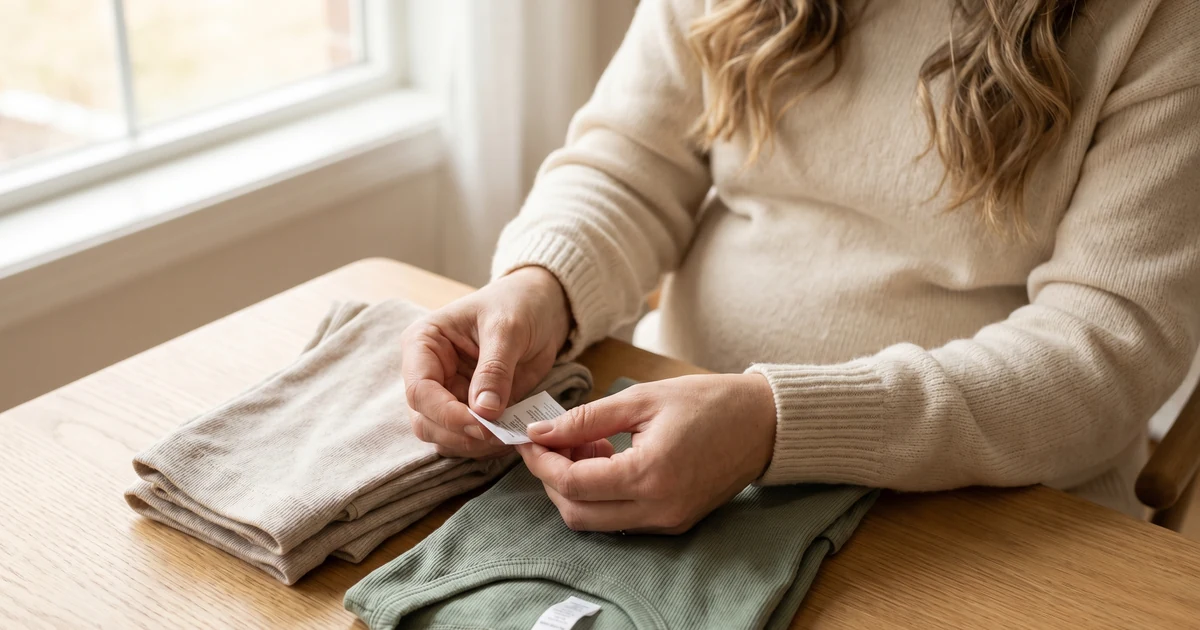
Most maternity clothes are fine. That is the honest headline, and it is worth saying up front so the rest of this reads as information, not alarm. The reason the question comes up at all is that pregnancy changes a few things about how your body meets your wardrobe, and a small set of chemicals used in textile manufacturing are worth knowing by name. This is a calm walk through what is actually known, what regulators limit, and a short checklist you can use before a new garment touches your skin.
Everything below is grounded in published guidance from medical and chemical-safety bodies. Where a number cannot be verified, it is left out on purpose. If you have a specific health concern, your obstetric provider is the right person to ask.
Why Pregnancy Changes the Clothing-Safety Question
Three things shift during pregnancy, and together they explain the heightened interest in fabric.
First, your skin often gets more reactive. Hormonal changes can make skin drier, itchier, and quicker to flare against an irritant it tolerated before. A finish or dye that never bothered you can suddenly leave a rash at the waistband or under a bra band.
Second, you are in more contact with stretch fabrics. Maternity wear leans heavily on elastane and polyester blends to flex with a changing body. These cling, they trap heat and sweat, and they sit against larger areas of skin for longer stretches of the day than a loose cotton tee would.
Third, there is the developing baby. The science here is still incomplete, which is exactly why the major medical bodies take a precautionary stance rather than a panicked one. The American College of Obstetricians and Gynecologists notes that prenatal exposure to certain toxic environmental agents has been associated with outcomes including miscarriage, preterm birth, and neurodevelopmental effects, and it advises reducing avoidable exposures where you reasonably can. According to ACOG, clinicians should consider environmental exposures during prenatal care and help patients lower them. Clothing is one small, controllable piece of that picture.
The Chemicals Worth Knowing About
You do not need to memorize a chemistry syllabus. Four categories cover almost everything that gets raised about clothing.
PFAS
Per- and polyfluoroalkyl substances are used to make fabric water-repellent, stain-resistant, and wrinkle-resistant. They are nicknamed "forever chemicals" because they break down extremely slowly. A peer-reviewed review of PFAS in consumer products reports that these substances can migrate from textiles to the skin through direct contact, sweat, and friction, and that infants and young children are more sensitive to skin absorption because their skin barrier is not fully developed. According to this review in the journal literature, textiles were a frequent high-skin-contact source of PFAS exposure among the product categories studied, with direct skin contact enabling absorption through sweat and friction. For a pregnant wardrobe, this points at performance and "stain-proof" finishes rather than plain fabric.
Formaldehyde finishes
Formaldehyde-based resins are applied to make clothes wrinkle-free, shrink-resistant, or "easy care." They are a documented cause of allergic contact dermatitis. A clinical study of dermatitis from formaldehyde textile resins found real cases that were often diagnosed late because clinicians had a low index of suspicion and labels rarely disclosed the finish. According to the study indexed on PubMed, the rashes tend to show up where fabric presses against skin. Worth flagging on anything sold as wrinkle-free or permanent-press.
Azo and disperse dyes
Some synthetic dyes can release compounds of concern or trigger skin reactions, which is why the EU restricts them in textiles that touch the skin. More on the specific limits below.
Phthalates in prints
Soft plastic prints, the rubbery raised graphics on tees and some appliques, can contain phthalates used as plasticizers. Phthalates are studied as endocrine disruptors. Research on dermal exposure shows clothing can both block and, in some setups, add to skin contact with these compounds, so a giant plastisol graphic pressed against your bump is a reasonable thing to skip. See the dermal-exposure study on PubMed for the measured picture.
The pattern across all four is the same: the concern lives in the finishes and add-ons, not in the basic idea of fabric.
Not sure what is in that maternity haul? Scan a garment with FiberCheck to flag risky fabrics and finishes before it touches your skin. Try it at fibercheck.app.
👆 Try it yourself — Scan your own clothes with FiberCheck (Free)
Is It Safe to Wear Shein or Temu Clothes While Pregnant?
This is the most-searched version of the question, so here is a straight answer. Ultra-fast-fashion garments are not automatically dangerous, but they are the category where quality control on chemical finishes is hardest to verify. As detailed in our guide on whether Shein clothes are safe, independent testing programs over the past few years have repeatedly found garments from some online fast-fashion sellers that exceeded chemical limits set for the EU market. The variability is the real issue. One order can be perfectly clean and the next, of the same item, may not be.
If you already own pieces from these retailers, you do not need to throw them out in a panic. A sensible approach: favor plain, undyed or lightly dyed natural fabrics over heavily treated synthetics, skip the rubbery prints, and wash everything before the first wear.
The same logic applies to maternity-specific lines from these sellers. A basic ribbed cotton maternity tank is a very different risk profile from a glossy water-repellent maternity coat with a printed graphic.
What the Regulators Actually Say
This is where the topic calms down, because limits exist and they are public.
In the European Union, the REACH regulation restricts a list of substances classified as carcinogenic, mutagenic, or toxic for reproduction in clothing and textiles that contact the skin. According to ECHA, the restriction covers groups including formaldehyde, certain azo dyes, phthalates, and heavy-metal compounds, with defined maximum concentrations for skin-contact articles. That means a garment legally sold into the EU has had these substances capped at specified levels.
In the United States, the Consumer Product Safety Commission regulates the safety of clothing and other consumer products, and it has formally sought information on the hazards of PFAS in consumer goods. PFAS in apparel are not yet restricted at the federal level the way the EU restricts CMR substances, so the strongest enforceable textile limits today come from the EU framework rather than a US clothing-chemical cap.
Voluntary certification fills part of the gap, and it is the most useful tool for a shopper. OEKO-TEX STANDARD 100 tests finished textiles against a long list of harmful substances, and it uses stricter product classes for items with more skin contact. According to OEKO-TEX, the strictest limits apply to its baby and toddler class, the tier built for the most sensitive skin. A maternity garment carrying an OEKO-TEX label has been tested against those substance lists, which is more reassurance than an untested item gives you.
None of this means treated clothing is poison. It means meaningful limits exist, certified options exist, and you can choose the tested path when it matters most to you. In its patient-facing guidance, ACOG frames the goal the same way: reduce avoidable exposures with practical steps, not fear.
Safer Fabric Choices for Sensitive Pregnancy Skin
When skin is reactive and contact is constant, simpler fabrics tend to behave better.
Reach for plain natural fibers
Cotton, organic cotton, linen, and Tencel-type fibers are breathable and less likely to carry the heavy performance finishes that cause trouble. "Breathable" is not marketing fluff here; fabric that lets heat and moisture move keeps sweat off your skin, and less trapped sweat means less of any residual chemical sitting against you and less heat rash.
Look for certifications, not just claims
OEKO-TEX STANDARD 100 and GOTS (Global Organic Textile Standard) both involve testing or process requirements, so they carry more weight than a vague "non-toxic" tag with nothing behind it.
Be choosy with synthetics, not afraid of them
Stretch maternity basics need some elastane, and that is fine. The flags are the extras layered on top: water-repellent treatments, stain-proofing, wrinkle-free finishes, and big plastic prints. A plain polyester-cotton legging is a smaller concern than a "performance" one marketed as repelling everything.
If you want a deeper breakdown by fiber, our guide to the best fabrics for sensitive skin ranks the common options and explains why some weaves itch and others do not.
A 5-Step Check Before You Buy or Wear Maternity Clothes
You can run this in under a minute per item.
Read the fiber content and finish claims
Plain natural fiber with no performance finish is the easy win. "Wrinkle-free," "stain-resistant," and "water-repellent" are your cue to look closer.
Check for a certification
An OEKO-TEX or GOTS label means the textile was tested or processed to a published standard.
Inspect the prints
Thick, rubbery, plastic-feeling graphics are the phthalate flag. A simple woven or embroidered design avoids the issue.
Use your nose
A strong chemical or "new plastic" smell on arrival is a reason to wash before wearing, and a reason to think twice about heavy finishes.
Scan it
Take the guesswork out by checking the garment with FiberCheck to flag risky fabrics and finishes before it touches your skin.
For anything that does not pass cleanly, the next step usually solves most of the residual concern.
After You Buy: Washing New Maternity Clothes Before First Wear
Washing new clothes before the first wear is a small habit with real payoff during pregnancy. A first wash removes surface manufacturing residues, loose dye, and some unbound finishing chemicals, and it cuts down the sizing and dust that irritate reactive skin. It will not strip out a finish that is chemically bonded into the fabric, so washing is a reducer, not a magic eraser, which is one more reason to favor lightly treated fabrics from the start.
Use a fragrance-free detergent, skip fabric softener while your skin is sensitive, and run an extra rinse for anything with a strong smell. We walk through the full routine in our guide on washing new clothes before wearing.
The overall takeaway is steady, not scary. Pick mostly plain natural fabrics, prefer tested and certified items where you can, skip the heavy finishes and plastic prints, and wash before first wear. That handles the large majority of the realistic concern, and it lets you spend the rest of your energy on the parts of pregnancy that actually deserve the worry.
Before that new maternity piece touches your skin, take the guesswork out. Scan a garment with FiberCheck to flag risky fabrics and finishes in seconds at fibercheck.app.
Scan Your Clothes — Know What You're Wearing
FiberCheck analyzes clothing labels and fabric photos instantly using AI, giving you health scores, chemical breakdowns, and safety insights in seconds. Make safer choices for your family.
Frequently Asked Questions
Is it safe to wear Shein or Temu clothes while pregnant?
Most pieces are fine, but ultra-fast-fashion is the category where chemical quality control is hardest to verify, and independent testing has periodically found items over EU chemical limits. You do not need to discard what you own. Favor plain natural fabrics over heavily treated synthetics, skip rubbery plastic prints, and wash everything before the first wear.
What fabrics are best for sensitive skin during pregnancy?
Plain, breathable natural fibers like cotton, organic cotton, linen, and Tencel-type fabrics tend to behave best because they let heat and sweat escape and usually skip the heavy performance finishes that trigger rashes. Look for an OEKO-TEX STANDARD 100 or GOTS certification, which means the textile was tested or processed to a published standard.
Can chemicals in clothing affect my baby during pregnancy?
The science is still incomplete, which is why medical bodies recommend reducing avoidable exposures rather than panicking. ACOG advises lowering prenatal exposure to toxic environmental agents where you reasonably can, and chemicals such as PFAS can migrate from treated textiles to skin. Choosing lightly treated, certified fabrics is a sensible, low-effort precaution.
Should I wash new maternity clothes before wearing them?
Yes. A first wash removes surface manufacturing residue, loose dye, and some unbound finishing chemicals, and it reduces the dust and sizing that irritate reactive pregnancy skin. Use a fragrance-free detergent, skip fabric softener while skin is sensitive, and add an extra rinse for anything with a strong chemical smell.
Medical Disclaimer: This article is for informational purposes only and does not constitute medical advice or replace consultation with a qualified healthcare provider. It summarizes publicly available guidance from the American College of Obstetricians and Gynecologists (ACOG), the European Chemicals Agency (ECHA), OEKO-TEX, and peer-reviewed literature as of June 2026. References to these organizations are for informational attribution; this article is not endorsed by or affiliated with them. If you have a specific health concern during pregnancy, consult your obstetric provider. FiberCheck is a clothing-analysis tool and is not a substitute for professional medical diagnosis, treatment, or laboratory testing.