Top 10 Baby Fabrics for Eczema-Prone Babies in 2026
Reviewed for accuracy against publicly available guidelines from the National Eczema Association (NEA) and American Academy of Dermatology (AAD), and against peer-reviewed dermatology literature current as of May 2026. Not medical advice.
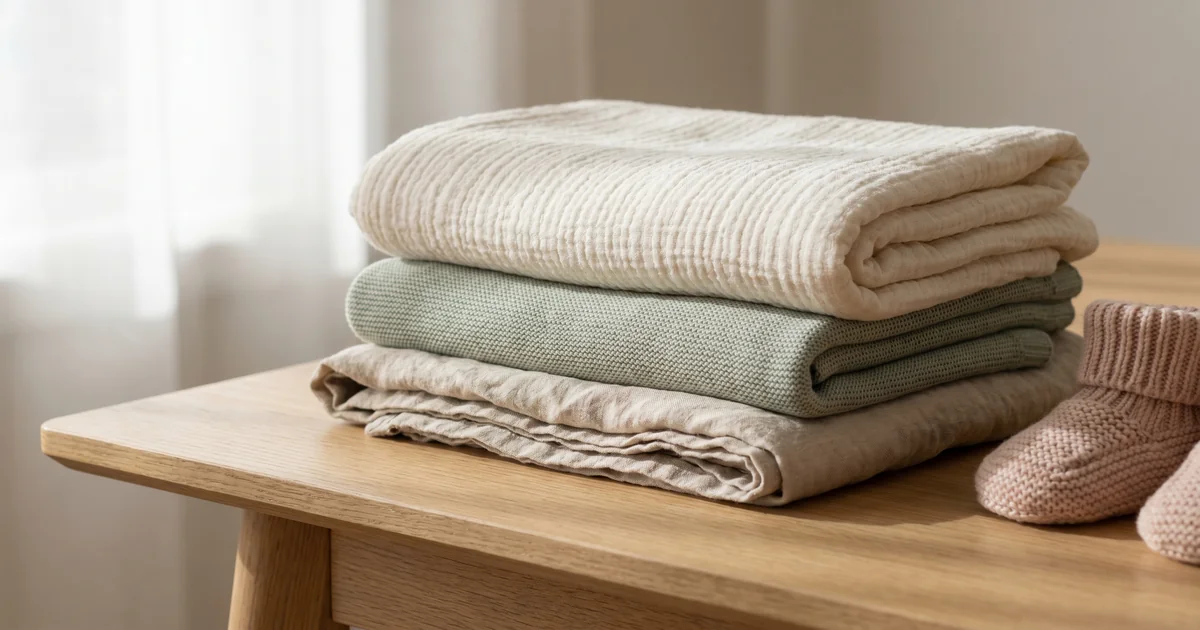
TL;DR: Baby Fabrics for Eczema, at a Glance
- Top three picks: GOTS organic cotton, OEKO-TEX certified bamboo lyocell, and mulberry silk for flare-prone weeks.
- Avoid as base layer: polyester, acrylic, nylon, wool blends with rough scales, and heavy plastisol prints.
- Cotton vs bamboo for eczema: certified versions of both work; the certification on the specific item matters more than the fiber name on the label.
- Two non-fiber habits: wash new clothing before first wear, and stick to a fragrance-free, dye-free detergent on baby loads.
- The shopping rule: filter by certification first (OEKO-TEX Class I or GOTS), then by fiber, then by cut and finish.
Choosing the right baby fabrics for eczema is one of the most practical things a parent can do for an irritated skin barrier. Eczema-prone babies react to friction, heat, sweat, dye residues, and finishing chemistry; the clothes they wear all day sit at the intersection of every one of those triggers. The right fabric calms the cycle. The wrong fabric quietly keeps it going. This 2026 guide ranks the ten fabrics that actually perform for eczema-prone skin, explains why each one helps, and gives you a shopping rule you can apply in any store.
The ranking below draws on peer-reviewed dermatology literature, third-party textile certifications, and guidelines published by the National Eczema Association (NEA) and the American Academy of Dermatology (AAD). It also reflects the practical patterns parents report in eczema communities. For the broader picture on hypoallergenic textiles for sensitive adults and older children, our companion guide on the best fabrics for sensitive skin is a useful sibling article.
Why Fabric Choice Matters So Much for Baby Eczema
Atopic dermatitis is a barrier disease as much as an inflammatory one. The National Eczema Association estimates that atopic dermatitis affects up to 25 percent of children in the United States, with flare triggers including friction, heat, sweat, and contact chemicals from dyes and fabric finishes. Eczema skin loses water transepidermally at a faster rate than healthy skin, reacts more strongly to mechanical abrasion, and is far more sensitive to residual finish chemistry. A baby with eczema can wear the same shirt as a baby without eczema and have a completely different day. The shirt did not change; the skin underneath did. That is why fabric choice, gram for gram, is one of the few variables a parent directly controls every hour the baby is awake.
Three fabric properties matter most for eczema-prone babies. First, breathability: skin that runs cooler and drier flares less. Second, smoothness at the fiber level: short, scratchy fibers and stiff weaves rub micro-tears into already-fragile skin. Third, chemical residue load: the fewer leftover finish compounds, dye fixatives, and antimicrobial treatments touch the skin, the calmer the immune response. A great eczema baby clothes choice scores well on all three. A bad choice (a stiff polyester pajama with a thick plastisol graphic, for example) fails all three at once.
The Top 10 Baby Fabrics for Eczema, Ranked
The ranking below moves from the most consistently safe fabric for an eczema-prone baby to the most situational. Each entry includes a short summary, the practical pros and cons in real-world parent use, and a letter grade so you can compare quickly at the shelf.
1. GOTS-Certified Organic Cotton, Grade: A+
The default first answer to "safest fabric for eczema-prone skin" on a baby is GOTS-certified organic cotton. The GOTS standard restricts pesticides during farming and limits the chemical inputs allowed during processing, meaning the finished garment carries a much lower residue load than conventional cotton. For baby clothing specifically, look for ring-spun or combed cotton with a tighter knit (roughly 200 thread-count equivalent for jersey) rather than a loose open-weave. Breathable, forgiving of repeated hot washes, this fabric suits eczema parents who wash clothing more frequently than average. Brands like Burt's Bees Baby and Hanna Andersson offer GOTS-certified lines with visible certification on the hangtag. Pros: predictable, widely available, cost-effective. Cons: not always the softest straight from the bag (two to three washes help) and the GOTS label only counts when verifiable on the actual hangtag, not just the brand's website.
2. OEKO-TEX Standard 100 Class I Cotton, Grade: A
If GOTS is unavailable, OEKO-TEX Standard 100 Class I cotton is the closest practical second. Class I is OEKO-TEX's strictest tier, designed for skin-contact items used by babies and toddlers. It limits residual formaldehyde to below 20 mg/kg, restricts heavy metals, pesticide residues, and roughly 100 restricted dye substances. It does not certify the agricultural supply chain (so the cotton may still be conventional), but the residue profile on the finished fabric is independently tested by an accredited lab. Brands like Kate Quinn carry both GOTS and OEKO-TEX Class I on most pieces, which provides the strongest combined signal. Pros: clear hangtag, easy to verify, broadly available. Cons: less environmental signal than GOTS and slightly less consistent dye chemistry on printed patterns.
3. Tencel / Lyocell, Grade: A
Tencel lyocell is a regenerated cellulose fiber made from eucalyptus or beech wood pulp using a closed-loop solvent system that recovers over 99 percent of the processing solvent, meaning almost none is rinsed into the finished fabric. The finished fiber is round and smooth at the microscopic level, translating into measurably less friction against inflamed skin than cotton terry or standard jersey. Lyocell also wicks and releases moisture faster than cotton, a concrete advantage for sweat-driven flares where trapped humidity sustains the itch-scratch cycle. Pros: silky feel, strong moisture handling, durable across many washes. Cons: pricier per garment and harder to find in baby-specific cuts than cotton, though availability has improved since 2024.
4. Certified Bamboo Lyocell, Grade: A
Bamboo lyocell uses the same closed-loop process as Tencel but starts from bamboo pulp. Textile-industry moisture-regain testing typically shows bamboo viscose and lyocell hold noticeably more moisture per gram of fiber than standard cotton, which can help on sweat-driven flare days. When the fabric carries an OEKO-TEX Standard 100 certification, it is one of the softest breathable options for an eczema-prone baby. It feels slick rather than fluffy, keeping friction low on rough or broken skin, and its moisture management is a genuine advantage for summer flares. Brands like Aden + Anais (bamboo muslin) and Boody (OEKO-TEX certified bamboo) are commonly cited examples in this category. Pros: very soft, breathable, well suited to hot weather. Cons: certification matters significantly here. See the next entry for the un-certified version.
5. Bamboo Viscose / Rayon (OEKO-TEX Certified), Grade: B+
Most bamboo baby clothes on the market are bamboo viscose or rayon, which is bamboo pulp dissolved using harsher solvents than the lyocell process. The finished fabric is lovely against the skin: cool, drapey, and forgiving. The catch is processing residue. With a credible OEKO-TEX Standard 100 certification, residue limits are independently checked and the fabric is a strong choice for eczema-prone babies. Without a certification, you are trusting an unknown supply chain. Pros: very soft, cool to the touch. Cons: processing-dependent quality and easy to confuse with bamboo lyocell on marketing pages.
6. Mulberry Silk, Grade: B+
Mulberry silk is one of the more studied specialty fabrics for pediatric eczema, though the evidence is mixed. The CLOTHES trial (Thomas et al., 2017), a UK-based pragmatic randomised controlled trial in 300 children with moderate to severe eczema, found no measurable improvement in eczema severity from sericin-free silk garments worn over six months alongside standard care. Some parents still report calmer flare nights with silk in practice, likely because the fiber is smooth, breathable, and temperature-regulating. Pros: gentle hand against inflamed skin, useful as an occasional nighttime base layer for individual responders. Cons: expensive, fragile in the wash, no consistent population-level benefit in trial data, not suitable for everyday playwear. Treat it as a comfort option some babies tolerate well, not a clinically established treatment.
7. Modal, Grade: B
Another regenerated cellulose fiber, modal is usually made from beech pulp and has a noticeably softer hand than standard cotton, with good moisture management. It blends well with cotton in baby basics and is widely used in pajamas and onesies. With a certification it is a calm, breathable fabric for eczema-prone skin. Pros: very soft, holds its softness across many washes. Cons: certification varies widely and some modal blends include enough elastane (over 7 percent) to introduce more friction and heat than the modal itself does.
8. Linen (Softened, Certified), Grade: B
Linen is one of the most breathable natural fibers and excels in hot, humid climates where sweat is the main flare trigger. The downside is texture: untreated linen is stiff and can scratch sensitive skin. Garment-washed or stonewashed linen, especially in lighter weights and certified for chemical content, becomes a strong summer option for eczema-prone babies. Pros: cool, dry, anti-microbial in a gentle way. Cons: texture can be a problem during active flares; best used over a base layer, not on freshly broken skin.
9. Hemp (Soft Weave, Certified), Grade: B-
Durable, naturally breathable, and grown with less pesticide chemistry than conventional cotton, hemp earns a place on this list mostly for its environmental profile. In a soft, certified weave it can work well for older eczema-prone babies, especially in outerwear layers. The honest caveat is texture and availability: most hemp baby clothes on the market run coarser than cotton, and the gentlest hemp blends are still niche. Pros: durable, breathable, environmentally lighter. Cons: texture variation, limited baby-specific selection.
10. Merino Wool (Ultra-Fine, Certified), Grade: B-
Wool is the most divisive entry on this list. Standard wool, with fiber diameters above 25 microns, is one of the more reliable irritants for eczema. Superfine and ultrafine merino at roughly 17.5 microns or below is a different category. The DESSINE crossover trial in young children with mild to moderate atopic dermatitis (Su et al., 2017, British Journal of Dermatology) reported lower SCORAD severity scores at three and six weeks on superfine merino compared with cotton ensembles. Certified, low-mulesing, fragrance-free merino base layers can work for cold climates in babies who already tolerate fine wool. Pros: temperature regulation, breathability, some pediatric trial data in fine grades. Cons: highly grade-dependent; anything coarser than roughly 18.5 microns is generally a poor fit for active eczema.
👆 Try it yourself — Scan your own clothes with FiberCheck (Free)
Cotton vs Bamboo for Eczema: The Honest Comparison
The most-asked question we hear from eczema parents in 2026 is the cotton vs bamboo eczema question. The honest answer is that the comparison only makes sense once you specify which cotton and which bamboo. GOTS organic cotton vs certified bamboo lyocell is a fair fight; conventional cotton vs un-certified bamboo viscose is a different conversation about residues. Cotton wins on track record, predictability, and price. Bamboo wins on softness, slipperiness against irritated skin, and warm-weather moisture handling.
In practice, most eczema-prone babies do well on a wardrobe that mixes both: certified cotton for daily basics washed every other day, and certified bamboo lyocell for hot days, naps, and flare weeks where every degree of cooling matters. Brands like Kate Quinn (GOTS-certified cotton) and Pact (Fair Trade organic cotton) sit in the cotton column. For bamboo, Aden + Anais and Mori (modal-cotton and bamboo blends) are frequently cited by NEA community members. These are examples, not endorsements. The wardrobe failure mode is choosing one fiber while ignoring certification. The wardrobe success mode is treating certification as the first filter and fiber as the second.
Fabrics and Finishes to Avoid for Eczema-Prone Babies
The fabrics most likely to push an eczema-prone baby into a flare are not random. They cluster around the same handful of materials and finishes. Use this list as the second half of the shopping rule: the top ten go in the cart, the items below stay on the rack.
Polyester as the next-to-skin layer
Polyester traps heat and sweat directly against the skin barrier. For eczema-prone babies, that combination is a near-perfect flare trigger. The polyester debate for general health is unsettled, but for active baby eczema the verdict is clear: keep polyester out of the layer that touches the skin. A small share inside an outer layer is not the issue; a 100 percent polyester pajama on bare skin is. We unpack the broader question in our guide on is polyester bad for babies.
Acrylic and nylon
Acrylic blankets and nylon-heavy onesies share polyester's heat and sweat profile and add static electricity, which further irritates a damaged skin barrier. They have a place in outer layers and accessories, but not as base fabric for eczema-prone skin.
Plastisol prints and PVC graphics
Thick, rubbery prints on baby tees are a leading source of phthalate exposure and sit on the skin like a small heat trap. Even on otherwise excellent cotton, a heavy plastisol graphic across the belly is the wrong choice for an eczema baby. Prefer water-based prints, embroidered details, or plain solid colors. Our deep dive on toxic dyes in clothes and what to avoid covers the dye chemistry in detail.
Wrinkle-free and easy-care finishes
Permanent-press, wrinkle-free, and easy-care finishes typically rely on formaldehyde-releasing resins. EU and US regulations cap free formaldehyde levels, but eczema skin does not need any of those resins to stay calm. Consider skipping wrinkle-free baby items and reaching for plain woven or knit cotton instead.
Stain-resistant and waterproof finishes
Stain-resistant and waterproof treatments often involve PFAS chemistry, which has no place against an inflamed infant skin barrier. If you need a waterproof outer layer, choose explicitly PFAS-free products and keep them as outer shells, not skin-contact fabric.
Coarse wool and fuzzy fleeces
Standard wool with thicker scales is one of the most reliably irritating fabrics for eczema. Polyester fleece adds heat trapping and static. Save both for outer layers worn over a certified cotton or lyocell base, never as direct skin-contact fabric during a flare.
How to Shop for Eczema Baby Clothes Without Guessing
The shopping process below works in any store, online or in-person. It collapses the entire baby aisle into a four-step filter you can run in under a minute per item. Treat it as a default routine, not an occasional check.
Filter by certification first
Before you read the fiber content, look for an OEKO-TEX Standard 100 Class I, GOTS, or Made in Green tag on the hangtag or product page. If neither is present, the item is a default skip for eczema-prone skin during flares, even if the fabric name looks good.
Check the fiber content
Aim for at least 95 percent natural or regenerated cellulose fiber (cotton, lyocell, modal, certified bamboo) on any layer touching the skin. Up to roughly 5 percent elastane is fine for waistbands and cuffs. More than that and you are introducing heat and friction the skin barrier does not need.
Inspect prints, finishes, and seams
Skip thick plastisol prints, wrinkle-free finishes, stain-resistant treatments, and rough internal seams. Prefer flat seams, tagless labels, and either solid colors or thin water-based prints. Turn the garment inside out and run a fingertip down the seams; if it catches on your skin, it will catch on a baby's.
Wash new pieces before first wear
Even certified eczema baby clothes benefit from a first wash with a fragrance-free, dye-free detergent before a baby wears them. The first wash removes loose dye, residual finish chemistry, and packaging residue. Skip fabric softener and dryer sheets entirely on baby laundry; they coat fibers in chemistry your eczema baby's skin will absolutely notice.
Building a Practical Eczema Baby Wardrobe
You do not need a closet full of premium fabrics. A working eczema-prone baby wardrobe is small, certified, and rotated hard. A good baseline: six to eight GOTS organic cotton bodysuits (brands like Magnetic Me offer organic cotton with flat magnetic snaps, which eliminates the friction point at closures), four certified bamboo lyocell or cotton-lyocell pajamas, two pairs of soft cotton or modal leggings, and one or two mulberry silk pieces reserved for flare nights. That covers most weeks. According to the American Academy of Pediatrics, reducing contact irritants (rough seams, synthetic fibers against broken skin) is a first-line environmental management step for pediatric atopic dermatitis. Outerwear can be heavier (a fleece or technical jacket) as long as the layer touching the skin underneath stays within the top-ten list above.
The single biggest wardrobe upgrade for most eczema parents is not a more exotic fabric. It is replacing the one or two daily items quietly contributing to flares: a polyester-heavy fleece sleeper, a graphic-print tee with a thick plastisol graphic, an un-certified bamboo onesie that sounds good on the label. Swap those out for certified cotton or bamboo lyocell. Anecdotal reports from NEA community forums and r/eczema commonly note flare frequency dropping within two to four weeks of rotating out synthetic base layers. We see a similar pattern in FiberCheck scans saved by parents of eczema-flagged babies: bamboo lyocell and Tencel sleep-shirts are by far the most repeat-scanned categories, while polyester-heavy fleece pajamas and plastisol-printed tees are the items most often deleted from the wardrobe within a month of being scanned. The fiber was never the full story; the certification and finish were.
The Bottom Line
The best baby fabrics for eczema in 2026 are certified organic cotton, lyocell-family fibers (Tencel, bamboo lyocell), and mulberry silk for flare-prone weeks. The worst are polyester base layers, plastisol prints, wrinkle-free finishes, and uncertified novelty fabrics. The deciding variable is rarely the fiber name on its own; it is the certification and finish on the specific item. Filter first by OEKO-TEX Class I or GOTS, then by fiber, then by cut and finish. Wash before first wear with a fragrance-free detergent. Repeat for every new piece. That is the entire shopping rule, and it is enough to make most eczema-prone wardrobes meaningfully calmer.
Scan Your Clothes — Know What You're Wearing
FiberCheck analyzes clothing labels and fabric photos instantly using AI, giving you health scores, chemical breakdowns, and safety insights in seconds. Make safer choices for your family.
Frequently Asked Questions
What is the safest fabric for an eczema-prone baby?
GOTS-certified organic cotton is the most consistent first choice for eczema-prone babies. It is breathable, low in residual finish chemistry, and free of the synthetic resins that commonly trigger flares. For babies with confirmed cotton irritation or heavy moisture issues, mulberry silk and tightly woven Tencel lyocell are useful second-line options. The best fabric is always the one that lets skin stay cool, dry, and chemically undisturbed for the full day.
Is bamboo fabric actually good for eczema, or is that marketing?
It depends on which bamboo you buy. Most bamboo baby clothing on the market is bamboo viscose or rayon: chemically dissolved and reformed cellulose. The finished fiber is soft and breathable, but processing uses sodium hydroxide and carbon disulfide solvents, and the safety of the final fabric depends entirely on whether residues are washed out. OEKO-TEX Standard 100 certified bamboo viscose is a reasonable choice for eczema-prone babies; uncertified bamboo from unverified sellers is a significant variable. Brands like Aden + Anais and Boody that carry current OEKO-TEX certification are commonly recommended examples. Mechanically processed bamboo linen is rare but the cleanest version if you can find it.
Cotton vs bamboo for eczema: which one wins?
For most eczema-prone babies, GOTS organic cotton wins on predictability and certified bamboo viscose wins on softness and moisture management. Cotton has a longer track record in dermatology literature, while bamboo viscose feels cooler and slicker against inflamed skin. The honest answer is that both can work; the deciding factor is certification and finish, not the fiber name alone. If your baby flares in standard cotton, try certified bamboo lyocell next, and vice versa.
Are eczema baby clothes from regular stores safe enough?
Many mainstream retailers now carry baby lines that meet category-level chemical limits, but those rules are not written for eczema-prone skin specifically. For an active eczema baby, the additional filter you want is a third-party certification (OEKO-TEX Standard 100 Class I, GOTS) on the specific item, plus avoidance of plastisol prints, wrinkle-free finishes, and stain-resistant treatments. A regular-store basic with a Class I tag is usually fine; an un-certified character print on the same shelf is a different category of risk.
Should I avoid all synthetic fabrics in eczema baby clothes?
You do not have to avoid 100 percent of synthetics, but you should avoid them as the main next-to-skin layer. Polyester, nylon, and acrylic trap heat and sweat against the skin barrier, which is exactly the trigger pattern that drives eczema flares. A small share of elastane (around 3–5 percent) in a mostly-cotton waistband is generally fine. A polyester-heavy fleece pajama on bare skin during a flare is the configuration to skip. Keep the layer touching skin natural and breathable, and reserve synthetics for outerwear over a base layer.
Medical Disclaimer: This article is for informational purposes only and does not constitute medical advice or replace consultation with a qualified healthcare provider. It summarizes publicly available textile-safety certifications, peer-reviewed dermatology literature, and parent-reported patterns as of May 2026. References to the National Eczema Association (NEA), American Academy of Dermatology (AAD), and American Academy of Pediatrics (AAP) are for informational attribution; this article is not endorsed by or affiliated with those organizations. Eczema (atopic dermatitis) is a medical condition. If your baby has persistent flares, broken skin, signs of secondary infection, or any other clinical concern, consult a board-certified pediatrician or pediatric dermatologist promptly. FiberCheck is a clothing-analysis tool and is not a substitute for professional medical diagnosis, treatment, or laboratory testing.