Are Temu Clothes Safe? A 2026 Guide to Chemicals, Red Flags, and Smarter Shopping
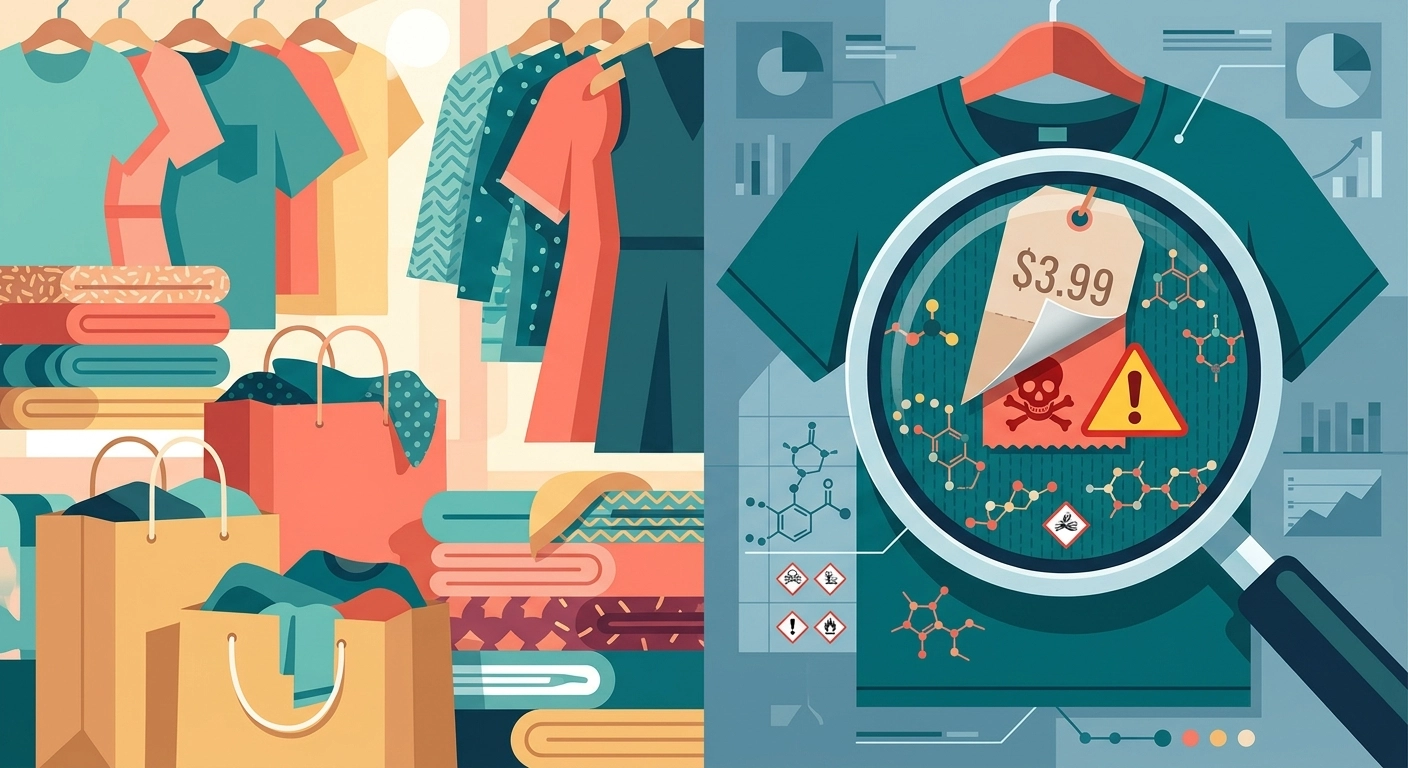
TL;DR - Key Takeaways
- Are Temu clothes safe? Sometimes, but the answer depends on the seller, the finish, and whether any credible certification is shown.
- The biggest concerns in ultra-fast fashion are lead, formaldehyde, phthalates, azo dyes, and PFAS finishes.
- Babies and children face higher risk because of thinner skin, more hand-to-mouth contact, and stricter legal thresholds.
- The safest habits are simple: read labels, look up certifications, smell-test the item, and wash before wear.
- FiberCheck can help as one screening tool, but independent standards such as OEKO-TEX, GOTS, CPSC, and REACH matter more.
Got a haul coming? Scan the care label, see polyester % and a chemical safety score in 5 s.
Get FiberCheckAre Temu clothes safe? That question is showing up everywhere in 2026 because Temu has made ultra-cheap fashion feel almost frictionless. When shoppers see 50-cent T-shirt promotions, baby outfits priced like impulse snacks, and endless social media hauls, they naturally wonder what has been cut from the equation: labor, durability, or chemical safety. If you are asking are Temu clothes safe, you are asking the right question.
The balanced answer is that some Temu garments may be harmless enough for normal use, while others raise legitimate red flags. Temu is a marketplace, not one single factory, so quality and testing consistency vary widely. That means the question are Temu clothes safe cannot be answered with a simple yes or no. What we can do is look at the same risk factors regulators, dermatologists, and consumer investigators focus on: chemical finishes, dyes, plasticizers, certification evidence, and how the item will be worn against the skin.
Why Is Everyone Asking "Are Temu Clothes Safe?"
Temu's growth has been explosive because it compresses the already aggressive fast-fashion model into something even faster and cheaper. Consumers are no longer comparing a $12 shirt with a $40 shirt; they are comparing a $2 shirt with a $20 shirt and asking whether the cheaper version is simply a bargain or a hidden risk. The more extreme the price gap gets, the more often people ask are Temu clothes safe and whether the savings come with trade-offs that never appear on a product page.
Media coverage has intensified those concerns. Investigations by outlets such as CBC Marketplace and Consumer Reports have pushed consumers to think beyond aesthetics and price when buying from online marketplaces. Their reporting has contributed to a broader consumer awareness problem: shoppers now know that incredibly cheap apparel can involve inconsistent supplier vetting, limited testing transparency, and product listings that reveal very little about what is actually touching the skin.
Temu is also difficult to evaluate because many listings do not make third-party certification easy to verify. Some products may be compliant with applicable import rules; others may rely on generic descriptions like "soft," "skin-friendly," or "safe for daily wear" that have no regulatory meaning. This is one reason our fast-fashion health risks guide recommends treating ultra-low-cost clothing as a screening problem, not an automatic trust decision.
So, are Temu clothes safe in a practical, day-to-day sense? Sometimes they may be. But when documentation is thin, your job as a shopper shifts from passive buying to active checking. That is especially true for underwear, sleepwear, leggings, gym clothes, and children's garments that sit on the skin for long periods.
Chemicals Found in Ultra-Fast Fashion
When experts ask are Temu clothes safe, they are usually talking about a handful of well-known chemical categories. Not every garment contains them, and not every trace amount creates a meaningful health risk. But these are the substances most often discussed in textile safety standards, recalls, and laboratory testing.
Lead - heavy metal contamination
What it is: Lead is a toxic heavy metal with no known safe exposure level for children. In textiles, concern is usually tied to pigments, painted prints, coated decorations, metallic trims, and accessory components rather than plain woven fabric alone.
Where it may show up: Bright screen prints, imitation leather coatings, low-cost hardware, decorative studs, and some intensely colored designs sourced through opaque supply chains.
Why it matters: Lead is a bigger concern for kids because hands, snaps, and printed surfaces end up in mouths. If you are shopping for children, CPSC limits matter, and cheap decorative elements deserve extra scrutiny. Our toxic dyes and lead guide explains where these risks most often appear.
Formaldehyde - wrinkle-resistant finishing
What it is: Formaldehyde-based resins are used to make garments resist wrinkling, shrinking, and mildew during shipping and display.
Where it may show up: "Wrinkle-free," "easy-care," or "permanent-press" pieces, along with some packed items that have a sharp chemical smell as soon as the plastic is opened.
Why it matters: Formaldehyde can trigger skin irritation and contact dermatitis, especially in people with eczema or sensitive skin. If a Temu item smells harsh and synthetic, the question are Temu clothes safe becomes more urgent, not less. See our full guide to formaldehyde in clothing.
Phthalates - plasticizers in prints and coatings
What they are: Phthalates are chemicals used to soften plastics. In apparel, they are most relevant in plastisol prints, rubbery graphics, PVC coatings, and flexible synthetic trims.
Where they may show up: Glossy prints, raised cartoon graphics, faux-leather coatings, and accessories designed to feel soft or rubber-like.
Why they matter: Several phthalates are restricted in children's products because of endocrine concerns. On an adult sweatshirt the risk may be lower, but on a teething baby's bib or pajama set the calculus changes.
AZO dyes - bright color with hidden byproducts
What they are: Azo dyes are among the most common textile dyes worldwide. Some restricted azo dyes can break down into aromatic amines that are banned under REACH.
Where they may show up: Ultra-bright reds, oranges, yellows, blacks, and low-cost synthetic blends with heavy color loading.
Why they matter: Heavy dye loads increase the chance of skin irritation, dye transfer, and compliance problems. If a garment bleeds heavily in the wash, that does not prove a banned dye is present, but it is still a warning sign. Learn more in our guide to toxic dyes in clothes.
PFAS - stain and water resistance chemistry
What they are: PFAS are "forever chemicals" used to create stain-resistant, water-repellent, or easy-clean finishes.
Where they may show up: Schoolwear, outerwear, activewear, and any listing promoting stain-proof or splash-proof performance at an unusually low price.
Why they matter: PFAS are persistent in both the environment and the body, and they are increasingly targeted by regulators. If the product description emphasizes performance coatings but offers no credible testing detail, it is fair to ask again: are Temu clothes safe, or just convenient?
👆 Try it yourself — Scan your own clothes with FiberCheck (Free)
Baby & Children's Clothing: A Special Warning
Children's apparel deserves a separate warning because the exposure pattern is different. Babies have thinner skin, a higher skin-surface-area-to-body-weight ratio, and far more oral contact with clothing than adults. That means a printed pajama cuff, a coated bib, or a metallic snap can matter more than a loose adult T-shirt worn for two hours.
Why the risk is higher: Children's skin absorbs more, their detox pathways are still developing, and safety thresholds for lead, phthalates, and formaldehyde are stricter.
What to avoid first: Thick plastisol prints, strong chemical odors, bargain multipacks with no certification, and "easy-clean" or "water-resistant" claims without supporting documentation.
What to do instead: Start with our baby clothing safety guide, prefer OEKO-TEX Standard 100 Class I or GOTS, and wash every new garment before wearing.
If you are specifically asking are Temu clothes safe for a baby, the safest answer is to raise your standards rather than lower them. For infant basics, certainty matters more than low price.
Temu vs Shein vs Amazon: Safety Comparison
The question is not just are Temu clothes safe, but how Temu compares with other mass-market online clothing channels. The table below reflects typical shopper visibility, not a laboratory verdict on every single item.
| Platform | Certification Visibility | Testing Transparency | Return Policies | Regulatory Compliance |
|---|---|---|---|---|
| Temu | Often limited or inconsistent at listing level | Low for generic sellers; rarely easy to verify | Usually available, but item quality disputes can be cumbersome | Varies by seller and import path; buyers need to screen carefully |
| Shein | Better known brand identity, but product-level certification still mixed | Moderate in some categories, limited in others | Generally straightforward in major markets | Subject to recurring scrutiny over product safety and supply chain oversight |
| Amazon | Better on established brands; weak on unknown marketplace listings | Moderate when brands provide documents; low for opaque third-party sellers | Usually the easiest and fastest | Wide variation because Amazon mixes private labels, brands, and marketplace sellers |
Key point: No platform is automatically "safe." In practice, a certified product from an established brand on Amazon may be easier to trust than a generic listing on Temu or Shein, but a non-certified bargain item can be risky on any marketplace.
How to Check If Your Clothes Are Safe
If you are still asking are Temu clothes safe, move from anxiety to process. A quick screening routine catches far more problems than brand loyalty alone.
Read the label and listing carefully
Check the fiber composition, country of origin, and care instructions. Be cautious with vague phrases such as "blended fiber" or missing content percentages. Synthetic blends are not automatically unsafe, but unclear labeling is a transparency problem.
Verify certification claims
Look for OEKO-TEX Standard 100, GOTS, or Bluesign, then verify them on the certifier's website when possible. A real certification is stronger evidence than "non-toxic" marketing copy because it reflects external standards, not just seller language.
Use a smell test and surface test
Sharp chemical odor, oily coating, glitter fallout, or stiff rubbery prints are all reasons to slow down. None of these proves contamination, but each is a legitimate signal to wash first or skip the item entirely.
Wash before first wear
A first wash can remove a meaningful amount of surface dye, finishing residues, and packaging-related contamination. Our wash-new-clothes guide explains why this is especially important for low-cost imports and heavily finished garments.
Use a fabric scanner as one screening method
A fabric scanner app such as FiberCheck can help you interpret label information, fiber mix, and likely risk patterns in seconds. It should support your decision, not replace certifications or regulatory standards.
This same process works whether you are wondering are Temu clothes safe, whether a Shein bodysuit is worth the risk, or whether an Amazon listing looks too vague to trust. Safety comes from evidence, not platform branding.
If you want a deeper look at chemical red flags, our guides on formaldehyde in clothing and toxic dyes in clothes are useful next reads before your next online order.
5 Practical Tips to Protect Yourself
Wash new clothes before wearing them
This is the single easiest way to reduce surface chemical residues and loose dye transfer.
Trust your nose
If the item smells strongly chemical, plasticky, or sour even after airing it out, do not normalize that signal.
Prioritize real certifications
OEKO-TEX, GOTS, and Bluesign all provide better evidence than generic "safe" or "premium" wording.
Choose natural fibers for high skin-contact items
Underwear, sleepwear, baby basics, and fitted tops are safer bets when they use simple cotton or other lower-complexity fabrics without heavy coatings.
Use a fabric scanner for a fast second opinion
If a label is confusing or a listing feels incomplete, a quick scan can help you flag likely problem areas before the item becomes part of your daily wardrobe.
The Bottom Line
Are Temu clothes safe? Some may be, but the platform does not give shoppers enough consistent product-level evidence to assume safety by default. The smartest approach is not panic and not blind trust. Instead, use the same framework used by informed consumers and regulators: check the label, look for OEKO-TEX, GOTS, or Bluesign, avoid strong odors and heavy coatings, wash before wear, and raise your standards for kids' clothing. When the listing is vague, treat uncertainty itself as a risk factor.
Scan Your Clothes — Know What You're Wearing
FiberCheck analyzes clothing labels and fabric photos instantly using AI, giving you health scores, chemical breakdowns, and safety insights in seconds. Make safer choices for your family.
Frequently Asked Questions
Are Temu clothes safe to wear?
Some Temu clothes may be safe enough for occasional wear, but safety varies widely by seller, fabric finish, dye chemistry, and product category. Because many listings provide limited testing information, shoppers should not assume a garment is verified just because it looks new or inexpensive. The safest approach is to check the fiber label, look for OEKO-TEX or GOTS certification, avoid strong chemical odors, and wash items before first wear.
Why do some Temu clothes smell chemical or plasticky?
A strong smell can signal volatile finishing chemicals, dye residues, plasticizers, or packaging-related off-gassing. It does not automatically mean a garment is toxic, but it is a useful caution sign. If the odor remains after washing and airing out, returning the item is the safer choice.
Is Temu baby clothing safe?
Temu baby clothing deserves extra caution because infants and young children have thinner skin, higher hand-to-mouth behavior, and stricter safety thresholds for chemicals like lead and phthalates. Parents should prioritize products with OEKO-TEX Standard 100 Class I or GOTS certification, avoid heavy prints and metallic trims, and wash everything before use.
Is Temu safer than Shein or Amazon for clothing?
No marketplace is automatically safer. Temu, Shein, and Amazon all include products with very different supply chains and testing practices. In general, established brands with visible certification documents and transparent material disclosures are easier to evaluate than generic marketplace listings with little product-level data.
What certification should I look for on cheap clothes online?
The most useful certifications are OEKO-TEX Standard 100 for finished-product chemical testing, GOTS for organic fibers and restricted processing chemicals, and Bluesign for safer chemical management in textile production. None of these guarantees perfection, but they provide much stronger evidence than vague claims such as 'eco,' 'skin-friendly,' or 'safe for all.'
Disclaimer: This article is for informational purposes only and does not constitute medical or legal advice. It summarizes publicly discussed consumer-safety concerns, certification standards, and regulatory frameworks as of April 2026. If you experience a rash, allergic reaction, breathing symptoms, or any health issue related to clothing, consult a qualified clinician. FiberCheck is a clothing-analysis tool and is not a substitute for professional medical guidance or laboratory testing.