Are AliExpress Clothes Safe? The 2026 Buyer's Guide
TL;DR - Key Takeaways
- Some AliExpress clothes are fine. Others are not, and the gap between a certified listing and an uncertified one is wider here than on most platforms.
- For adults buying basics, risk is manageable with the right checks. For kids -- especially babies and toddlers -- the bar for acceptable evidence is higher, and many listings do not clear it.
- EU Safety Gate, Health Canada, and ECHA REACH regularly flag clothing from AliExpress-linked supply chains for excessive lead, phthalates, and restricted azo dyes.
- OEKO-TEX Standard 100 and GOTS are the certifications that actually mean something -- verify them by certificate number, not logo.
- Six buying rules at the bottom of this guide apply to any AliExpress clothing purchase.
What Regulators Have Actually Found
AliExpress is a marketplace, not a manufacturer. Sellers from hundreds of factories ship directly to buyers worldwide, so product-level safety is as variable as the seller pool, which runs into the millions.
European regulators have documented the problem through the EU Safety Gate (formerly RAPEX). Clothing entries regularly include hazards such as excessive lead in metal components, phthalates in PVC-coated items, and restricted azo dyes.
Health Canada's recalls and safety alerts database lists periodic enforcement actions on clothing imports, including children's apparel flagged for formaldehyde and azo dye non-compliance (see Health Canada Recalls and Safety Alerts).
The ECHA REACH regulation sets limits on Substances of Very High Concern (SVHC) in EU-sold products. The candidate list includes phthalates in prints and PVC trims, azo dyes releasing carcinogenic aromatic amines on skin contact, and flame-retardant chemicals in imported textiles. Without a REACH declaration of conformity, you have no evidence the product meets EU limits (see ECHA REACH SVHC candidate list).
The Categories Where Risk Concentrates
Not every AliExpress garment carries equal risk. Chemistry tells you where to pay attention.
Children's and baby items
The highest-risk category on any platform. Regulatory thresholds for lead, phthalates, and formaldehyde are tighter for children's products in every major market. Children have thinner skin and higher hand-to-mouth contact than adults, which changes how exposure accumulates. A print-heavy baby bodysuit from an uncertified seller is the worst-case combination.
Faux leather and PVC-coated items
These use plasticizers to keep the material flexible. Many of those plasticizers are phthalates. EU REACH bans the most harmful phthalates above 0.1% by weight in toys and childcare items, and the restriction increasingly extends to clothing that children handle. Adult faux leather shoes and belts are lower priority, but kids' faux leather accessories are not.
Screen-printed and plastisol graphics
These carry two concerns: ink chemistry (solvents, pigments, plasticizers) and adhesion chemicals that bond the print to fabric. Strong chemical odor on a printed graphic, especially on a new garment, is a practical warning signal.
Sleepwear
AliExpress listings may not meet the flammability standards the EU or US require. Listings rarely specify which jurisdiction the item was tested for, if tested at all.
Faux-leather and synthetic shoes
These can contain chromium VI in the leather-alternative tanning process. The EU caps chromium VI in leather at 3 mg/kg; untested imports may not meet that limit.
Certifications That Actually Mean Something
Some AliExpress listings display certification logos; most do not. Those that do vary widely in what the claim is worth.
OEKO-TEX Standard 100
Tests for over 1,000 harmful substances including formaldehyde, heavy metals, pesticide residues, pH, and certain azo dyes. Certifications are issued at the product level, and every certified article carries a unique label number. Enter that number at oeko-tex.com to verify. A logo image with no certificate number is not a valid claim.
GOTS (Global Organic Textile Standard)
Covers organic fiber content plus social and chemical criteria across the supply chain. It is harder to fake than OEKO-TEX because GOTS-certified facilities are publicly listed and audited annually.
Bluesign
A manufacturing-process certification more common in outdoor brands than fast fashion. Seeing it on an AliExpress listing is unusual; verify it on the bluesign website if present.
Fake-cert signals: a logo with no certificate number, a number with no result on the certifier's tool, or certification claimed only in the product FAQ with no supporting document.
👆 Try it yourself — Scan your own clothes with FiberCheck (Free)
AliExpress vs Shein vs Temu: What Makes Each Different
All three platforms source heavily from Chinese manufacturing, but their structures differ in ways that affect how you evaluate a listing.
Shein designs and sources its own catalog, giving it more supply-chain control than a marketplace -- though independent testing has still found non-compliant items. The Shein safety guide covers this in detail.
Temu, like AliExpress, is a marketplace model where sellers list and ship directly. The Temu safety guide covers the same category risks.
AliExpress is the oldest and largest of the three, serving both retail and small wholesale buyers. The wholesale proximity matters: minimum-order quantities push sellers toward the most cost-effective inputs, and cost-cutting in unregulated chemical categories tends to increase risk.
AliExpress seller ratings have a longer history than Temu, which launched in 2022. A seller with 10,000 reviews and 98% positive rating tells you the seller ships reliably -- not that the product is chemically safe. It is a logistics signal, not a safety signal.
The 6 Buying Rules
These apply to any AliExpress clothing purchase -- not a guarantee, but a method for reducing worst-case exposure.
Read the label before anything else
A listing that cannot name fiber content cannot be evaluated. A 100% polyester item carries different chemical risks than a cotton-linen blend. If the label is absent or lists "mixed fiber" without percentages, that is a flag.
Check certifications properly
If a listing claims OEKO-TEX, find the certificate number and verify it at the OEKO-TEX verification tool. Do not accept a logo image as evidence.
Use the smell test
Open the package before you commit to keeping it. A sharp chemical odor from printed areas suggests residual chemicals. That does not mean the garment fails regulatory limits, but it is a practical early-warning check.
Wash before first wear, always
Washing removes surface finishes, residual dyes, and some processing chemicals. It does not remove everything bonded to the fiber, but it reduces the initial dose. Hot water for whites and unpainted items; cold for everything else to limit dye bleeding.
Apply a fiber priority list for kids
For children, prioritize: OEKO-TEX Standard 100 Class I or GOTS-certified cotton. Avoid: faux leather, heavy plastisol prints, screen-printed graphics on bodysuits or sleepwear. For babies under 12 months, the standard should be Class I OEKO-TEX or GOTS; nothing else gives comparable evidence of low chemical load. The baby clothing safety guide covers this certification path in full.
Understand the return policy before buying kids' items
AliExpress seller return policies vary widely. For a child's item, confirm before purchase that you can return without a cost dispute. Check the seller's return window and buyer-protection terms before ordering.
How FiberCheck Reads an AliExpress Label
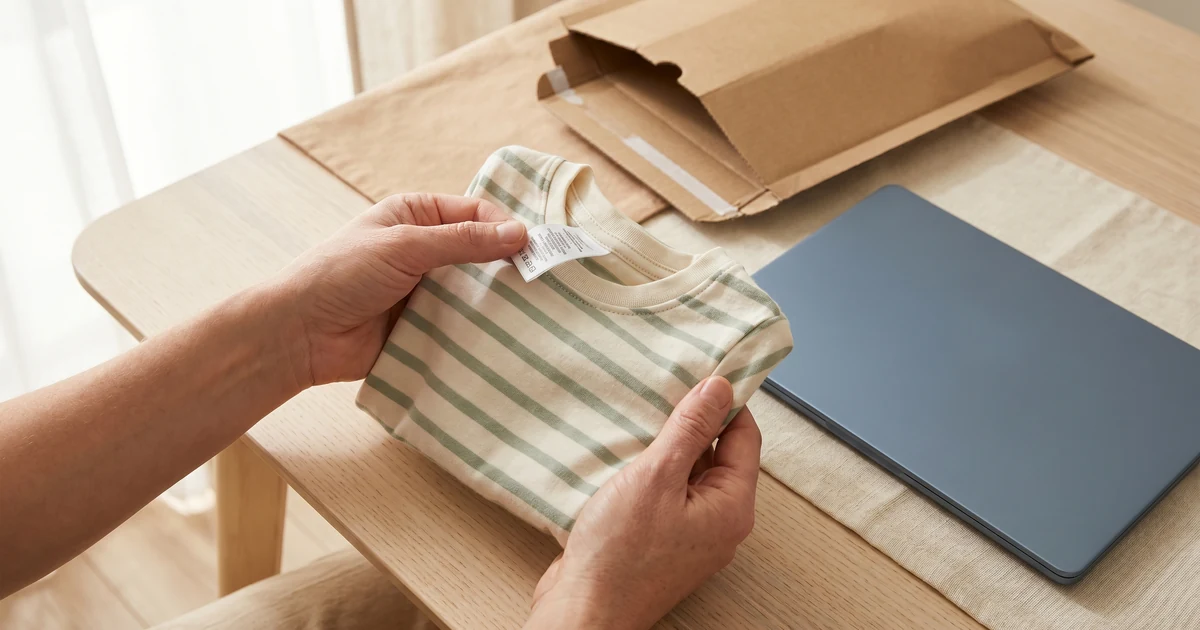
AliExpress listings vary widely in label detail. Some sellers photograph tags clearly; many do not. When a garment arrives, the physical tag is the authoritative source.
FiberCheck reads the fiber content declaration, country of origin, care symbols, and any certification language on that tag, then identifies chemical risk patterns. A label showing 100% polyester with a dry-clean symbol sits in a different risk category than 60% cotton / 40% rayon with no care guidance. A valid OEKO-TEX number is flagged differently than no certification reference at all.
The scan does not replace lab testing. It reads what is declared and flags where the information conflicts with known risk patterns or falls short of what certification requires. For AliExpress purchases, where listing-level information is often incomplete, a physical label scan gives you the most accurate picture of what you received -- not what the listing claimed.
When AliExpress Is Genuinely Fine
The platform is not uniformly high-risk. Several categories carry low chemical-exposure risk:
- Accessories without skin contact: phone cases, bags, decorative items, hats with woven sweatbands. The main chemical concern in accessories is lead in metal hardware; for items with substantial metal components, the same rules apply as for kids' items.
- Established brands on AliExpress: some European and Asian brands use AliExpress as a distribution channel alongside their own retail presence. If you can independently verify the brand and it holds checkable certifications, you are buying a certified product through an unusual channel.
- Undecorated basics in natural fibers with certification: a plain cotton t-shirt from a seller who can provide an OEKO-TEX certificate number is a reasonable low-risk purchase. Risk concentrates in the processing-heavy categories above.
Price alone does not determine risk. A certified basic is low-risk regardless of price; an expensive item can still fail safety standards. The signal is evidence, not cost.
The Bottom Line
Are AliExpress clothes safe? Some are; many are not, and the gap between a certified listing and an uncertified one is wider here than on most platforms. For adults buying basics with the six rules above, risk is manageable. For kids -- especially babies -- require certification evidence you can verify. Drop a photo of any AliExpress label into FiberCheck and we'll flag the risk patterns, including PVC plastisol, PFAS, formaldehyde finishes, and undeclared blends.
Scan Your Clothes — Know What You're Wearing
FiberCheck analyzes clothing labels and fabric photos instantly using AI, giving you health scores, chemical breakdowns, and safety insights in seconds. Make safer choices for your family.
Frequently Asked Questions
Has AliExpress been banned or fined for unsafe clothing?
AliExpress has not been banned in major markets, but EU regulators have raised consumer-protection concerns under the Digital Services Act. Product-level safety alerts from EU member states appear in the Safety Gate database and include items sold through AliExpress-linked supply chains. The regulatory pressure is ongoing, not resolved.
How do I check if an AliExpress seller's OEKO-TEX claim is real?
Every valid OEKO-TEX Standard 100 certificate has a unique label number in the format XX-XXXXXXX. Go to the OEKO-TEX label check tool at oeko-tex.com, enter that number, and the result will show the certified article, the testing institute, and the validity period. If a listing shows only a logo image with no certificate number, the claim is unverified. If the number you enter returns no result, the claim is false.
Is AliExpress baby clothing ever safe?
Yes, if the seller holds and can provide a current OEKO-TEX Standard 100 Class I certificate for the specific item, or a GOTS certificate. Class I is the strictest tier and the only one appropriate for babies under 36 months. Without that documentation, there is no basis for confidence in chemical compliance, regardless of what the listing description says. For anything going against a baby's skin, require the certificate number and verify it.
Will washing remove chemicals from AliExpress clothes?
Washing removes surface dye residue, certain processing finishes, and a portion of formaldehyde from wrinkle-resistance treatments. It does not remove dyes bonded to fibers, plasticizers in prints, or PFAS coatings. Washing lowers the initial exposure dose; it does not reset a garment's chemical profile to zero. Wash before first wear, but do not treat it as full remediation.
AliExpress, Shein, or Temu -- which is safest right now?
No honest answer ranks them cleanly. All three source from overlapping supply bases and carry both compliant and non-compliant items. What matters is whether the specific product has certification evidence you can verify -- not which platform name is on the app. A certified item on AliExpress is safer than an uncertified item on Shein, and vice versa.
Disclaimer: This article is for informational purposes only and does not constitute medical or legal advice. It summarizes publicly reported consumer-safety findings, certification standards, and regulatory frameworks as of May 2026. If you experience a rash, allergic reaction, or any health issue related to clothing, consult a qualified clinician. FiberCheck is a clothing-analysis tool and is not a substitute for professional medical guidance or laboratory testing.