PFAS 'Forever Chemicals' in Clothing: The Hidden Danger in Your Closet
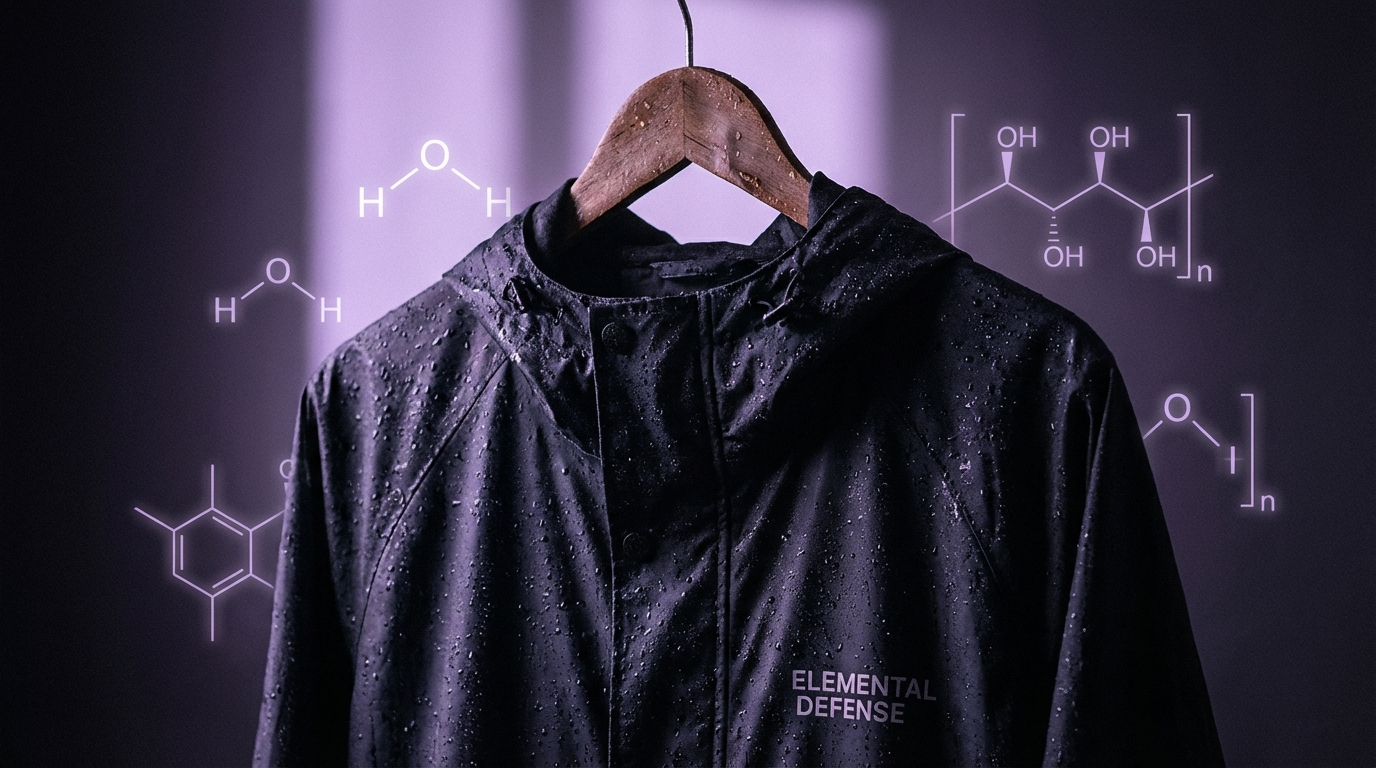
On January 1st, France became the first country to ban PFAS in clothing. Denmark follows in July. These "forever chemicals" have been hiding in your waterproof jackets, stain-resistant pants, and outdoor gear for decades—and the health risks are finally catching up with the industry.
What Are PFAS, and Why Should You Care?
PFAS (per- and polyfluoroalkyl substances) are a group of over 10,000 synthetic chemicals invented in the 1940s. They're called "forever chemicals" because they don't break down in the environment—or in your body. Once you're exposed, these chemicals accumulate in your blood, organs, and tissues for years.
In textiles, PFAS create water-repellent and stain-resistant finishes. That rain jacket that beads water perfectly? Those work pants that never stain? They likely contain PFAS. The problem is that these chemicals don't stay on the fabric—they migrate onto your skin, into the air, and eventually into your bloodstream.
The Health Risks Are Serious
Research from the EPA and major health organizations links PFAS exposure to a disturbing range of health problems:
- Cancer: Increased risk of kidney and testicular cancer, with emerging links to other types.
- Immune suppression: Studies show PFAS reduce vaccine effectiveness in children—a critical concern in the post-pandemic era.
- Hormonal disruption: Thyroid disease, fertility problems, and developmental issues in children.
- Liver damage: PFAS accumulate in the liver and have been linked to elevated cholesterol and liver disease.
- Pregnancy complications: Higher rates of preeclampsia and low birth weight in exposed mothers.
The 2026 Global PFAS Bans
Governments are finally taking action. Here's what's happening in 2026:
| Country/Region | Effective Date | Scope |
|---|---|---|
| France | January 1, 2026 | Clothing, cosmetics, ski wax |
| Denmark | July 1, 2026 | Clothing, footwear, waterproof products |
| California (USA) | January 1, 2025 | Sportswear, uniforms, footwear |
| Minnesota (USA) | January 1, 2025 | 11 major product categories |
| Maine (USA) | 2026 | Textiles, furniture, ski wax |
The EU is also moving toward a comprehensive PFAS restriction proposal that could take effect by 2027, potentially banning all non-essential uses of forever chemicals across member states.
👆 Try it yourself — Scan your own clothes with FiberCheck (Free)
Children's Clothing: A Hidden Danger Zone
A 2024 study by IPEN and Arnika tested 72 children's clothing items from major retailers. The results were alarming: 64% contained detectable PFAS levels. Even more concerning, 17 products contained PFOA—a PFAS variant that's already been banned in most countries due to its known cancer-causing properties.
Children's outdoor jackets and waterproof gear were the worst offenders. Kids are especially vulnerable because they have higher skin-to-body-weight ratios, and they're still developing. The chemicals they absorb today could affect their health for decades.
How to Spot PFAS in Your Clothes
Unfortunately, brands aren't required to disclose PFAS on labels in most regions. Here's what to watch for:
- "Water-repellent" or "stain-resistant" claims: These features often rely on PFAS coatings.
- Outdoor and performance wear: Rain jackets, hiking pants, and workout gear are high-risk categories.
- Gore-Tex and similar membranes: Traditional DWR (durable water repellent) treatments often contain PFAS, though some brands are transitioning.
- Look for "PFAS-free" labels: Some brands now explicitly certify their products as PFAS-free.
Which Brands Are Actually Safe?
The Natural Resources Defense Council (NRDC) recently graded major clothing retailers on their PFAS policies. Here's how some well-known brands scored:
- Levi Strauss (A+): Committed to eliminating PFAS across all products.
- Columbia and outdoor brands: Many failed to demonstrate clear PFAS-free policies.
- JCPenney, Kohl's, Walmart, Macy's, Nordstrom: No comprehensive PFAS policy or inadequate commitments.
How to Protect Your Family
- Skip the "water-resistant" marketing: Unless you truly need it, choose untreated natural fabrics instead.
- Choose wax-coated or silicone-based alternatives: These provide water resistance without forever chemicals.
- Prioritize natural fibers for children: Organic cotton, wool, and linen are safer choices for kids' everyday wear.
- Wash new clothes before wearing: While this won't eliminate PFAS, it can reduce initial surface contamination.
- Use a fabric scanning app: Tools like FiberCheck can help you identify potentially problematic fabrics before you buy.
The Bottom Line
The tide is turning on forever chemicals. France's ban is just the beginning—more countries and U.S. states will follow. While the industry transitions, you can protect your family by being selective about waterproof and stain-resistant claims, prioritizing natural fabrics, and supporting brands that have committed to PFAS-free products. Your waterproof jacket might keep you dry, but it shouldn't come at the cost of your long-term health.
Scan Your Clothes — Know What You're Wearing
FiberCheck analyzes clothing labels and fabric photos instantly using AI, giving you health scores, chemical breakdowns, and safety insights in seconds. Make safer choices for your family.