Are Your Gym Clothes Toxic? PFAS, BPA & Hidden Chemicals in Activewear
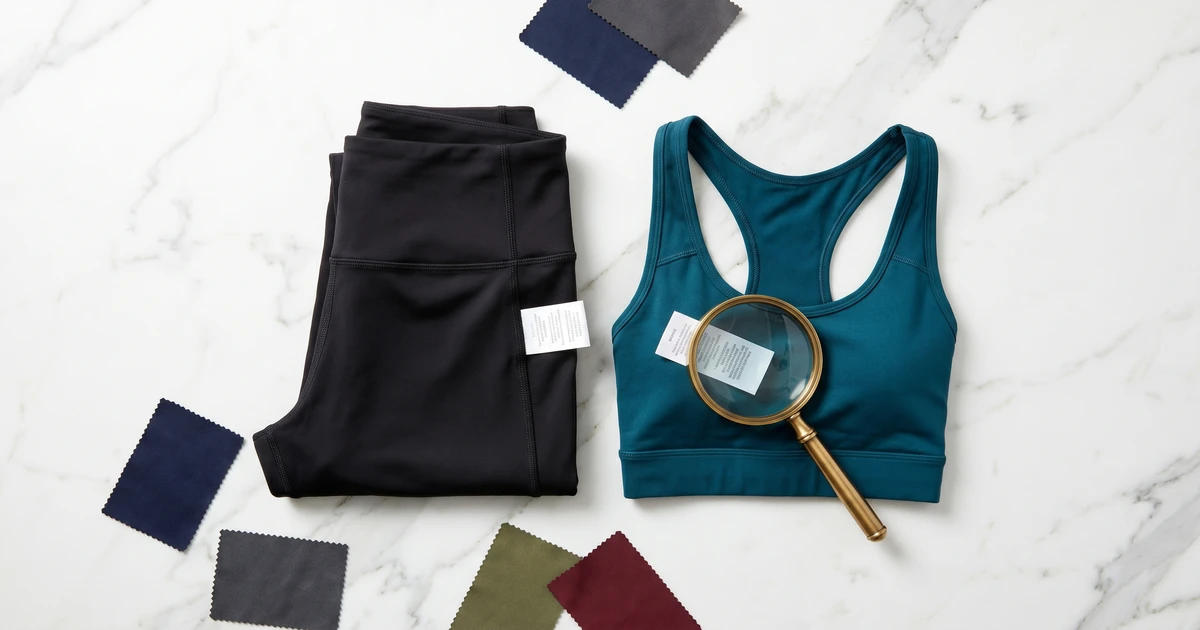
You just finished a 45-minute spin class. You're flushed, drenched in sweat, skin flushed from exertion. The whole point was to get healthier. But the leggings against your skin for the past hour? They may have been working against you.
That's not fearmongering. It's what independent lab testing and regulatory actions have revealed about a category of clothing most of us never think twice about.
Here's what the science actually says about toxic chemicals in workout clothes, which brands failed testing, and what you can realistically do about it.
TL;DR - Key Takeaways
- PFAS ("forever chemicals") and BPA are both found in popular activewear brands at concentrations that concern regulators and toxicologists.
- Sweat dramatically amplifies dermal absorption - up to 3,252-fold compared to dry contact - making workout exposure especially significant.
- Sports bras and leggings are the highest-priority items to swap. They're worn directly against high-sweat, high-surface skin for extended periods.
- You don't need to replace everything at once. A few targeted swaps using certified or natural-fiber options make a meaningful difference.
Own this activewear already? Scan the label, see the fiber mix and a chemical safety score in 5 s.
Get FiberCheck1. The Hidden Chemical Cocktail in Your Workout Clothes
Most gym clothes are made from synthetic fibers: polyester, nylon, spandex (also called elastane or Lycra). These materials are engineered to wick moisture, resist odor, and hold their shape. The chemistry that makes them do those things is where the problems start.
Finishing chemicals give fabrics their water-repellent or stain-resistant properties. Dye fixatives help colors stay bright through hundreds of washes. Plasticizers keep spandex flexible. Antimicrobial agents suppress the bacteria that cause odor. None of these are listed on the care label, and most haven't been comprehensively tested for long-term dermal exposure.
The two most studied chemical groups in activewear are PFAS (per- and polyfluoroalkyl substances) and BPA (bisphenol A). Both are endocrine disruptors. Both have turned up in independent testing at concentrations that regulators and toxicologists find concerning. And both are particularly problematic in the one context you wear these clothes: a sweaty workout.
2. PFAS ("Forever Chemicals"): Why They're in Your Leggings
PFAS is an umbrella term for roughly 12,000 synthetic chemicals that share a carbon-fluorine bond. That bond is extraordinarily stable, which is why PFAS are used to make fabrics water-repellent and stain-resistant. It's also why they don't break down in the environment, or in your body. That's where the name "forever chemicals" comes from.
In activewear, PFAS typically appear as durable water repellent (DWR) coatings on outer shells, or as internal fluorine-based finishes on moisture-wicking fabrics. Durable-water-repellent garments contain approximately three times higher PFAS concentrations than conventional functional items, according to research published in Environmental Science & Technology tracking the fate of PFAS from DWR-treated clothing during real-world use.
Independent testing organization Mamavation commissioned EPA-certified lab testing of 32 pairs of workout leggings and yoga pants. The results found organic fluorine (a PFAS indicator) in 8 of 32 pairs tested, ranging from 10 ppm to 284 ppm. The highest reading came from LulaRoe leggings. Lululemon and Athleta products also showed detectable fluorine in that testing round.
The legal pressure is arriving too. In April 2026, the Texas Attorney General's Office issued a Civil Investigative Demand to Lululemon USA Inc., examining whether the company's marketing was consistent with the actual chemical content of its apparel. Lululemon stated it phased out intentionally added PFAS in fiscal year 2023 and cooperated with the investigation.
Health regulators are also moving. As of 2024, attorneys general from 30 states and the District of Columbia have initiated litigation against PFAS manufacturers for contaminating water supplies. The EU has proposed a broad restriction on PFAS use across product categories. The science driving that regulatory momentum is not ambiguous.
👆 Try it yourself — Scan your own clothes with FiberCheck (Free)
3. BPA in Sports Bras: What the Testing Found
BPA is a plasticizer that's been phased out of baby bottles and water containers after decades of pressure. It's still legal in textiles, and it turns up in a surprising place: the polyester-spandex blends used in sports bras, leggings, and athletic shirts.
BPA is added to these fabrics to improve colorfastness and static resistance. The catch is that spandex is typically worn directly against skin, often in the areas with the highest sweat glands and thinnest dermal layers.
The California-based Center for Environmental Health (CEH) ran some of the most comprehensive testing on record. In 2023, CEH sent legal notices to 19 activewear brands after testing found BPA levels that could expose wearers to up to 40 times the safe limit under California's Proposition 65. Brands that received notices included Athleta, PINK (Victoria's Secret), The North Face, Brooks, Nike, FILA, Asics, and All in Motion. A second round of testing added Amazon Essentials, Avia (Walmart), Patagonia, Skechers, and Aerie to the list.
To be clear: California's Prop 65 limit for BPA via skin exposure is 3 micrograms per day. CEH found some garments could deliver 40 times that amount. This is not a trace-level issue.
CNN Business covered the findings in May 2023, and subsequent reporting confirmed the pattern: BPA was found exclusively in garments made from polyester-spandex blends. Pure cotton, wool, and linen activewear showed no BPA contamination.
4. How Sweat Makes It Worse: Dermal Absorption During Exercise
Here's the part that most coverage misses. It's not enough to ask whether PFAS or BPA are present in fabric. The more important question is: how much of it reaches your bloodstream when you're exercising?
The answer is: more than you'd absorb at rest, and potentially a lot more.
Sweat acts as a chemical solvent. Research shows that sweat dissolves chemical residues from fabric and drives them into direct contact with skin. A 2025 study published in Environmental Science & Technology modelling dermal transfer of PFAS from household and children's textiles found that sweat can increase chemical absorption up to 3,252-fold compared to dry fabric contact.
At the same time, exercise increases blood flow to the skin surface to support thermoregulation. That expanded blood supply means chemicals crossing the skin barrier enter systemic circulation faster than they would at rest.
A University of Birmingham study noted by FashionUnited found that oily components in sweat help pull plastic additives, including bisphenols and PFAS, out of synthetic microfibers and make them biologically available for absorption.
The compound effect is what matters. Wear PFAS-treated leggings for a 60-minute run, sweat heavily, and you are maximizing the conditions for dermal absorption. This is not the same as wearing a treated jacket in the rain for ten minutes.
5. Brand Safety Scorecard: Who Passed and Who Failed
Here's a consolidated picture based on published testing, not brand self-reporting.
Brands with detected PFAS in leggings (Mamavation, EPA-certified lab)
- LulaRoe: 284 ppm (highest detected)
- Lululemon: fluorine detected
- Athleta: fluorine detected
- Old Navy: fluorine detected
Brands with zero detected fluorine in leggings testing
- Alo, Reebok, Nike, Sweaty Betty, Under Armour
- Pact Organic, Mate The Label, Groceries Apparel (zero fluorine, organic materials)
Brands receiving CEH legal notices for BPA in sports bras/activewear (2023)
- Round 1: Athleta, PINK, Asics, The North Face, Brooks, All in Motion, Nike, FILA
- Round 2: Amazon Essentials, Avia, Patagonia, Skechers, Aerie
NRDC 2024 PFAS scorecard grades
- Levi Strauss: A+ (already eliminated PFAS from supply chain)
- Patagonia: B (committed to phase-out, largely complete)
- Columbia Sportswear, REI, Wolverine Worldwide: F
A few caveats worth stating plainly: testing snapshots reflect specific SKUs at specific points in time. Brands update formulations. A brand that failed in 2022 may have reformulated; a brand that passed may use different chemistry on a different product line. Brand-level verdicts should be treated as signals, not permanent verdicts.
6. Five Steps to Check Your Own Activewear
You don't need a lab. The label and a few searches tell you a lot.
Check the fiber content
If the label reads "100% polyester" or "polyester/spandex," you're in the highest-risk category for both PFAS finishes and BPA. Pure cotton, merino wool, or TENCEL Lyocell activewear has no structural reason to contain either chemical.
Look for DWR language
Any garment marketed as "water-repellent," "stain-resistant," or "sweat-proof" likely uses a surface treatment. Those three words are the clearest signal that PFAS-based chemistry may be involved. "Moisture-wicking" alone doesn't automatically imply PFAS.
Search for third-party certifications
OEKO-TEX Standard 100 means the finished product was tested for harmful substances including some PFAS and BPA. GOTS (Global Organic Textile Standard) requires organic fibers and restricts synthetic chemical inputs throughout the supply chain. Neither guarantees zero PFAS, but both set a higher threshold than unlabeled garments.
Scan the label with FiberCheck
FiberCheck's AI scanner reads fabric composition labels and flags high-risk fiber and finish combinations in seconds. It's the fastest way to assess a garment you're holding in a store before you buy it.
Skip the performance finish when you don't need it
For yoga, Pilates, or lower-intensity training, you don't need a DWR coating. The less surface chemistry between your skin and the base fiber, the simpler the exposure picture.
7. How to Build a Non-Toxic Workout Wardrobe Without Going Broke
You do not need to throw out everything and replace it with $200 organic leggings. A few targeted swaps reduce your exposure significantly.
Prioritize what touches your skin directly
Sports bras and leggings are worn against the highest-surface-area skin for the longest time. These are your priority swaps. An outer shell jacket or shorts worn over tights are lower risk.
Choose certified organic cotton for lower-intensity workouts
Cotton is breathable, contains no synthetic performance chemistry, and is widely available. Pact, Organic Basics, and Thought Clothing all offer GOTS-certified basics in the $30-60 range. Cotton doesn't perform as well as polyester in high-sweat conditions, but for a yoga class or weight session it's more than adequate.
Look for merino wool
Merino is naturally moisture-wicking, odor-resistant, and temperature-regulating without any synthetic chemistry. Icebreaker and Smartwool offer merino base layers that work for running and gym use. They're not cheap (typically $60-100 for a top), but they last years and contain no synthetic finishing chemicals.
For high-performance polyester, go certified
If you need synthetic performance fabric (marathon training, HIIT, swimming), choose brands with OEKO-TEX or GOTS certification, or with documented PFAS-free commitments. Patagonia has publicly committed to eliminating intentionally added PFAS across all new products as of Spring 2025. Alo passed Mamavation's fluorine testing.
Wash before first wear and air dry
Always wash new activewear with cold water and a fragrance-free detergent before wearing. Skip the dryer for synthetics - heat can increase chemical off-gassing from polyester. Air drying also preserves the elastic performance of spandex.
The Bottom Line
The chemicals in question (PFAS and BPA) are real, the testing showing their presence in popular activewear brands is real, and the mechanism by which sweat amplifies dermal exposure during exercise is real. What's still evolving is the precise dose-response picture for clothing-specific exposure. That's not a reason to panic. It is a reason to read labels, choose certified fabrics where you can, and swap out the highest-contact garments first. Your workout is supposed to make you healthier. The clothes you do it in should not be the variable working against that goal.
Scan Your Clothes — Know What You're Wearing
FiberCheck analyzes clothing labels and fabric photos instantly using AI, giving you health scores, chemical breakdowns, and safety insights in seconds. Make safer choices for your family.
Frequently Asked Questions
Can PFAS in workout clothes be absorbed through the skin?
Yes. Research shows sweat acts as a solvent that pulls PFAS out of fabric and onto skin. A 2025 study on dermal transfer of PFAS from textiles found sweat can increase chemical absorption up to 3,252-fold compared to dry contact. Exercise amplifies this because increased blood flow to the skin surface accelerates how quickly absorbed chemicals enter circulation. The exact dose absorbed from clothing specifically is still an active area of research, but dermal uptake of PFAS is an established exposure pathway, not a theoretical one.
Which activewear brands are PFAS-free?
Based on published independent testing: Alo, Reebok, Nike, Sweaty Betty, and Under Armour showed zero organic fluorine in Mamavation's leggings testing. Patagonia has eliminated intentionally added PFAS from all new products as of Spring 2025. Levi Strauss earned an A+ in the NRDC's 2024 PFAS scorecard for already removing PFAS from its supply chain. Pact and Mate The Label use GOTS-certified organic materials with no fluorine detected in testing. Note that testing reflects specific products at specific points in time. Brands reformulate, and a clean test result for one SKU does not cover an entire product line.
Should you wash new gym clothes before wearing them?
Yes, always. Washing removes surface chemical residues, excess dye, and manufacturing treatments. Use warm water and a fragrance-free detergent. For synthetic activewear, air-dry rather than using a dryer. Heat accelerates chemical breakdown and off-gassing from polyester-spandex blends, and it can also degrade the elastic performance of spandex over time. Washing alone won't remove PFAS or BPA that are embedded in the fiber structure, but it reduces the surface residue load before first contact with your skin.
Disclaimer: This article is for informational purposes only and does not constitute medical or legal advice. It summarizes publicly reported consumer-safety findings, certification standards, and regulatory frameworks as of May 2026. If you experience a rash, allergic reaction, or any health issue related to clothing, consult a qualified clinician. FiberCheck is a clothing-analysis tool and is not a substitute for professional medical guidance or laboratory testing.